
Wildfires force mass evacuations as Europe reels under extreme heat
 5 Min Read
Nearly 30,000 people have been evacuated in France and Spain as extreme heat, drought, and record-setting wildfires intensify across southern Europe and the Mediterranean.
-
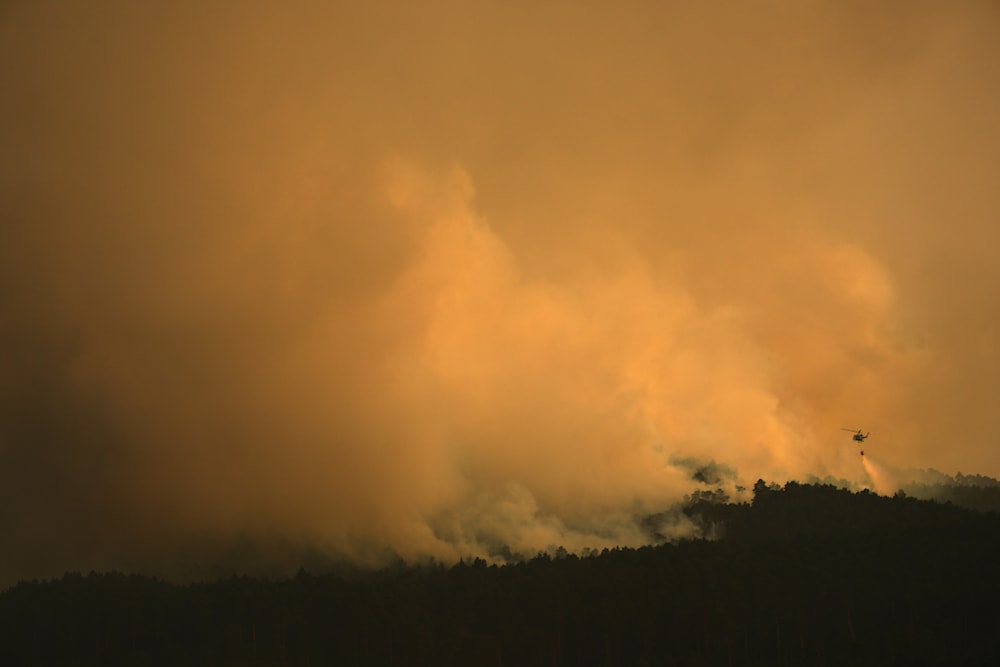
A firefighting helicopter drops water on the flames as a wildfire advances near Condemios de Arriba, Guadalajara province, Spain, Wednesday, July 22, 2026, after a wildfire scorched tens of thousands of hectares in one of Spain's largest wildfires in recent years (AP)
Nearly 30,000 residents and tourists have been ordered to leave their homes and holiday sites as rapidly spreading wildfires grip parts of France and Spain amid punishing temperatures across southern Europe.
According to The Guardian, emergency crews are struggling to contain several major blazes, while a severe marine heatwave has pushed Mediterranean waters far above seasonal averages. Researchers have warned that increasingly extreme conditions could produce “Dantesque” fire scenarios.
France has turned to the European Union for additional aircraft and helicopters as a major wildfire advances through the Gironde region near the Atlantic coast. Spain, meanwhile, has declared national emergencies in areas surrounding Madrid and in the province of Ávila, where fires have continued to spread beyond firefighters’ control.
France seeks European reinforcements
French President Emmanuel Macron said the situation remained “extremely tense”, particularly in Gironde in the country’s southwest.
“France has requested the activation of the European Union’s civil protection mechanism. We will soon be able to count on reinforcements from two Croatian Canadair aircraft, two Portuguese Air Tractor planes, as well as two heavy Black Hawk helicopters from the Czech Republic and Slovakia,” Macron wrote on X on Friday.
More than 18,800 people have been evacuated from communities, campsites and holiday residences near the French Atlantic coast.
The blaze began in thick pine woodland close to Saumos, approximately 40 kilometers west of Bordeaux and north of the Bay of Arcachon, a major summer tourism destination.
Within slightly more than a day, the fire had consumed over 3,700 hectares. Authorities said several homes had been destroyed, although no deaths or injuries had been reported.
🔥 Les soldats du feu s'apprêtent à affronter une deuxième nuit de lutte face à l'incendie de Saumos, en Gironde
— Association Prévention & Signalement Feux De Forêt (@asso_psfdf) July 23, 2026
🌳 À 22h, les flammes ont déjà parcouru 4 800 hectares et l'incendie reste hors de contrôle
🏘️ Au moins 6 habitations ont été touchées par les flammes
🚒 800… pic.twitter.com/AigCqYJGGx
Around 800 firefighters and four water-dropping aircraft were deployed, but officials said conditions remained unfavorable and the fire had yet to be stabilized.
“The fire is highly erratic and gaining very significant force,” regional fire service chief Marc Vermeulen said on Thursday evening. “One of the main fronts is very close to a semi-urban area. We are defending house by house.”
Flames reportedly reached heights of around 10 meters as strong winds drove the fire through vegetation left exceptionally dry by successive heatwaves.
Thousands evacuated around Madrid
Spanish authorities placed the response to fires in Madrid and Ávila under the control of the country’s military emergency unit after ordering approximately 10,000 people to evacuate.
Separate fires were also affecting León, Toledo, and other parts of the country.
“The government has deployed every available resource to stop the terrible fires currently affecting numerous areas: Avila, Leon, Toledo, Madrid and other parts of Spain,” Prime Minister Pedro Sánchez wrote on X.
Atención a la extrema voracidad del incendio forestal de #IFCastropodame, en El Bierzo, (León)…
— PacoCastañares (@PacoCastanares) July 22, 2026
Las violentas llamaradas, su enorme altura y su voracidad de propagación hablan bien a las claras que el incendio está fuera de capacidad de extinción. Es absolutamente intratable.… pic.twitter.com/a1btyXL54C
He called on residents to exercise “great caution” and follow instructions issued by emergency services.
Figures from the European Forest Fire Information System indicate that close to 125,000 hectares have burned in Spain since the beginning of the year. By comparison, approximately 393,000 hectares were lost during all of last year.
Spain has also recorded exceptional temperatures. The Spanish meteorological agency Aemet registered a high of 44.7°C in Cieza, Murcia, on Thursday.
A day earlier, Albacete, Ávila and Teruel established new July temperature records, with readings reaching as high as 42°C.
Mediterranean waters reach extreme temperatures
The heat is not confined to the land. Data from the Mediterranean Monitoring System shows that a marine heatwave is affecting about 80% of the Mediterranean Sea.
Temperatures in several areas reached extreme levels on Tuesday, with some waters approximately 5°C warmer than the 1991–2020 average.
🌡️ The Mediterranean is experiencing an extreme marine heatwave
— Windy.com (@Windycom) July 23, 2026
Sea surface temperatures are above average across almost the entire Mediterranean. On 21 July, the basin-wide average reached 27.71 °C, which is 2.91 °C above the long-term average for that date (Copernicus Marine… pic.twitter.com/pyI2QamDXa
Across the European Union, wildfires have already burned roughly twice as much land as would normally be expected by July 22, according to the European Forest Fire Information System.
France has registered a record amount of burned territory for this point in the year, while both France and Spain have recorded unprecedented numbers of fires.
France has experienced three heatwaves in rapid succession since May. The repeated periods of extreme heat have dried forests, soil and waterways, creating conditions in which fires can ignite and spread rapidly.
Scientists have repeatedly linked the growing frequency and intensity of European heatwaves and wildfires to the worsening climate crisis.
Residents describe sudden evacuations
Several people forced to leave the Gironde region described receiving little warning as the flames approached nearby communities.
Patrick Martineau, 69, who was evacuated from Le Porge, said police had “come banging on the doors … It’s scary – hard to take in. When we bought a home here, we never thought there’d be a fire risk.”
Sylvie, a tourist from Paris staying in Lège-Cap-Ferret, said a neighbor had warned her, “‘Get your bags ready, we’re going to be evacuated during the night.’ We put the bulk of our stuff in the car boot and left.”
Elke Urbain, a Belgian tourist who visits the region annually, said she had been instructed while at the beach to “go back immediately to the campsite and gather your things. It’s just terribly sad.”
The area experienced another devastating fire in 2022, when more than 30,000 hectares burned and around 50,000 people were evacuated.
Read more: Climate crisis fuels extreme drought across Europe, study finds


