
Malnutrition having 'harrowing' impact on Afghan women: WFP
 3 Min Read
The World Food Programme warns of a worsening malnutrition crisis in Afghanistan, with millions of women and children at risk amid severe funding cuts and collapsing aid services.
-
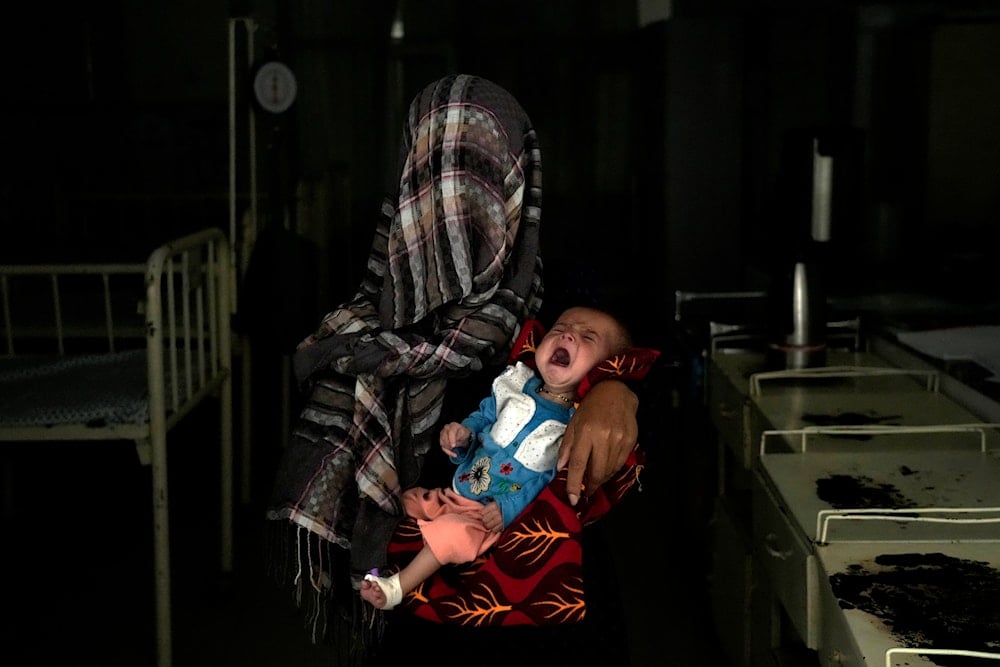
Nazia, 30, who has lost four children due to severe malnutrition, holds her malnourished baby in a hospital in Parwan province, north of Kabul, Afghanistan, on May 19, 2022. (AP Photo/Ebrahim Noroozi)
The World Food Programme (WFP) has issued a stark warning about the deepening malnutrition crisis in Afghanistan, highlighting devastating effects on women and children as international support dwindles.
The UN agency, which provides the majority of food aid to the country, says millions are at risk as funding cuts force clinics to shut down and humanitarian operations to scale back.
In an interview with AFP, John Aylieff, WFP’s director for Afghanistan, described the situation as "heartbreaking," noting that 2025 will see critical levels of acute malnutrition across the country. Aylieff said, "In the next 12 months, five million women and children in this country will experience acute malnutrition, the life-threatening type of malnutrition,” adding, "Nearly four million children in this country will need malnutrition treatment. These numbers are staggering."
Afghanistan’s population stands at more than 40 million, with the WFP playing a central role in supplying food amid widespread poverty and instability.
Clinics shutting down amid severe funding cuts
After receiving what Aylieff described as "immensely generous" donations in 2021 and 2022, the WFP has since seen its funding slashed dramatically. In 2024, the agency received only half of the $600 million it had expected.
"Since then, funding to Afghanistan has been cut and cut further and cut further," said Aylieff. These cuts have had dire consequences. Clinics treating malnourished children are closing down, and many families are being turned away due to a lack of resources.
"When those women carry their child, maybe four or five hours to the clinic, and they get there, and they’re told WFP simply does not have the money to treat your child anymore, this is heartbreaking,” Aylieff added.
Women face devastating health consequences
WFP officials report a sharp rise in malnutrition among pregnant and breastfeeding women in Afghanistan, many of whom are sacrificing their own health to feed their children. “They’re not getting the food assistance that would otherwise be helping them. Many of them just don’t know how to cope,” Aylieff said.
Early marriages and child labor on the rise
The collapse of food assistance programs is pushing families into desperate survival strategies. In areas where WFP has halted operations due to funding shortages, there has been a spike in early marriage and child labor. “We’re seeing girls being sold off into early marriage just so their families can put food on the table. We’re seeing children being pulled out of school and sent to work,” Aylieff said.
The organization has also received a growing number of distress calls from Afghan women, including calls related to severe mental health crises. “We’re getting an increasing number of distress calls to WFP from very desperate women across the country, including some suicide calls,” he noted.
Aylieff was critical of the international community, saying it has failed the very people it once pledged to protect. “I think we are, as an international community, abandoning and letting down the very people, women and children in particular, that we pledged to protect,” he said.
The WFP continues to call for renewed support from donors to meet urgent needs and prevent further deterioration of the humanitarian situation in Afghanistan.


