
Rising patient attacks spark 'national emergency' for UK NHS staff
 5 Min Read
A Guardian investigation found that violence and sexual abuse against NHS staff in England have surged to nearly 300,000 incidents in three years, prompting healthcare unions to warn that staff safety has reached a national emergency.
-
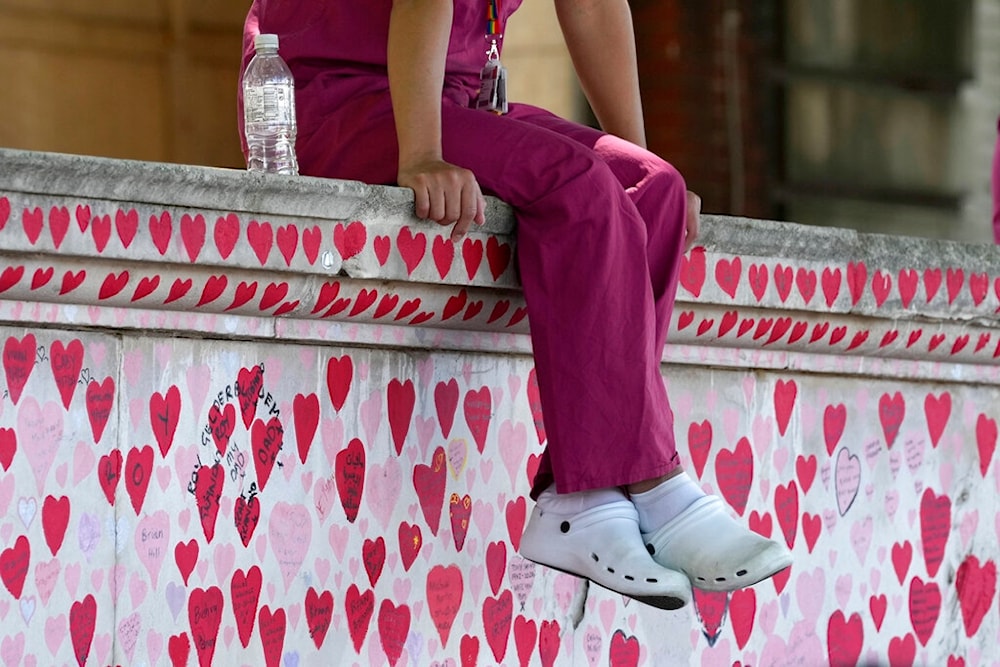
A member of the NHS staff of the nearby St Thomas Hospital enjoys his lunch break with a bottle of water sitting in the shade on the National Covid Memorial Wall in London, Thursday, Aug. 11, 2022. (AP)
A report published by The Guardian on Saturday revealed an alarming surge in violence and sexual abuse against National Health Service (NHS) staff, prompting warnings from healthcare unions that the crisis has reached a national emergency point.
According to data obtained through freedom of information requests, more than 295,000 incidents of physical violence and aggression by patients against NHS workers were recorded across 212 NHS trusts in England between 2022 and 2025. Hospital records show a steady rise in such incidents, from 91,175 cases in 2022-23 to 104,079 in 2024-25, the equivalent of around 285 reported incidents every day in the most recent year.
The abuse ranges from threats and physical assaults to attacks involving knives and other weapons. In one incident last week, a man armed with a crowbar attacked six staff and patients at Newton Community Hospital in Merseyside. Police said the suspect has been arrested and detained under the Mental Health Act.
NHS safety emergency
Healthcare unions say the situation is deteriorating rapidly, particularly during high-pressure periods such as Christmas and the New Year. Prof Nicola Ranger, the general secretary of the Royal College of Nursing (RCN), described the scale of the problem in stark terms: “The scale, frequency and severity of the abuse faced by the NHS workforce make this a national emergency for staff safety.”
Hospital data also points to a sharp increase in sexual assaults and sexual harassment against staff. Nearly 24,000 alleged incidents were recorded over the past three years, exceeding the total logged in the previous five. These incidents range from verbal abuse to rape. Some female staff reported being sexually assaulted while delivering care, while others described witnessing patients deliberately exposing themselves or ejaculating on nurses in accident and emergency departments.
“Working in the NHS is becoming increasingly dangerous,” Ranger said. “It should cause total outrage that healthcare professionals, especially in a female-dominated profession like nursing, face the prospect of being sexually assaulted, violently assaulted or sometimes both.”
Doctors and nurses told the newspaper that while the level of violence has escalated, consequences for perpetrators remain rare. They said patients who assault staff are seldom prosecuted or denied treatment, even in severe cases where wards or equipment are destroyed, causing extensive damage.
System Failure Violence
The British Medical Association (BMA) linked the rise in violence to long waiting times, chronic understaffing, growing distrust in medicine driven by Covid-related conspiracy theories, and increasing racism directed at staff of colour. Emma Runswick, deputy chair of the BMA council, said all NHS workers were now “living in increasing fear of harassment, abuse, violence”.
Frontline staff also highlighted the collapse of specialist mental health provision as a major factor. Managers said entire hospital wards are increasingly being shut down for weeks or months to isolate highly violent or emotionally dysregulated patients, particularly teenagers with complex mental health needs or autism, due to a lack of secure mental health beds.
One NHS risk manager told the paper that their trust regularly closes wards for a single patient who is too violent to be treated alongside others, while another case involved a teenager causing tens of thousands of pounds’ worth of damage by smashing windows and ripping doors from their hinges.
Runswick said such cases were not isolated, but stressed that severe mental illness was not the sole driver of abuse. “The cause of their violence is the poor service that we are giving them and all their family members,” she said. “That can only be prevented if the service improves.”
Underreported violence
The report also questioned the reliability of official figures, noting striking disparities between trusts. While some recorded thousands of violent or sexual incidents, others reported implausibly low numbers. Experts and unions said this reflected widespread underreporting, as overstretched staff often lack the time or confidence to formally log incidents.
“These figures show that some trusts are dealing with explosions in incidents, while others refuse to share data or claim they’ve barely had a single case,” Ranger said. “You can’t keep your workers safe if you ignore what is happening or don’t know where the danger is.”
A recent RCN survey of 20,000 nurses found that more than 27% had been physically assaulted in the past year, while over 10% reported sexual harassment.
Calls for Action
Ranger urged Health Secretary Wes Streeting and NHS England to take urgent action, warning that some trusts may be breaching their legal obligations under health and safety and worker protection laws. Runswick echoed the concern, saying:
“If the Health and Safety Executive came in [to inspect them], there would be lots of places which would fail on these grounds.”
Streeting said in response that violence, racism and sexual misconduct against NHS staff were “completely unacceptable” and promised tougher action against perpetrators, while NHS England reiterated that physical violence against staff should never be tolerated.
Despite official assurances of “zero tolerance”, unions and frontline workers warned that without significant investment, enforcement and accountability, abuse against NHS staff will continue to rise.
Read more: Anti-migrant climate driving foreign doctors from NHS, warns chief


