
Famine risk looms over southern Somalia as aid funding collapses
 3 Min Read
The IPC and FEWS NET have warned that Burhakaba in southern Somalia's Bay region has recorded malnutrition levels not seen since 2022, with famine possible if rains fail again.
-
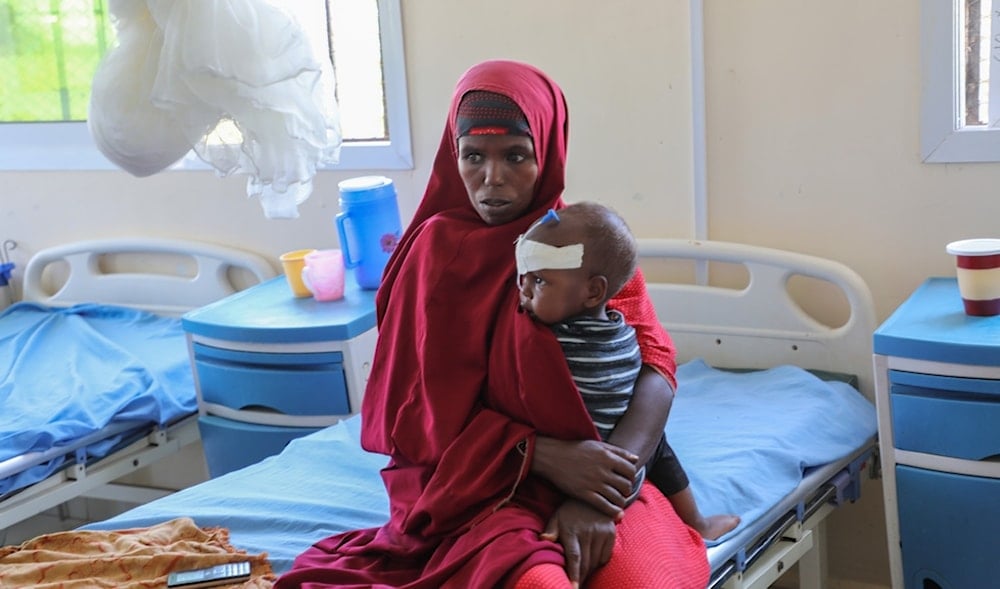
Isho Isak sits with her malnourished child at Dolow Referral Hospital in southern Somalia after being affected by drought, Wednesday, March 25, 2026 (AP Photo/Mohamed Sheikh Nor)
Two global food security monitoring bodies have warned that parts of southern Somalia are at risk of famine, with one district recording hunger levels not seen in the country since 2022. The warnings come as consecutive poor rainy seasons and entrenched insecurity compound the effects of sweeping cuts to foreign aid and the economic fallout of the US-Israeli war on Iran.
More than 37% of young children in Burhakaba, a town of around 200,000 people in Somalia's southern Bay region, are suffering from acute malnutrition, according to a report by the UN-backed Integrated Food Security Phase Classification (IPC).
The IPC found Burhakaba at risk of famine under a worst-case scenario involving the failure of the Gu rainy season, which runs from April to June, alongside soaring food prices and lower-than-expected delivery of food security-related humanitarian aid.
The Famine Early Warning Systems Network (FEWS NET), a US-funded body focused on early warnings about hunger crises, said its most likely scenario assumed seasonal rains would improve enough to temporarily stabilize conditions. However, it warned that a credible alternative scenario involved below-average rainfall leading to another decline in crop yields.
"If the harvest fails, famine could rapidly emerge in these areas," FEWS NET spokesperson Hannah Button said, referring to agro-pastoral areas in the Bay, Bakool, and Gedo regions of southern Somalia.
Six million facing crisis
The IPC report estimated that around 6 million Somalis are currently facing crisis levels of food insecurity or worse. Although the figure is slightly lower than the 6.5 million recorded in February, it remains higher than the projected 5.5 million for this period, owing to a worse-than-expected rainy season.
Somalia is one of the world's most food-insecure countries due to recurring droughts, conflict, and poverty. The country last experienced famine in 2011, when around 250,000 people died, and narrowly avoided another in both 2017 and 2022.
A famine is officially declared when at least 20% of households in a given area face extreme food shortages, at least 30% of children suffer acute malnutrition, and two people out of every 10,000 die daily from hunger.
Aid funding collapses
Humanitarian assistance between April and June 2026 increased considerably, the IPC noted, yet still covers only 12% of those facing crisis-level food insecurity or worse.
According to UN data, total humanitarian funding for Somalia in 2026 stands at $160 million, down sharply from $531 million last year and far below the $2.38 billion allocated during the country's previous drought crisis in 2022.
Cuts to foreign aid by several countries, including the United States, have significantly reduced support for Somalia. The economic repercussions of the US-Israeli war on Iran have compounded the crisis further, driving up fuel and food prices across the region.


