
ICE arrest of US citizen exposes violent DHS tactics: The Guardian
 5 Min Read
ICE's violent arrest of Los Angeles protester Christian Cerna is under scrutiny over DHS tactics, militarized operations, and online dissemination of arrest footage.
-
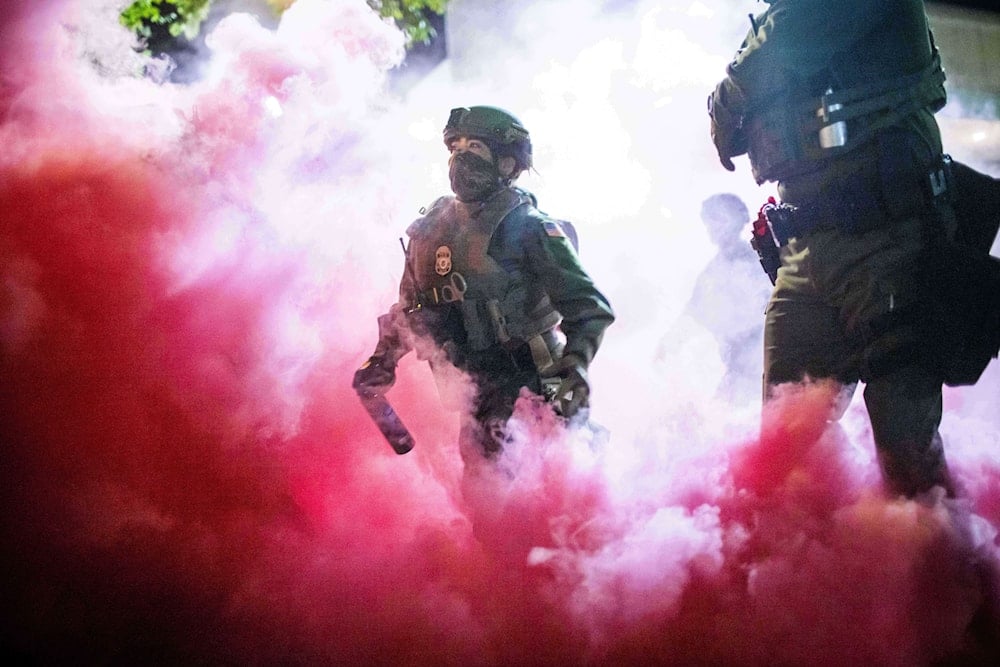
Police and federal officers throw gas canisters to disperse protesters near a US Immigration and Customs Enforcement facility in Portland, Ore., on October 5, 2025 (AP, File)
An ICE arrest of a Los Angeles protester case has triggered debate in the US over federal enforcement tactics, surveillance practices, and the use of social media footage in criminal prosecutions, following the arrest of California carpenter and US citizen Christian Cerna.
An exclusive report by The Guardian detailed how the Department of Homeland Security (DHS) and Immigration and Customs Enforcement (ICE) operations escalated into a high-profile arrest that later drew judicial criticism for what a federal judge said was a "vindictive effort" to impose extrajudicial punishment.
Christian Cerna, a carpenter and Southern California native, said he joined protests amid heightened tensions in Los Angeles during a period of intensified immigration enforcement actions targeting workers and immigrant communities.
According to the report, federal agencies, including ICE and other components of the DHS, had carried out visible enforcement operations across the city’s garment district and surrounding areas. Cerna said his opposition to immigration raids was shaped by childhood experiences, including the deportation of his father after an ICE arrest.
Immigration enforcement protest in LA 2025
During an immigration enforcement protest, LA 2025 escalation, Cerna encountered federal agents near a DHS office while filming and verbally confronting officers. Videos cited in court records showed chaotic scenes involving protesters and federal agents in tactical gear.
Cerna, who was livestreaming at the time, shouted criticisms at officers and questioned the militarized appearance of the operation. Federal officials later alleged Cerna struck a border agent during the confrontation, while his legal team argued any contact was disputed and occurred amid a rapidly escalating physical confrontation.
ICE tactics, surveillance, and social media arrest footage
A central issue in the case involves what critics describe as expanded surveillance and media strategy during enforcement operations, including the use of drones, undercover tracking, and recorded footage.
According to the report, the ICE tactics protest surveillance video aspect of the case became particularly controversial after court disclosures showed agents filming parts of the operation and later sharing DHS social media arrest footage online.
Scott Tenley, Cerna’s lawyer and a former federal prosecutor, said in 20 years of criminal defense, he had never seen officers film themselves planning and executing an arrest: "You’re not making a documentary. You’re supposed to be fighting crime".
According to the reporting, ICE personnel used surveillance methods to track Cerna following the protest incident, later coordinating a multi-vehicle operation to intercept him while he was driving with his partner and two young children.
The arrest itself involved unmarked vehicles, flash-bang grenades, and officers approaching with weapons drawn after the collision that brought Cerna’s vehicle to a stop.
DHS later stated Cerna failed to comply with a vehicle stop and claimed officers executed a lawful interdiction maneuver. He and witnesses disputed that account, saying the crash occurred without a clear warning.
California operation raises questions
The federal agents' arrest of a protester in California intensified scrutiny after footage showed agents filming themselves during the arrest and a public affairs official documenting the operation. Cerna was handcuffed in front of his family while officers pointed firearms at the vehicle. His partner, Abby Chavez, recorded parts of the incident from inside the car with their children present.
The DHS response, including posts referencing then DHS Secretary Kristi Noem, framed the arrest as part of a broader crackdown on individuals accused of attacking law enforcement officers during protests.
Officials stated Cerna was a “violent rioter” who assaulted a federal agent, claims that remain disputed in court filings and by defense attorneys.
Christian Cerna ICE case and legal dispute
The Christian Cerna ICE case moved through federal court with competing accounts of the protest and arrest.
According to the report, prosecutors alleged Cerna intentionally struck a border patrol agent during the demonstration and later attempted to evade law enforcement. Defense attorneys argued he did not make contact in the way described by prosecutors and that agents used excessive force during both the protest and arrest.
The government initially faced procedural issues, including an indictment error naming the wrong protester and victim before the case proceeded. Cerna ultimately pleaded guilty to a lesser misdemeanor charge of simple assault, avoiding a felony conviction that could have carried a longer prison sentence.
Judge criticism and reports of excessive enforcement conduct
In later proceedings, a federal judge criticized aspects of the enforcement approach, describing elements of the operation as punitive and excessive in nature.
Court records and testimony also highlighted the psychological and physical toll on Cerna and his family, including hospitalization, stress-related health complications, and ongoing trauma experienced by his partner and young children. Defense attorneys argued the case reflected broader concerns about the use of force during immigration enforcement protests and the portrayal of suspects in official media channels.
The ICE arrest of a Los Angeles protester case has become part of a wider debate in the US over immigration enforcement tactics, protest policing, and the growing use of digital media in law enforcement operations.
While federal authorities maintain the arrest was justified based on an alleged assault on an officer, critics argue the operation raises serious questions about proportionality, surveillance practices, and the public dissemination of arrest footage before trial conclusions.


