
Iraq contains Al-Ahdab oil field blaze; production unaffected
 2 Min Read
Preliminary investigations suggest that extreme temperatures or an electrical spark may have triggered the fire in the evaporation ponds area.
-
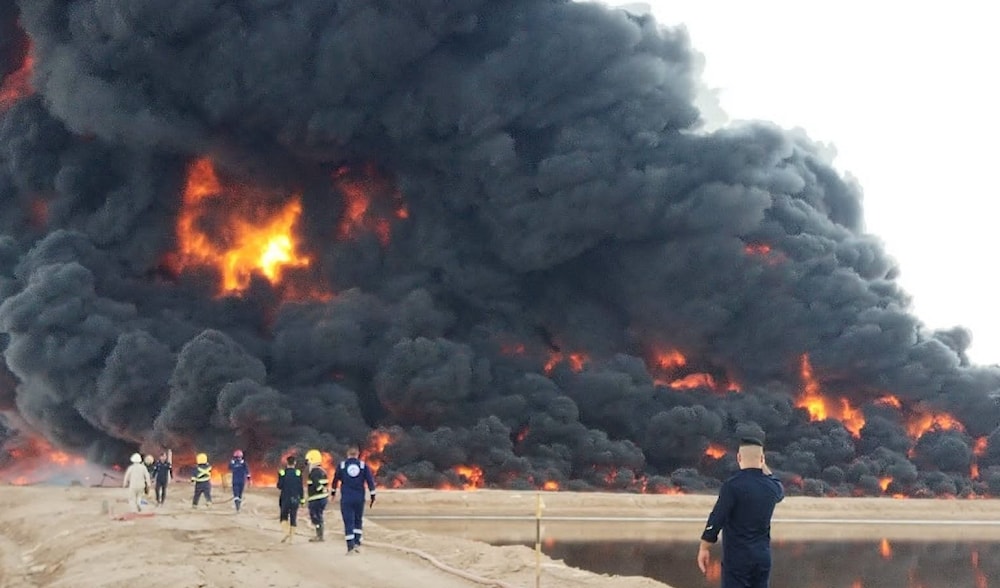
Civil defense teams extinguish a fire that broke out in crude oil evaporation ponds at the Al-Ahdab oil field in Iraq’s Wasit Governorate (Social Media / X)
A fire that broke out at the Al-Ahdab oil field has been fully contained, announced Iraq’s Ministry of Oil on Friday.
Mohammed Yassin, Director General of the Midland Oil Company, confirmed that no casualties or property damage were recorded, and that the incident had no impact on production operations or caused any leakage of toxic gases.
وزارة النفط العراقية:
— قناة الميادين (@AlMayadeenNews) July 31, 2026
الإنتاج لم يتأثر عقب حريق في موقع لتجميع النفط الخام بحقل الأحدب في محافظة واسط#الميادين pic.twitter.com/Yxz8S3OP4I
Yassin told the Iraqi News Agency (INA) that the fire occurred at the Al-Ahdab oil field, specifically in the evaporation ponds area, which contains a mixture of water and oil.
Iraq oil field fire linked to heat wave or electrical spark
The blaze erupted in Pond No. 6 before spreading to the beginning of Pond No. 4. He noted that firefighting teams succeeded in containing and extinguishing the fire.
The company director explained that these evaporation ponds are primarily designated for collecting water discharged from production units that falls outside technical specifications.
Regarding the cause of the incident, Yassin said that the exact cause has not yet been determined. However, preliminary assessments suggest that extreme heat or an electrical spark may have been the likely trigger of the fire.
It is worth noting that the field plays an important role in supporting the country’s crude oil output and energy sector, making the uninterrupted continuation of production particularly significant.
Officials emphasized that the incident did not affect production facilities, ensuring that the field continues to contribute to Iraq’s oil exports and domestic energy infrastructure without disruption.


