
Iraq signs oil deal with Halliburton to boost production
 3 Min Read
Iraq signed a deal with US oil services giant Halliburton to manage two Basra oil fields, aiming to significantly increase production and gas output.
-
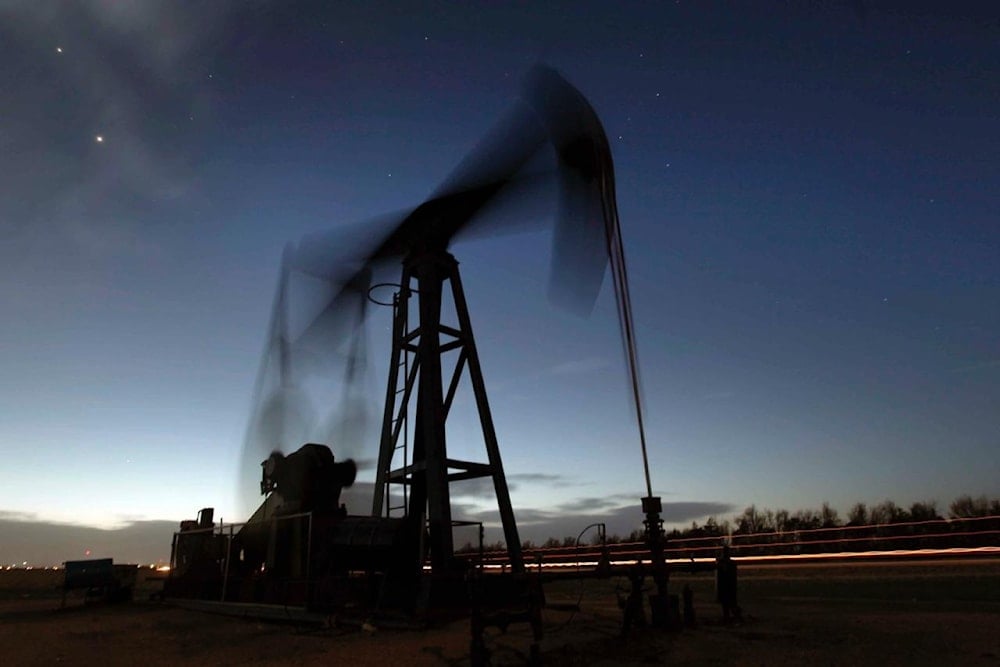
A pumping unit sucks oil from the ground near Greensburg, Kansas, on March 6, 2012 (AP)
Iraq has signed a new agreement with US oil services giant Halliburton to manage two major oil fields in the country’s south, as Baghdad moves to expand production capacity and strengthen its energy sector.
The state-owned Basra Oil Company signed a joint management contract with Halliburton for the Bin Omar and Sinbad oil fields in Basra province, according to the Iraqi oil ministry’s media office.
Iraqi Oil Minister Bassem Khodeir said the agreement aligns with government efforts to “boost oil and gas production capacity,” as the country seeks to maximize output from its southern energy assets.
Under the plan, Iraq aims to increase production at the Bin Omar field by 150,000 barrels per day over the next five years, alongside an additional 300 million cubic feet of associated gas.
Production to increase drastically
Production at the Sinbad oil field is also expected to rise by between 80,000 and 100,000 barrels per day, according to official projections.
The agreement comes as Iraq’s new government, led by Prime Minister Ali al-Zaidi, pushes for a higher OPEC production quota, arguing that the country’s energy sector has been significantly impacted by years of conflict and regional instability.
Iraq, a founding member of OPEC, remains heavily dependent on oil exports, which account for around 90 percent of state budget revenues, making energy output a critical pillar of economic stability.
The deal with Halliburton was signed ahead of Zaidi’s expected visit to Washington later this month, as Baghdad seeks to attract further US investment into its oil sector and broader economy.
Iraq expects full recovery
Iraq expects its oil production to return to pre-war levels within one to two months, according to officials from the country's Oil Ministry, as regional energy markets begin recovering from months of disruption caused by the US-Israeli war on Iran and the subsequent closure of the Strait of Hormuz.
Oil Ministry spokesperson Salim Farhoud told the Iraq News Agency (INA) that production capacity is already increasing at fields that had been forced to reduce output during the conflict.
"We can return within one to two months to the previous production levels," Farhoud said, adding that oil fields affected by production restrictions have begun restoring capacity.
The announcement comes days after Tehran and Washington signed a memorandum of understanding aimed at ending hostilities and reopening one of the world's most important maritime energy corridors.
Strait of Hormuz reopening boosts export outlook
The gradual reopening of the Strait of Hormuz has improved expectations for Iraq's export sector after months of severe disruptions due to the US-Israeli war on Iran.
The Islamic Republic initially closed off the Strait to entities with ties to the US-Israeli aggression against it. After a ceasefire was announced in early April, Washington imposed its own blockade, further complicating international maritime travel through the vital waterway.
Iraqi Oil Minister Bassem Khodeir said exports would recover progressively as navigation through the strait returns to normal.


