
Japan supreme court upholds sentence for US soldier in rape case
 3 Min Read
Japan’s Supreme Court has upheld a five-year sentence against US Air Force serviceman Brennon Washington for kidnapping and sexually assaulting a minor in Okinawa, rejecting his final appeal.
-
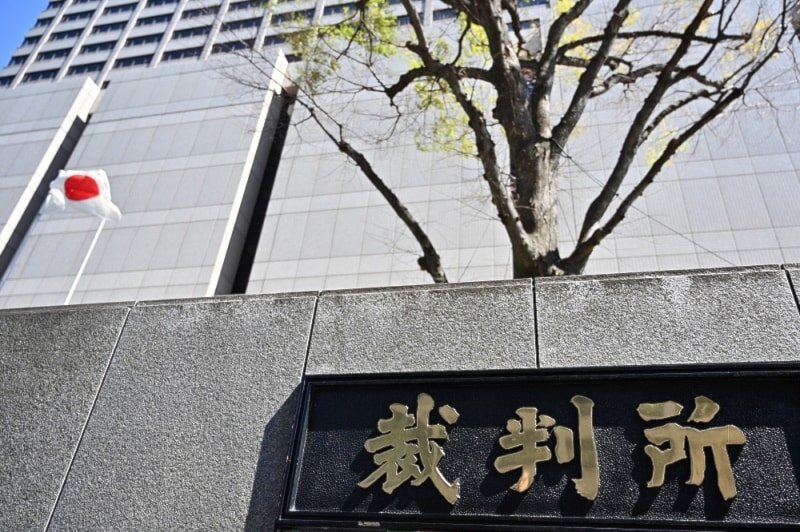
A general view shows the front of the Tokyo District Court on December 12, 2019. (AFP)
The Supreme Court of Japan has upheld the five-year prison sentence for US Air Force serviceman Brennon Washington, who was convicted of kidnapping and sexually assaulting a girl under the age of 16 in Okinawa Prefecture. The ruling marks the final legal decision in the case, as reported by Japanese media on Tuesday.
According to the Japan Times, the Supreme Court’s Small Bench rejected Washington’s appeal, thereby affirming the decisions handed down by both the Naha District Court in 2024 and the Fukuoka High Court in 2025.
The case stems from an incident in December 2023, when Washington approached a teenage girl in a public park in Okinawa. Surveillance footage captured him asking the girl about her age before inviting her to sit in his vehicle, citing cold weather. He later drove her to her residence and committed the assault. Authorities confirmed that the victim and the serviceman had no prior acquaintance. The footage and the victim's account played a central role in the prosecution.
Defense claims rejected as courts uphold victim’s testimony
Throughout the proceedings, the defense argued that Washington believed the victim was of legal age and that the encounter had been consensual. However, the court found the victim’s testimony credible and consistent.
The Naha District Court convicted Washington in 2024, a ruling that was upheld by the Fukuoka High Court the following year. With the Supreme Court's decision to reject the appeal, the original sentence has now taken full effect. The conviction has renewed focus on the legal and social tensions surrounding the presence of US military personnel in Okinawa. Past cases involving crimes by foreign troops have triggered public outrage and raised questions over jurisdiction and accountability.
As of now, US authorities have not commented on the Supreme Court ruling. The case underscores ongoing scrutiny over the behavior of foreign military personnel stationed in Japan and the importance of judicial independence in handling such cases.
Japan's opposition to the US military base
On a related note, in September 2023, Governor Tamaki appealed for international support at a United Nations session to express his opposition to the relocation of a US military base within his region. However, a Japanese government representative in Geneva promptly raised doubts about Governor Tamaki's position, underscoring the ongoing disagreement over this project, which originates from a 1990s agreement between Tokyo and Washington.
Tamaki addressed the Human Rights Council of the United Nations, stating that the clustering of military installations in the area poses a threat to peace. "I am here today to ask the world to witness the situation in Okinawa," he said.
Similar to Washington's crimes against the Japanese schoolgirl, three US soldiers also raped a woman on the island in 1995. Additionally, a 20-year-old woman was raped and murdered by a former US base worker, sparking a mass demonstration on the island's capital, urging the US military to relocate their military base outside Okinawa.


