
Tennessee prison chief faces scrutiny after botched Pike execution
 5 Min Read
Lawyers point to repeated execution failures and ignored recommendations under Tennessee prison chief's leadership.
-
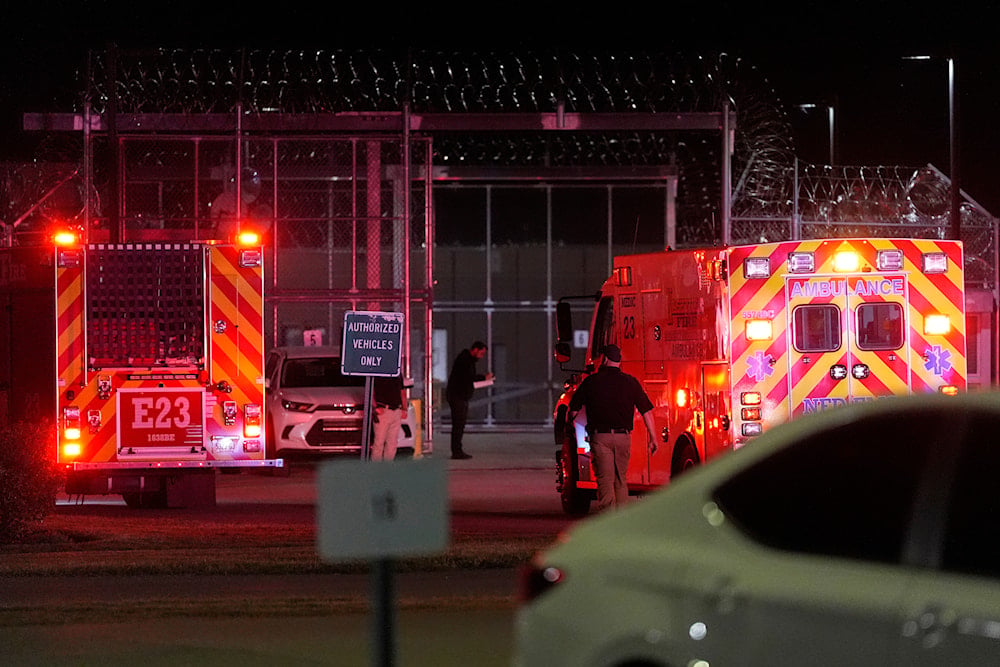
Emergency vehicles arrive at Riverbend Maximum Security Institution after the execution of Christa Pike was halted Wednesday, Sept. 30, 2026, in Nashville, Tenn. (AP)
Tennessee’s corrections leadership is facing demands for accountability after Christa Pike survived a lethal injection, with attorneys arguing that years of warnings about inadequate training and execution procedures went unaddressed.
Frank Strada, who heads the Tennessee Department of Correction, held senior positions overseeing five executions that lawyers describe as botched across Tennessee and Arizona since 2022, according to The Guardian.
The latest involved Pike, 50, who was hospitalized after two doses of pentobarbital failed to kill her Wednesday evening. Witnesses described hearing her choke and struggle during the prolonged procedure. Her attorneys said Friday that she remained unconscious and dependent on a ventilator.
Governor Bill Lee has suspended executions through the end of the year and ordered an independent investigation. However, lawyers question whether another review will produce meaningful changes when recommendations from an earlier state investigation remain unimplemented.
Earlier warnings return to the forefront
Tennessee’s execution system was already under scrutiny when Lee appointed Strada in early 2023.
A state-commissioned investigation published in 2022 found that officials had departed from execution protocols, failed to properly test lethal injection drugs, and adopted a “tunnel-vision, result-oriented” approach.
In a November 2025 deposition, Strada acknowledged that some recommendations had not been implemented. These included hiring a full-time employee or consultant with pharmaceutical expertise and securing dedicated assistance to identify sources of lethal injection drugs.
Death row attorney Kit Thomas questioned the value of commissioning further investigations without acting on their findings.
“What good is an independent investigation if those investigators provide recommendations that are ignored?” she said.
Thomas also pointed to changes in execution training under Strada. Earlier guidelines required staff to practice catheterization using saline, while subsequent instructions stated, “No IV is inserted into the person playing the role of the inmate.”
“He reduced the training requirements and we’ve seen disastrous results,” Thomas said. “He oversaw executions in Arizona which involved prolonged, torturous attempts to establish IV lines, and he brought a similar practice here.”
Record spans two states
Before taking charge of Tennessee’s prisons, Strada served as a deputy corrections director in Arizona. His responsibilities included assembling execution teams, supervising practices, and obtaining lethal injection drugs, according to his deposition.
Three Arizona executions in 2022 involved difficulties establishing intravenous access.
During Clarence Dixon’s execution in May, staff resorted to an incision near his groin to insert an IV after struggling to place the lines. His attorneys said the process lasted approximately 40 minutes.
The following month, Frank Atwood, 66, helped officials identify a vein after repeated difficulties. In November, executioners inserted a catheter into Murray Hooper’s groin after failing to establish access elsewhere.
The Death Penalty Information Center classified all three executions as botched. The term is not a legal designation, but describes procedural failures or unexpected complications that cause unnecessary suffering.
An Arizona corrections review subsequently identified “inadequate knowledge and expertise” among execution personnel, alongside concerns about IV procedures and drug effectiveness.
Arizona later expanded its IV team and strengthened training requirements. Thomas said Tennessee had retained a two-person IV team resembling Arizona’s earlier arrangement.
Tennessee experienced another failed execution in May this year, when officials abandoned the procedure against Tony Carruthers after spending more than an hour attempting to locate a vein.
Read more: JD Vance pledges death penalty for drug dealers in 2nd Trump Admin.
Drug secrecy complicates scrutiny
The cause of Pike’s failed execution remains unresolved. Outside experts have raised questions about whether the pentobarbital had degraded or entered surrounding tissue instead of her bloodstream.
Tennessee withholds the identities of execution personnel and key information about its lethal injection drugs, limiting outside scrutiny of their sourcing, storage, and administration.
Thomas said Strada had previously declined to answer questions about whether Tennessee used his former Arizona supplier, whether the supplier complied with federal regulations, and what safeguards existed to detect adulterated chemicals.
Stephen Ferrell, one of Pike’s attorneys, said the secrecy had persisted despite the previous independent investigation.
“We are kept in the dark,” he told a Thursday press conference.
“Our predictions are downplayed, and yet they continue to come true. Tennessee should not be torturing its citizens in the name of justice.”
Pike was sentenced to death in 1996, aged 20, for the murder of 19-year-old Colleen Slemmer.
Governor pressed over Strada’s leadership
Lee described the outcome as “deeply disturbing”, but offered no direct criticism of Strada when questioned about his record.
“So far as we know, the department of correction followed exactly the protocol that was outlined,” the governor said.
The Department of Correction declined to answer questions about Strada’s record on Friday and said he was unavailable for an interview. Lee’s spokesperson did not respond to inquiries.
Robin Maher, executive director of the Death Penalty Information Center, said authorities had also failed to publicly explain the problems during Carruthers’ attempted execution or identify measures taken afterward.
“We saw no information about why this had gone wrong and no explanation or corrective action to ensure that wouldn’t happen another time,” she said.
“Governor Lee should urge his officials to be forthcoming about all the mistakes that may have been made and to accept responsibility for whatever went wrong with these executions.”
Read more: US moves to expand executions, reintroduce firing squad


