
UK refugee reunion freeze leaves children separated from families
 4 Min Read
Britain's suspension of refugee family reunification is leaving hundreds of children separated from relatives in the UK each month.
-
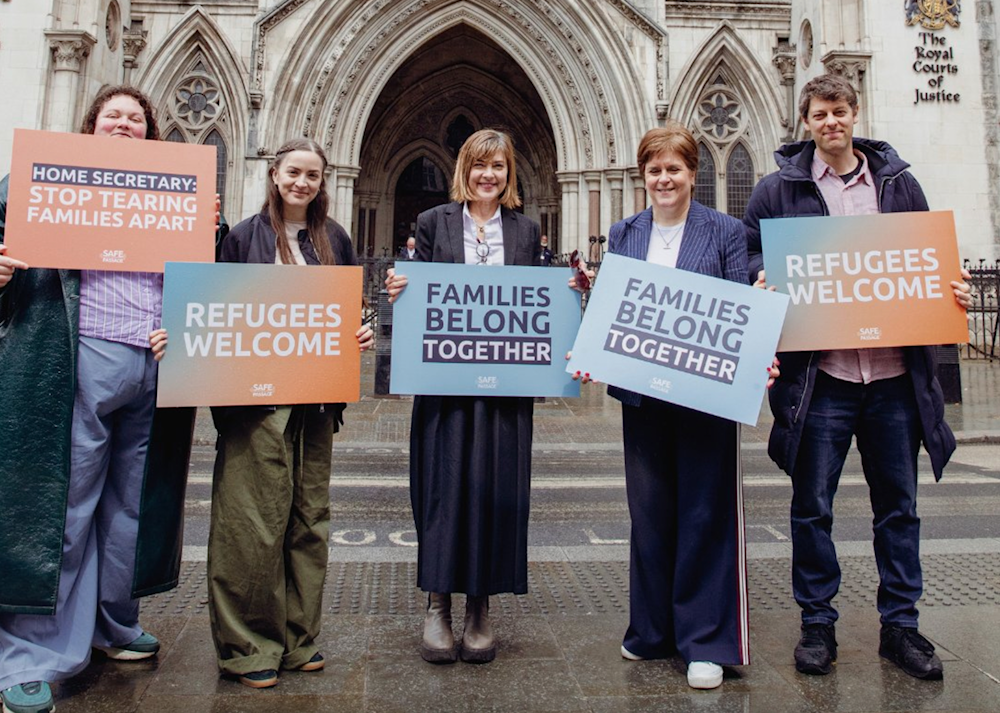
Campaigners and refugee advocates gather outside the Royal Courts of Justice in London during a legal challenge against the UK government’s suspension of refugee family reunification policies (Photo posted by Safe Passage via X)
Britain’s suspension of refugee family reunification could leave hundreds of children separated from relatives already residing in the United Kingdom each month, The Guardian reported, citing an analysis by the British Red Cross.
The charity said its analysis of previous Home Office family reunion approvals suggests that between 550 and 1,360 children could remain divided from their families for every month the suspension remains in place. Among them, an estimated 180 to 430 are unaccompanied minors.
Legal challenge intensifies
The figures were published shortly after a legal challenge against the policy was heard before the High Court last week. The case was brought by refugees alongside the advocacy group Safe Passage, arguing that the freeze has stranded relatives in dangerous conditions abroad.
BREAKING: We are in court challenging the Government over the suspension of Refugee Family Reunion.
— Safe Passage International🧡 (@safepassageint) May 14, 2026
Right now, inside the Royal Courts of Justice, the Government is defending a decision that has left child refugees separated from their moms or dads. pic.twitter.com/M7h54Vw0dC
Court proceedings revealed that former Home Secretary Yvette Cooper had sought tougher refugee measures last year as part of broader efforts to curb Channel crossings by asylum seekers arriving in small boats.
According to documents presented during the hearings, ministers searched for evidence to support claims that refugee family arrivals were placing excessive strain on local authorities. Internal assessments, however, reportedly warned that the proposed measures could instead “encourage small boat journeys”.
In written submissions, the Home Office defended the policy by arguing that rising numbers of refugee family arrivals were placing growing pressure on limited local authority resources.
“The suspension was therefore an entirely reasonable and rational response to the ongoing impact on public resources,” the submission stated.
Lawyers representing two of the refugees challenging the suspension criticized the decision-making process behind the measure. Barrister Raza Husain KC described the move as “chaotic” and “rushed”.
Warnings over humanitarian risks
The British Red Cross said it has been contacted by 1,160 separated families since the suspension took effect. Many involve women and children stranded in conflict zones or unstable regions, including Afghanistan, Sudan, Yemen, and Eritrea.
The organization noted that applicants were given only four days’ notice before the suspension began, prompting last-minute attempts by families to submit requests before the deadline.
Aid groups warn that relatives left behind remain exposed to persecution, violence, and humanitarian crises, with women and girls facing heightened risks of gender-based violence.
Mubeen Bhutta, the director of policy and advocacy for the British Red Cross, said, “It is vital to recognize the traumatic circumstances that force refugee families apart. Many flee war, persecution and violence, with no money or means of contacting their loved ones. People we support tell us they cannot begin to rebuild their lives until their children and family members are safely reunited with them."
“Family reunion is one of the only safe ways for many children to be reunited with their parents, without having to take dangerous journeys. Without it, they can be trapped in unimaginable situations, alone. We urge the government to reinstate the scheme as soon as possible and ensure any new requirements are fair, achievable and compassionate.”
Government defends suspension
A spokesperson for the Home Office defended the government’s broader asylum reforms, stating, “Under this government’s reforms to create a fairer asylum system, family reunion will no longer be automatic. Those seeking to bring family members to the UK will need to meet stricter criteria going forward."
“Other routes will be available for eligible individuals to apply to reunite with family.”
Read more: ICE arrest of US citizen exposes violent DHS tactics: The Guardian


