
Weaponizing hunger in wars: Over 20,000 attacks target food since 2018
 4 Min Read
More than 20,000 incidents targeting markets, farmland, and aid systems have been documented since 2018, according to a new war data analysis.
-
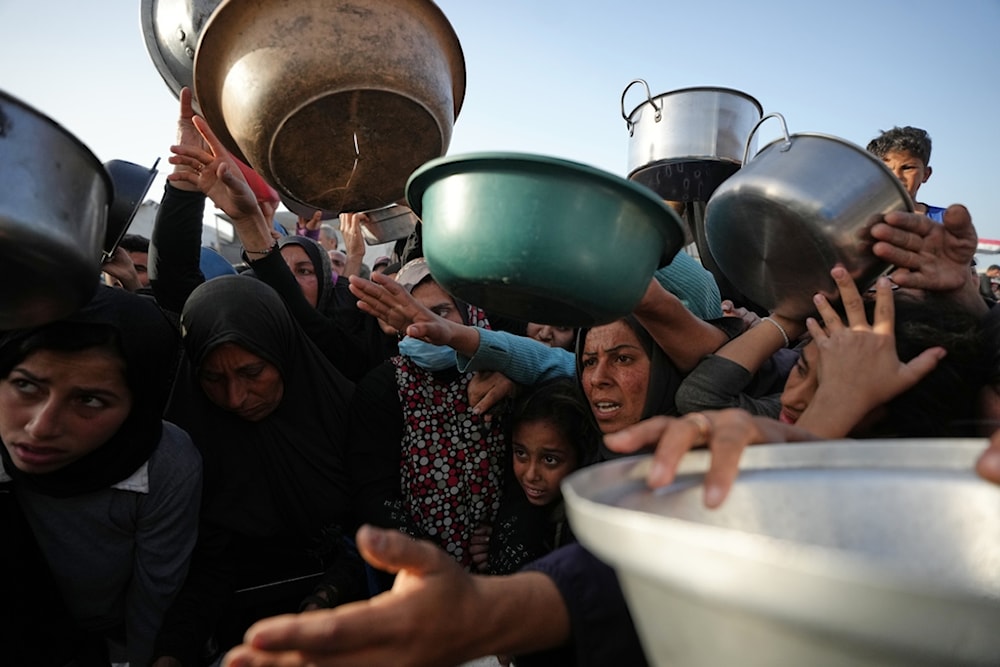
Displaced Palestinians struggle to receive donated food for iftar, the fast-breaking meal, on the first day of the Muslim holy month of Ramadan at a community kitchen in Khan Younis, Gaza Strip, Wednesday, Feb. 18, 2026 (AP)
Hunger is being increasingly used as a weapon of war across multiple war zones, with more than 20,000 documented attacks on food systems, farmland, markets, and aid infrastructure recorded since 2018, The Guardian reported, citing an analysis released ahead of the anniversary of a key UN resolution on starvation in war.
The report, compiled by Insecurity Insight, documented 21,403 incidents of “food-related violence” across 15 countries since the adoption of UN Security Council Resolution 2417, which condemned the deliberate starvation of civilians and obstruction of humanitarian aid during war.
Researchers found that attacks increasingly targeted systems essential for civilian survival, including food markets, agricultural land, water infrastructure, and humanitarian distribution networks.
In South Sudan, @WFP's airdrops are a lifeline for communities cut off by conflict and flooding.
— United Nations (@UN) May 23, 2026
With thousands forced from their homes and facing catastrophic hunger, these food deliveries are critical to saving lives. pic.twitter.com/WRCLjkxGCO
Attacks target markets, farmland, aid systems
According to the analysis, at least 1,261 attacks targeted civilian markets used for daily food supplies, while another 863 incidents struck food distribution systems, including attacks in which aid workers were killed.
Reem Al-Attar, a deaf woman, bids farewell to her niece Sila (13) and her nephew Bara’ (10), who were killed while on their way to fetch food for their family from their home in Jabali, in the northern of the strip. pic.twitter.com/7uRxERubyR
— Eye on Palestine (@EyeonPalestine) June 28, 2025
The report also identified 1,909 military strikes on farmland and 563 attacks on water infrastructure critical for agriculture and food production.
Researchers said the violence has affected food security across more than 42 countries and territories.
The occupied Palestinian territories recorded the highest number of incidents, with 9,013 documented attacks involving food systems since 2018. Yemen followed with 1,863 incidents, while Sudan recorded 1,605 attacks targeting food-related infrastructure and supply chains.
Once again, famine is knocking on the doors of Gaza after the suspension of the charity kitchens supported by the World Kitchen organization, leaving thousands of displaced families in the camps without a meal to ease their hunger.
— Sameh Ahmed 𓂆 🇵🇸 (@PalPress24) May 18, 2026
Children, women, and the elderly are facing… pic.twitter.com/8bz7HGJUd1
One of the latest reported incidents occurred in Sudan’s West Kordofan region, where a drone strike on a crowded market in Ghubaysh reportedly killed 28 people. Witnesses cited in the report said the market appeared to have been deliberately targeted while civilians were present.
Syria also recorded 1,538 incidents, while Mali documented 1,415 attacks amid ongoing instability and war involving armed groups and state forces.
Read more: States issue joint statement on protection of aid workers in Lebanon
Civilians attacked while seeking food
The report points to a “marked increase” in attacks on food infrastructure and civilians attempting to access aid.
Researchers found that more than 10,300 people were killed or injured between October 2023 and the end of 2025 while trying to obtain humanitarian assistance.
Giulia Contò said many cases of war-driven hunger remain largely overlooked despite worsening conditions.
“Famine in Gaza and Sudan has captured global headlines over the past two years, but most conflict-induced hunger never does,” she said.
“It unfolds daily, with relentless attacks on the systems communities depend on to survive: livestock looted, markets bombed, aid convoys blocked.”
The families of the two Palestinian truck drivers mourn their loss after they were killed by Israeli occupation forces while transporting humanitarian aid from the Karm Abu Salem crossing. pic.twitter.com/AOaNHl11cg
— Quds News Network (@QudsNen) May 21, 2026
In the current ongoing Israeli war on Lebanon, vehicles transporting humanitarian aid meant for the displaced and people in need were purposely being targeted by Israeli airstrikes. "Israel" has also repeatedly attacked paramedics and rescue workers in blatant aggression on the health sector, the death toll from these attacks going over a hundred.
#WATCH | Footage shows the aftermath of an Israeli aggression on civilian vehicles in the Saadiyat and Jiyyeh areas, Chouf District, #Lebanon, on Wednesday morning.
— Al Mayadeen English (@MayadeenEnglish) April 15, 2026
The vehicle targeted in the Saadiyat area was carrying humanitarian aid, as footage and pictures from the scene… pic.twitter.com/76hEBCbZnS
Read more: IOF intercept 41 Gaza-bound Sumud flotilla vessels, abduct dozens
Calls grow for enforcement of UN resolution
Christina Wille urged governments to enforce UN Resolution 2417 more effectively, arguing that states have failed to act against violations despite formally condemning starvation tactics.
“It is not that Resolution 2417 has failed, but that member states have failed to implement it,” Wille said.
The report also highlighted the disproportionate impact on women, noting that many are forced to travel longer distances for food, face greater security risks, and reduce their own food intake to support family members.
Researchers warned that children are among the most severely affected, with prolonged malnutrition threatening long-term physical and cognitive development.
According to recent UN assessments, war remains the leading driver of severe hunger globally, accounting for more than half of all acute food insecurity cases worldwide.
Gaza’s Children and Hunger pic.twitter.com/7JctXWNCC6
— TIMES OF GAZA (@Timesofgaza) May 23, 2026


