
States issue joint statement on protection of aid workers in Lebanon
 4 Min Read
Australia, Canada, the UK and others issue a joint statement expressing concern over Lebanon’s worsening humanitarian crisis, calling for a ceasefire and protection of aid workers.
-
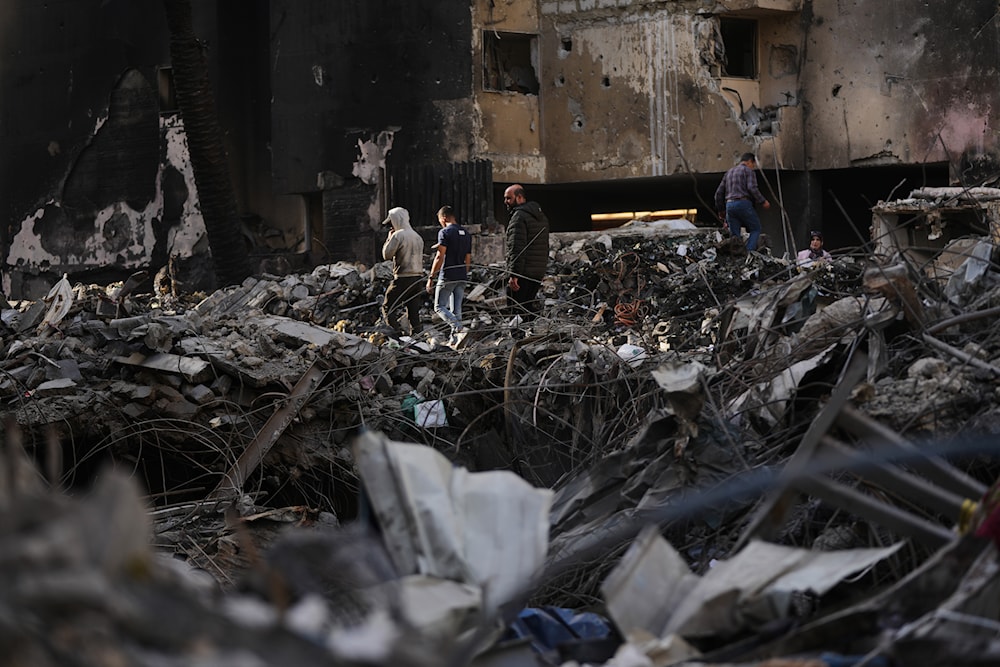
Residents walk through debris at the site of a building destroyed in an Israeli airstrike last Wednesday in central Beirut, Lebanon, on April 14, 2026. (AP Photo/Hassan Ammar)
Canada, Australia, Brazil, Colombia, Indonesia, Japan, Jordan, Sierra Leone, Switzerland, and the United Kingdom issued a joint statement on Wednesday addressing the worsening humanitarian situation in Lebanon and the growing risks faced by humanitarian personnel.
The countries expressed deep concern over the displacement crisis and the impact of ongoing hostilities on civilians and aid operations.
The signatory states warned of the deteriorating humanitarian conditions in Lebanon, highlighting the increasing displacement of civilians and the strain on essential services and relief efforts. They emphasized the urgent need for coordinated international action to address the crisis, resulting from the war, and ensure humanitarian access to affected populations.
The joint statement welcomed efforts for a ceasefire agreement and called for an immediate end to hostilities in Lebanon. The countries stressed that sustained violence continues to worsen the humanitarian situation and undermines stability in the region.
Full text of the joint statement:
Australia, Brazil, Canada, Colombia, Indonesia, Japan, Jordan, Sierra Leone, Switzerland, and the United Kingdom remain deeply concerned by the worsening humanitarian situation and displacement crisis in Lebanon.
We welcome the ceasefire agreed between the United States, Israel, and Iran. We call for an urgent end to hostilities in Lebanon.
Civilians and civilian infrastructure must be protected from the effects of hostilities.
Humanitarian personnel, who dedicate themselves to protecting and assisting the most vulnerable, must be respected and protected.
Attacks that threaten the safety and security of humanitarian personnel must stop. International humanitarian law must be upheld by all parties to the conflict in all circumstances.
Respect for international humanitarian law is essential to preserving human dignity, mitigating civilian harm, and maintaining the space needed for humanitarian action and access.
We condemn in the strongest terms actions that have killed UN peacekeepers and significantly increased the risks faced by humanitarian personnel in southern Lebanon.
Meaningful accountability and justice are critical for violations of international law that harm humanitarian personnel or impede their activities.
In September 2025, over 100 nations launched a Declaration for the Protection of Humanitarian Personnel, committing to protect aid workers in conflict zones.
We will continue working together to ensure that those who work to save the lives of others do not have to sacrifice their own.
Protection of civilians and humanitarian personnel
The statement underscores the obligation to protect civilians and civilian infrastructure from the war. It also highlights the critical role of humanitarian workers, stressing that they must be safeguarded while carrying out life-saving operations in conflict zones.
The countries reaffirmed that international humanitarian law must be respected by all parties at all times.
They noted that adherence to these legal frameworks is essential for preserving human dignity, reducing civilian harm, and ensuring safe humanitarian access.
Accountability for attacks on humanitarian workers
The statement strongly condemned attacks that have resulted in the killing of UN peacekeepers and increased risks for humanitarian personnel in southern Lebanon. It called for meaningful accountability and justice for violations of international law that harm aid workers or obstruct their operations.
The signatories referenced the September 2025 Declaration for the Protection of Humanitarian Personnel, which was endorsed by over 100 countries.
They reaffirmed their commitment to continued international cooperation to ensure that humanitarian workers can carry out their duties safely, without becoming victims of the crises they are trying to address.
UN peacekeeper killed, another injured in South Lebanon strike
Late last month, a UN peacekeeper was killed and another critically injured after an Israeli projectile struck a UNIFIL position in southern Lebanon on March 29 at night, the United Nations mission confirmed on March 30.
The explosion occurred near Adchit al-Qusayr in the Marjayoun district, targeting the headquarters of the Indonesian contingent serving with UNIFIL, according to Lebanon’s National News Agency (NNA).
This incident marks a serious escalation in Israeli artillery attacks on South Lebanon, highlighting the dangers faced by peacekeepers in the region.
Comparatively, findings from a United Nations inquiry suggest that Israeli tank fire struck a UN peacekeeping position in southern Lebanon, wounding Ghanaian soldiers. The incident took place on March 6 and targeted a UNIFIL position.
The findings highlighted the increasing risks faced by UN peacekeepers as Israeli military operations in southern Lebanon continue to escalate.
According to Reuters, preliminary conclusions from the UNIFIL-led inquiry indicate that three shells struck the al-Qawzah base directly.
The rounds were identified as 120-mm M339 HE-MP-T shells fired from an Israeli battle tank. The strikes occurred within a five-minute window, suggesting repeated fire rather than a single accidental round. “Israeli involvement in the attack against UNIFIL is undeniable, given that these munitions are manufactured by "Israel" Military Industries (IMI),” the source told Reuters.
UN peacekeepers operating in southern Lebanon have been facing a sharp increase in “aggressive behavior” from Israeli forces over the past year, including incidents involving grenades dropped by drones and machine-gun fire.
The United Nations mission emphasized that deliberate attacks on peacekeepers constitute “grave violations of international humanitarian law and of Security Council Resolution 1701” and may amount to war crimes.


