
'Israel' greenlights new jet squadrons citing lessons from war on Iran
 3 Min Read
"Israel" has approved the purchase of two new fighter jet squadrons, as part of a broader multi-billion-dollar military expansion plan.
-
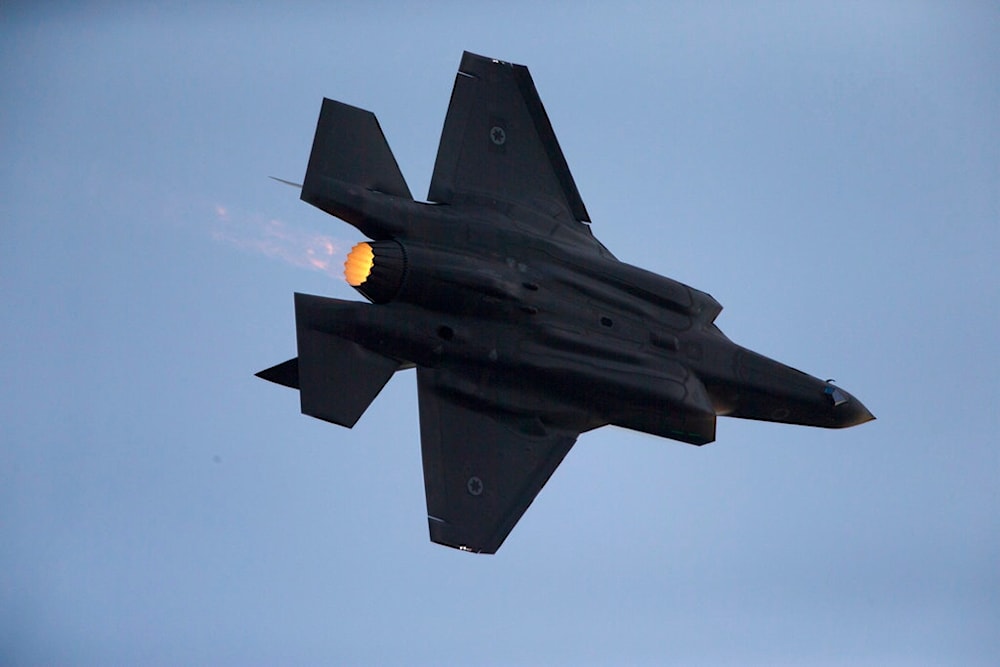
In this Dec. 29, 2016, file photo, an Israeli Air Force F-35 plane performs during a graduation ceremony for new pilots in the Hatzerim Air Force Base near Beer al-Sabe', occupied Palestine (AP)
"Israel" has approved plans to buy two additional fighter jet squadrons, a move officials say is driven by insights gained during the ongoing war on Iran, CNN reported.
According to Israeli Minister of War Israel Katz, the new units will include advanced F-35 and F-15IA aircraft, produced by Lockheed Martin and Boeing. The procurement, expected to cost billions of dollars, has been approved by the Ministerial Procurement Committee.
“The operational lessons from the campaign against Iran require us to accelerate force buildup,” Katz said. “Our mission is clear: to stay ahead of our enemies.”
He described the decision as an initial phase in a broader military expansion program valued at 350 billion shekels (approximately $118.9 billion), aimed at strengthening "Israel’s" capabilities over what he called an “intensive security decade.”
War buildup
The program represents one of the most extensive military expansion efforts in "Israel’s" history, designed to restructure its warfighting capacity across air, land, sea, cyber, and space domains over the coming decade. Beyond fighter jet acquisitions, it includes a major push toward domestic weapons production, with officials seeking to expand local manufacturing of munitions and reduce immediate dependence on foreign supply chains while maintaining deep industrial ties with the United States.
It also prioritizes next-generation capabilities, including autonomous systems, advanced missile and air defense platforms, and laser-based interception technologies, reflecting a shift toward high-intensity, technology-driven warfare. The emphasis on these systems comes amid continued US-Israeli aggressions across the region, which have involved sustained attacks on multiple countries and contributed to escalating violence in West Asia.
US arms surge
The expansion coincides with a surge in US arms transfers across the region. On May 2, the United States authorized more than $8.6 billion in weapons sales to "Israel" and several Gulf states, bypassing congressional review under an emergency determination invoked by Marco Rubio. The package included nearly $1 billion in precision-guided rocket systems for "Israel", alongside major air defense and command system deals involving BAE Systems, RTX, Lockheed Martin, and Northrop Grumman.
The move reflects mounting pressure on US stockpiles as the war on Iran continues to drain munitions reserves, with Washington redirecting weapons from other regions and warning allies of delays in future deliveries. Analysts note that the acceleration of arms transfers, combined with "Israel’s" multi-billion-dollar buildup, points to a coordinated expansion of military capacity across West Asia, sustaining ongoing offensives while preparing for prolonged confrontation.
Despite discussions in Washington about gradually reducing direct military aid in the coming decade, the expansion underscores continued structural integration between the two countries, as "Israel’s" airpower remains heavily reliant on US-produced platforms and joint development programs.
Read more: US sends 6,500 tons of weapons to 'Israel' amid war on Iran, Lebanon


