
'Israel' marginalized as US dictates ceasefire with Iran: Economist
 3 Min Read
The Israeli occupation is sidelined as Trump negotiates a ceasefire with Iran, leaving Netanyahu exposed.
-
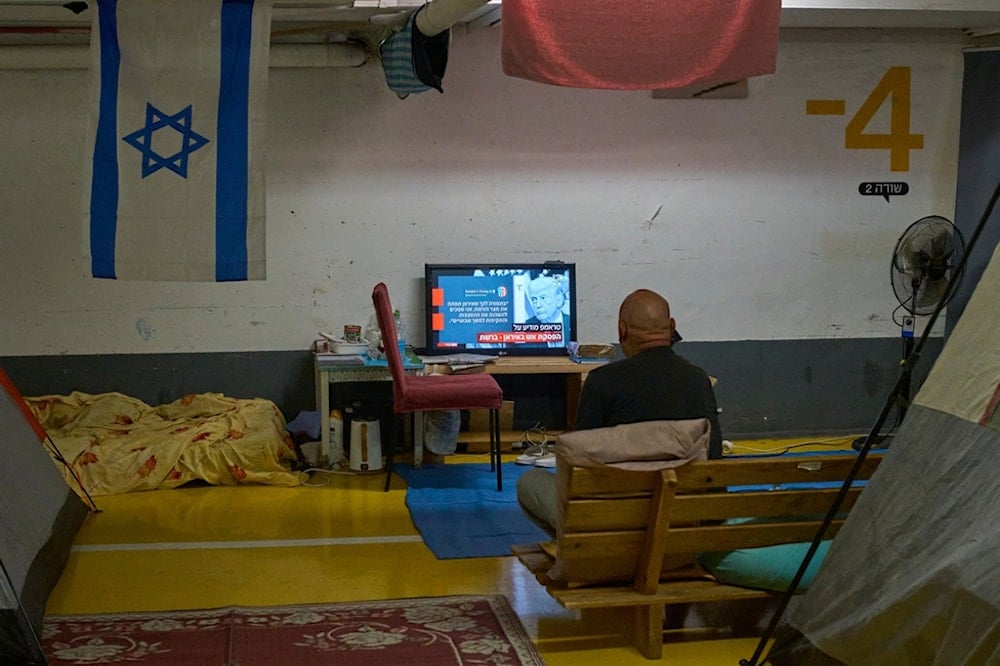
A man sits inside a shelter watching television news after a two-week ceasefire with Iran was announced, in Tel Aviv, 'Israel', on April 8, 2026. (AP)
Even after US President Donald Trump announced a temporary ceasefire with Iran, Iranian missiles continued to be launched within an hour, a stark reminder that "Israel’s" objectives in the war remain largely unfulfilled after forty days of intense aggression, according to a report by The Economist on Wednesday.
According to the report, Israeli claims of neutralizing Iran’s ballistic missile capabilities were exaggerated. While Netanyahu promised to destroy most of Iran’s missile launch platforms, independent assessments suggest only about half were affected, many easily reactivated. This underscores the futility of "Israel’s" reliance on the US.
According to classified US intelligence reports cited by the New York Times, Iranian military personnel rapidly clear debris from underground missile shelters hit by bombs and return them to operational status. Tehran also maintains large stockpiles of missiles and mobile launch platforms.
While the Pentagon and White House claimed tangible progress, citing over 11,000 Iranian targets hit during the five weeks of the war, US officials stressed that Iran still possesses an effective operational capacity to launch missile strikes toward the occupied Palestinian territories and regional states.
Despite the continuous bombardment of nuclear research sites, Iran retains more than 400 kilograms of enriched uranium underground. Netanyahu’s goal of "regime change" has receded further, while the US maneuvers behind the scenes to secure its own interests, leaving "Israel" sidelined.
Trump negotiates directly with Iran, sidelines 'Israel'
The ceasefire was negotiated through Pakistan, excluding "Israel." Even as the Israeli Air Force prepared strikes on Iran’s energy infrastructure, the US halted its aggression, indicating that "Israel’s" partnership with Washington is merely subordinate compliance.
"Israel," once the US' key regional partner, risks becoming a scapegoat. Leaks indicate some US officials may even distance themselves from Netanyahu, aware of "Israel’s" growing unpopularity in Washington.
"Israel" faces a harsh reality: its security and military ambitions are at the mercy of American calculations. The ceasefire exposes "Israel’s" true role, not a strategic partner, but an entity constrained and controlled by US interests.
Netanyahu weakened as war on Iran falls short amid truce: The Guardian
The Guardian’s international correspondent, Peter Beaumont, wrote that Israeli Prime Minister Benjamin Netanyahu appears politically weakened as the ceasefire is declared.
The analysis argues that Netanyahu had long pushed for aggression on Iran, using a combination of public threats, diplomatic pressure on Washington, and sustained messaging portraying Tehran as an existential threat. Yet expectations of a swift and decisive campaign have not materialized, as the war has extended beyond initial projections without delivering key strategic outcomes.
According to the report, assumptions that the war would trigger internal collapse in Iran proved unfounded. Intelligence assessments that dismissed Israeli claims of imminent regime change as unrealistic appear to have been validated, while early projections that the fighting would conclude within days or weeks failed to materialize.
The analysis also points to growing strains between "Israel" and the United States toward the later stages of the escalation. Despite Netanyahu’s reported attempts to dissuade Trump from endorsing a ceasefire, Washington ultimately opted for de-escalation, with some accounts suggesting "Israel" was not central to the final decision-making process.


