
'Israel' officially recognizes Somaliland as sovereign state
 4 Min Read
The Israeli regime announces formal recognition of the Republic of Somaliland, signing a joint declaration and pledging expanded cooperation across key sectors.
-
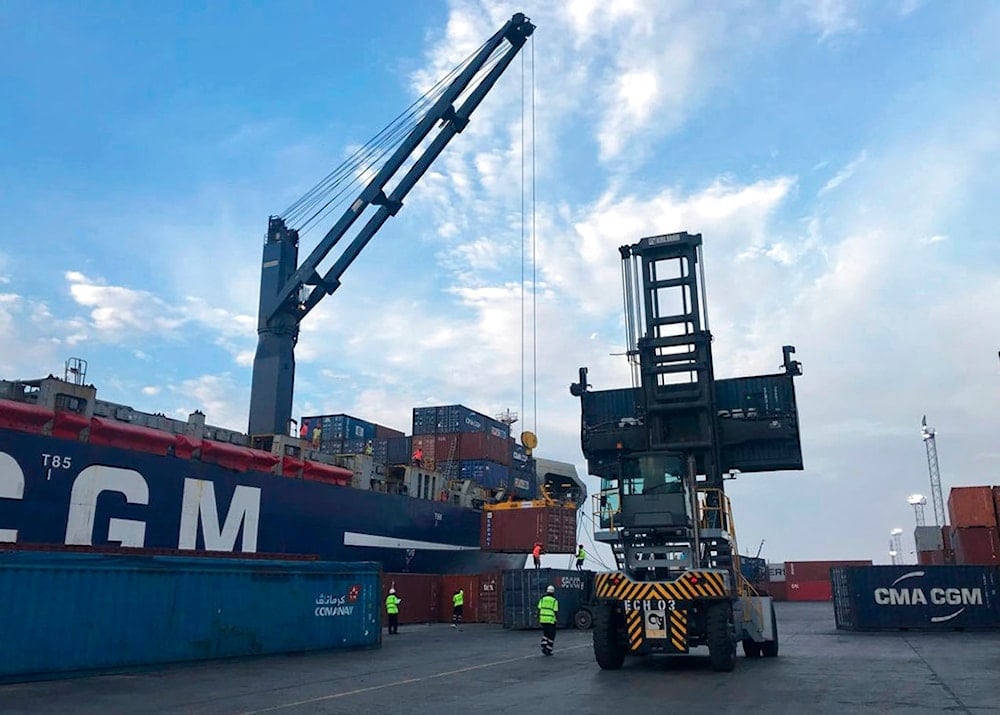
In this Sunday, April 1, 2018 photo, containers are loaded onto a cargo ship at the Port of Berbera, run by DP World, which is majority-owned by the Dubai government in the UAE, in Berbera, Somaliland, Somalia (AP Photo/Malak Harb)
“Israel” has officially recognized the Republic of Somaliland as an independent and sovereign state, following the signing of a joint declaration between Prime Minister Benjamin Netanyahu, Foreign Minister Gideon Sa'ar, and Somaliland President Abdirahman Mohamed Abdallah.
The announcement was made by the Prime Minister’s Office, which said the declaration reflects the spirit of the regional normalization agreements, also known as the Abraham Accords, signed at the initiative of US President Donald Trump. Netanyahu congratulated the Somaliland president on what he described as a "historic step," praising his leadership and "commitment to stability and peace."
Netanyahu also invited President Abdallah to pay an official visit to occupied Palestine. In response, the Somaliland leader thanked the prime minister for the recognition and expressed appreciation for what he described as Netanyahu’s efforts in "promoting regional peace" as he carries out a genocide in Gaza.
The statement said Netanyahu extended his thanks to Foreign Minister Sa’ar, as well as to Mossad chief David Barnea and the agency’s leadership for their role in advancing the agreement.
According to the announcement, the Israeli occupation plans to immediately expand relations with Somaliland through broad cooperation in agriculture, health, technology, and economic development, as part of a wider push to deepen ties following the formal recognition.
Israeli ambitions in Horn of Africa
Somaliland hosts a major Emirati military presence at Berbera, developed by the UAE as part of its broader regional footprint stretching from the Horn of Africa to the southern Red Sea. The base has played a central role in Abu Dhabi’s efforts to project power across maritime chokepoints and to support operations linked to Yemen, including attempts to restrict the operational depth of Ansar Allah and limit Saudi Arabia’s exposure along critical shipping lanes, which greatly benefits the Israeli occupation.
US military planners have also long viewed Somaliland as a strategic fallback and logistics hub near the Bab al-Mandab strait, especially to protect their interests as Ansar Allah grows. Israeli security officials, meanwhile, have reportedly sought access and intelligence cooperation in the area as part of a wider push to monitor Red Sea traffic and resistance-aligned movements operating across Yemen and the Horn of Africa.
The recognition of Somaliland aligns with this emerging security architecture, effectively granting political cover to an already entrenched military and intelligence reality. By formalizing relations, the Israeli regime positions itself alongside Washington and Abu Dhabi in shaping Red Sea security arrangements that aim to control maritime routes, constrain Ansar Allah’s reach, and reinforce a regional bloc extending from occupied Palestine to East Africa.
The declaration also echoes the logic of the "Abraham Accords," backed by Trump, which linked diplomatic normalization with deeper security and intelligence integration. In this context, Somaliland’s recognition is less than an isolated diplomatic gesture and more as a strategic consolidation of overlapping US, Israeli, and Emirati interests at a critical geopolitical crossroads.
Strategic value in a volatile region
Somaliland, a self-declared independent state that broke away from Somalia in 1991, has been offering the United States access to a strategic military base near the Red Sea and deals on critical minerals in exchange for official recognition.
Recognizing Somaliland could boost US strategic positioning in a vital region, particularly as Yemen's Ansar Allah continues to target international shipping linked to the US, "Israel", and other Gaza war allies. The United Arab Emirates, a key US partner, already operates a port and military airstrip in Berbera, Somaliland.
However, any move toward recognition would complicate US security cooperation with Somalia, where American forces have long supported counterterrorism efforts against Islamic State and al-Qaeda affiliates. US Africa Command’s deputy commander, John Brennan, emphasized Monday that combating extremist groups remains the military’s primary focus in East Africa, “the biggest investment that we have.”
While US Ambassador Richard Riley and other officials have met with Somaliland leaders to discuss mutual interests in the Horn of Africa, the State Department clarified that Washington is not engaged in formal talks about recognizing Somaliland, emphasizing the US supports Somalia's "territorial integrity, which includes Somaliland."


