
'Not blind obedience': Germany rejects Trump's NATO loyalty demand
 3 Min Read
Washington's proposal to reward higher defense spending has fueled concerns among European allies about the future direction of the NATO alliance.
-
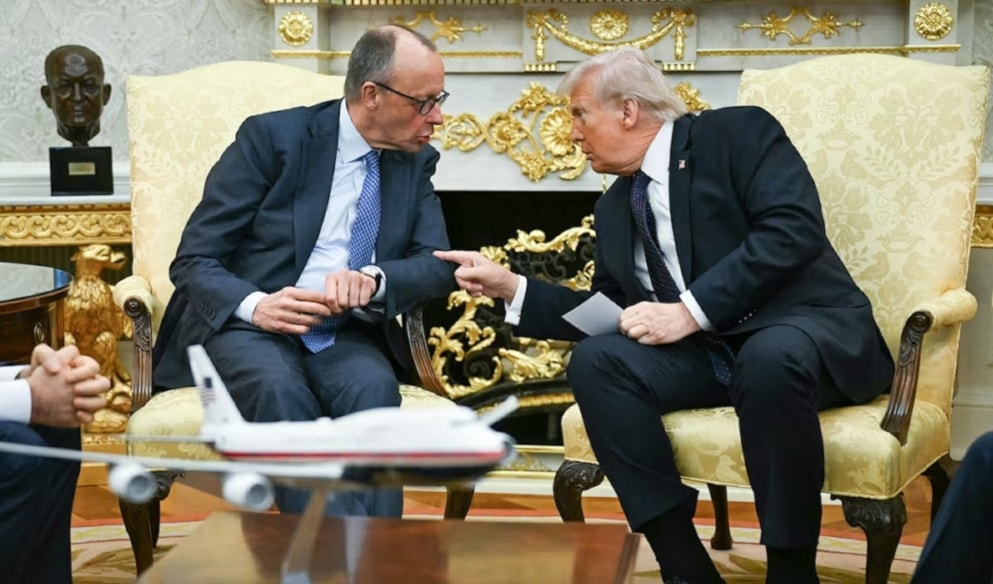
US President Donald Trump meets with German Chancellor Friedrich Merz in the Oval Office of the White House in Washington on Tuesday, March 3, 2026. (AFP)
German Defense Minister Boris Pistorius rejected calls by US President Donald Trump for European NATO allies to demonstrate unconditional loyalty to Washington.
“NATO is not about blind obedience,” Pistorius told Der Spiegel magazine in an interview published Thursday. “Decisions within NATO are taken by free consensus of all member states, and without being dictated by individual member states.”
Pistorius said he did not anticipate additional US criticism of Germany during next week's NATO summit in Turkey, following tensions between German Chancellor Friedrich Merz and Trump over Washington's approach to the war on Iran.
US proposal raises concerns over a divided alliance
The United States has proposed offering political and economic incentives to NATO members that increase their defense spending, fueling the possibility of a two-tier alliance.
The proposal reflects continuing strains within the North Atlantic Treaty Organization as Trump presses European allies to shoulder a larger share of the alliance's defense costs.
While European leaders have generally responded positively, they remain concerned that Trump could scale back US security commitments across the continent.
US troop reductions unsettle European allies
In recent months, Washington has unsettled its allies with changing plans regarding the withdrawal of troops and military resources from Europe.
The Pentagon announced last May the withdrawal of approximately 5,000 US troops from Germany over the next six to twelve months, in yet another flashpoint between Washington and its European allies over the war on Iran.
At the time, Pentagon spokesperson Sean Parnell confirmed the decision, describing it as the outcome of a "thorough review" of US force posture in Europe, citing "theater requirements and conditions on the ground."
The withdrawal order, signed by War Secretary Pete Hegseth, follows a public falling-out between Trump and Merz.
At the same time, the German chancellor sparked Washington's ire when he said Iran was "humiliating" the United States at the negotiating table, comments that infuriated Trump, who responded by accusing the German leader of believing Iran should be allowed to develop nuclear weapons.
The withdrawal announcement is part of a broader pattern of Trump leveraging US military presence to pressure European allies who have distanced themselves from the war on Iran or declined to contribute to a deployment in the Strait of Hormuz.
The withdrawal threat lands at a moment of heightened European unease. With the war in Ukraine now in its fourth year and US security guarantees increasingly uncertain, European capitals have accelerated defense spending and deepened military coordination.


