
Trump slams Merz over Iran stance as transatlantic rift grows
 2 Min Read
Tensions rise as Trump attacks Germany’s chancellor over Iran remarks, exposing deeper divisions on war, nuclear policy, and Western alliances.
-
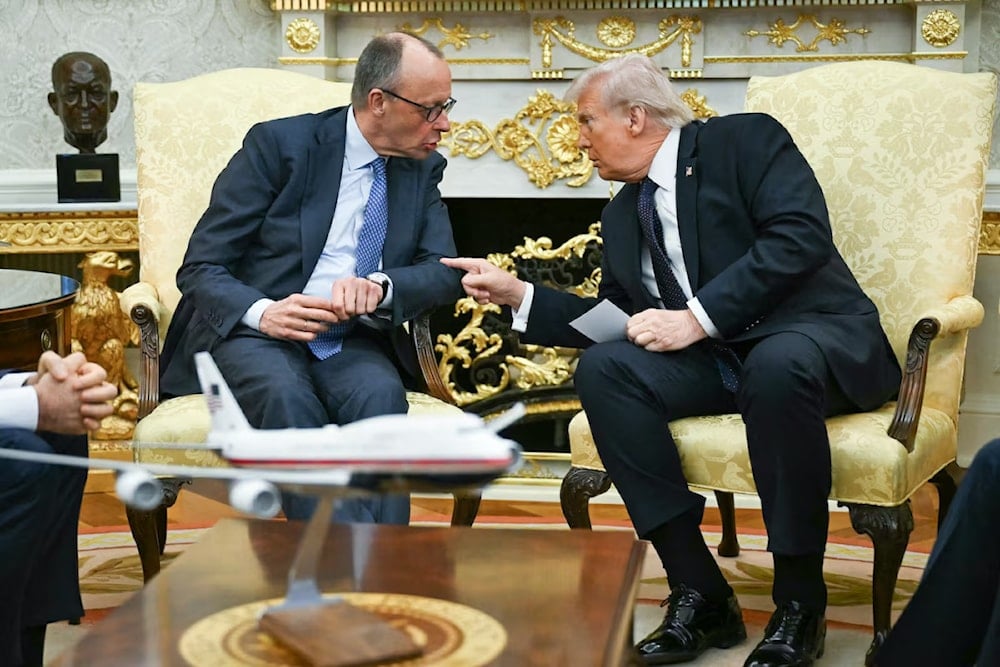
US President Donald Trump meets with German Chancellor Friedrich Merz in the Oval Office of the White House in Washington on Tuesday, March 3, 2026. (ANDREW CABALLERO-REYNOLDS/AFP)
US President Donald Trump sharply criticized German Chancellor Friedrich Merz over his position on Iran, in remarks that highlight growing tensions between Washington and its European allies.
Writing on Truth Social, Trump said: “The Chancellor of Germany, Friedrich Merz, thinks it's OK for Iran to have a Nuclear Weapon. He doesn't know what he's talking about!”
He further claimed that his administration is addressing issues related to Iran that previous leaders and governments had failed to confront.
“No wonder Germany is doing so poorly, both Economically, and otherwise!” Trump added.
Merz warns against prolonged war
Merz had earlier stated that Western countries underestimated Iran, arguing that it has demonstrated greater resilience and capability than expected.
He warned that the United States risks becoming entangled in a prolonged conflict, while also noting that Iran has shown greater effectiveness in negotiations compared to Washington.
His remarks reflect broader concerns within Europe about the trajectory of the confrontation and its long-term consequences.
Read more: US, Iran are not far apart in talks to end war: CNN
Deepening transatlantic divisions
The exchange underscores widening divisions between the United States and its European allies over the lack of EU allyship in the war on Iran and the broader regional escalation.
Differences have emerged over military involvement, diplomatic strategy, and risk assessment, with several European governments expressing reluctance to deepen direct engagement in the conflict.
These tensions point to a growing divergence within Western alliances, particularly regarding the balance between military pressure and political negotiation.
Trump renews pressure on allies
Earlier this month, Trump signaled he was considering withdrawing the United States from NATO after allies declined to join the US-Israeli war on Iran.
He also criticized European states for refusing to deploy naval forces to the Strait of Hormuz, stating that he no longer viewed Europe as a reliable defense partner.
The remarks reflect an ongoing effort by Washington to pressure allies into greater military alignment, even as resistance within Europe continues.
Read more: Pentagon internal email outlines US options to punish NATO allies


