
Al Mayadeen's Mohammad Faraj released from Jordanian custody
 4 Min Read
The Jordanian authorities have released our fellow journalist Mohammad Faraj after he was held for more than twenty days with no charges.
-
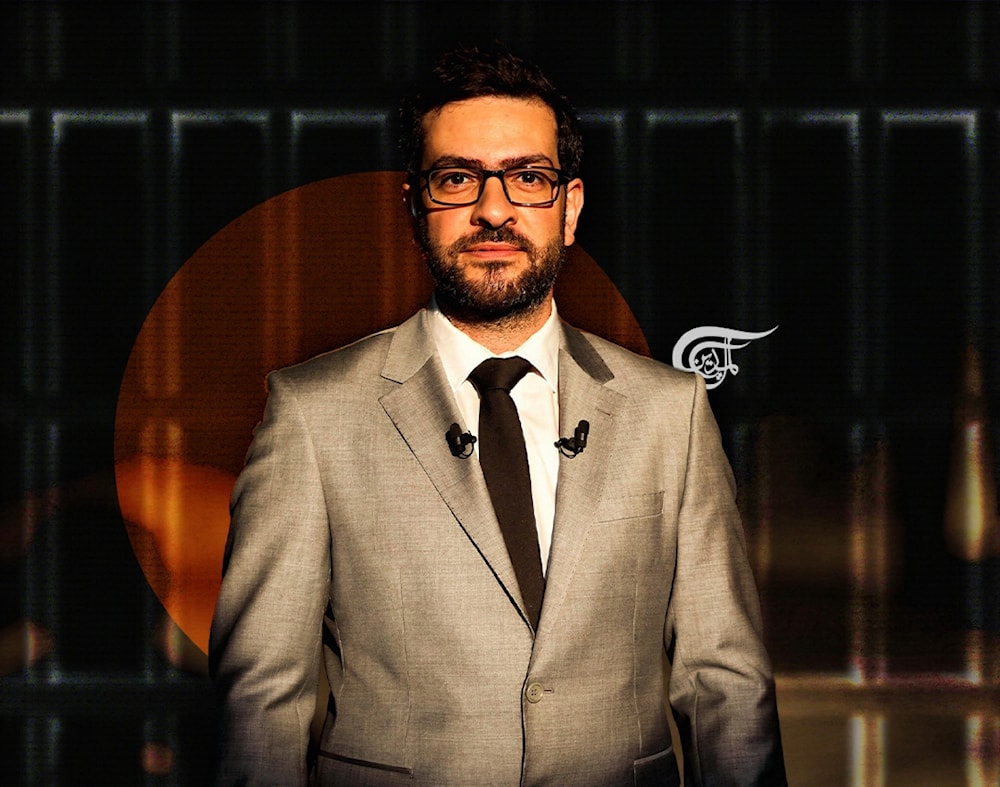
Al Mayadeen journalist Mohammad Faraj (Al Mayadeen)
Al Mayadeen journalist Mohammad Faraj was released by Jordan after 21 days in captivity without any charges or explanation as to why he was being held.
The network has welcomed the release of colleague Faraj, congratulating him on his freedom and praising his resilience, steadfastness, and courage.
In a statement issued on Wednesday, it also congratulated Faraj’s family, including his wife, saluting their patience, composure, and perseverance throughout the period of his detention.
It expressed its deepest appreciation to journalists, writers, politicians, and Arab and international activists who demonstrated solidarity with Faraj and supported calls for his release and thanked Arab and international press unions and organizations that took part in advocacy efforts demanding his freedom.
Al Mayadeen paid special tribute to the General Federation of Arab Journalists and its president, Mouayad al-Lami, citing their effective and sustained efforts in contributing to the journalist’s release.
The statement further commended official and media bodies in Jordan for their positive interaction and for pushing toward the wise decision of releasing Faraj.
Al Mayadeen reaffirmed its intention to continue pursuing a positive, professional, balanced, and fair editorial approach in its media engagement with Jordan, its leadership, and its people. The network also stressed that public and media freedoms are a sacred right for Arab citizens and journalists, underscoring that it will continue to support and defend the principle of freedom wherever it may be.
Detention without charges
Faraj's family issued a statement on Friday expressing serious concern over his health condition following his detainment, while urging the relevant authorities to immediately clarify his legal status and ensure his safety.
According to the statement, Faraj’s family was able to see him on Thursday for the first time since his detention on December 12. They said he appeared to be in poor mental and physical health, raising “legitimate concerns” about his well-being.
The family noted that Faraj’s case has drawn wide public attention, acknowledging the large number of supporters following developments surrounding his detention.
Supporting resistance not criminal offense
The statement stressed that since the outset of Faraj’s detention, the family has sought to address the matter calmly and with restraint, out of respect for Jordanian state institutions. This approach, they said, was rooted in part on assurances received through multiple contacts that his conditions of detention were acceptable.
However, the family revealed that Faraj was unaware of where he was being held and had not been informed of any official charges. They added that Faraj had categorically denied committing any act that would warrant his detainment, emphasizing that expressing political positions and supporting resistance to occupation cannot be treated as a criminal offense.
The case received widespread support from human rights advocates, media organizations, and political groups both within Jordan and across the Arab world, highlighting concerns over press freedom.
Calls for Faraj's release
Multiple media advocacy organizations and rights groups have called for Faraj’s immediate release, condemning the lack of official explanation for his arrest or information about his whereabouts. The General Secretariat of the Arab National Congress described his detention as "arbitrary" and urged Jordanian authorities to allow him to reunite with his family, stressing his record of responsible journalism and advocacy for Arab causes.
Domestic political and cultural bodies in Jordan have also criticized the detention. The Jordanian Popular National Front, the Jordanian Communist Party, the Democratic Popular Unity Party, and the Jordanian Writers Association have characterized Faraj’s detention as a clear violation of public freedoms and journalists’ rights, calling for his immediate release and for authorities to disclose the legal basis for his detention.
International press freedom watchdogs have voiced similar concerns. The Committee to Protect Journalists (CPJ) has urged Jordanian authorities to clarify the legal grounds for Faraj’s detention, reveal his location, and grant him access to legal counsel and his family, warning that detaining a journalist without charges or due process raises serious questions about respect for basic legal rights and press freedom.


