
Alberta separation row sparks Brexit comparisons in Canada
 3 Min Read
Alberta Premier Danielle Smith faces criticism after proposing a controversial referendum process on separation from Canada.
-
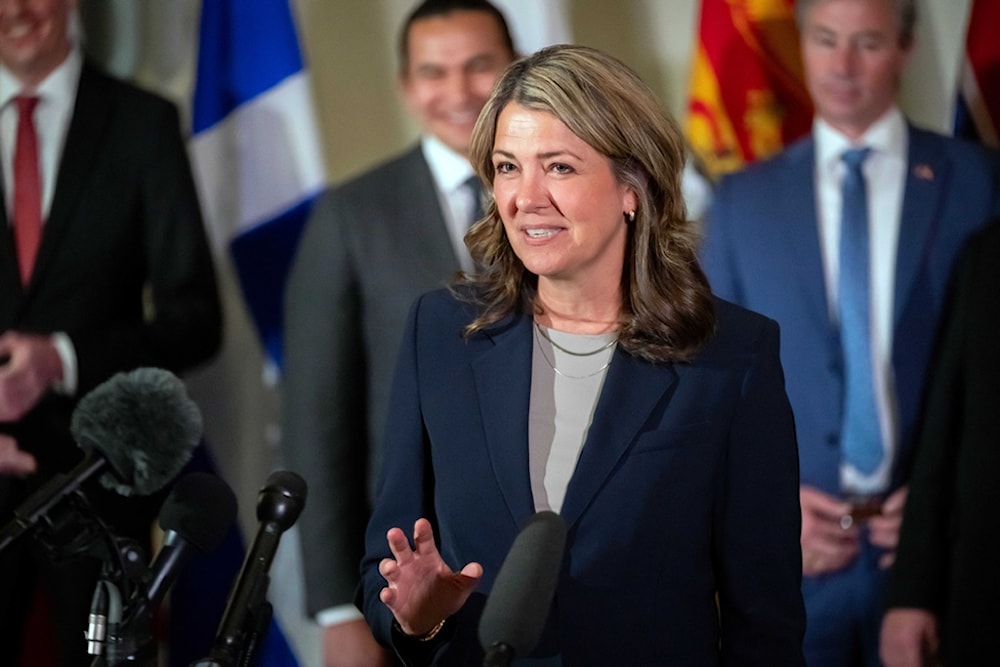
Premier of Alberta Danielle Smith, accompanied by other Council of the Federation members, speaks to reporters at the Mayflower Hotel in Washington, Feb. 12, 2025 (AP, File)
Alberta Premier Danielle Smith is facing mounting criticism after unveiling a controversial referendum proposal on the western Canadian province’s future within Canada, drawing repeated comparisons to Britain’s Brexit vote, The Guardian reported.
The proposed question asks voters whether Alberta should remain a province of Canada or whether the provincial government should begin the constitutional process required to hold a binding referendum on separation. Critics across the political spectrum described the wording as confusing and politically risky.
The initiative comes amid growing pressure from separatist factions inside Smith’s governing United Conservative Party, despite polling that suggests most Albertans do not support secession. Political analysts say Smith is attempting to balance demands from separatists while publicly pledging to campaign against Alberta leaving Canada.
Critics warn of political, economic consequences
Political science professor Duane Bratt said the situation resembles the lead-up to the 2016 Brexit referendum in the United Kingdom, when then-prime minister David Cameron called a referendum while opposing withdrawal from the European Union.
Bratt warned that Alberta’s debate carries even greater consequences because it concerns the potential breakup of a country rather than an exit from a political bloc.
The proposal has also triggered backlash from municipal leaders and federal politicians. Edmonton Mayor Andrew Knack described the move as “catastrophic", while Liberal MP Corey Hogan said Smith’s internal party disputes had escalated into a national crisis.
At the same time, separatist groups criticized the referendum proposal for being non-binding and lacking clarity, accusing Smith of betraying supporters of independence.
Data breach, legal challenges complicate separatist push
The debate intensified after separatist organizers submitted more than 300,000 signatures supporting a referendum on Alberta’s independence. Days later, controversy erupted following reports that a group linked to the campaign had illegally accessed confidential election data, prompting investigations by election officials and police authorities.
The effort suffered another setback after a court ruled the referendum initiative invalid, citing the provincial government’s failure to consult First Nations communities whose treaty rights predate Alberta’s creation.
Sturgeon Lake Cree Nation accused the United Conservative Party of undermining democratic principles and catering to a vocal minority.
Concerns grow over polarization and foreign influence
Political columnist Jen Gerson warned that the province’s increasingly polarized political climate risks deepening divisions within Alberta society.
Supporters of separation argue Alberta would gain greater economic autonomy and control over its natural resources. However, opponents fear prolonged instability and economic uncertainty, particularly amid concerns that the United States could attempt to influence separatist movements in Canada.
Federal Conservative leader Pierre Poilievre said he would campaign actively for Alberta to remain part of Canada if a referendum proceeds.
Analysts also questioned whether separatist leaders have presented a realistic strategy for governance or negotiations in the event of a narrow or contested result.
Read more: Carney calls Alberta ‘essential’ amid separation referendum


