
Analysis: War on Iran may deepen national resistance
 3 Min Read
An analysis argues that the US-Israeli war on Iran could strengthen Iranian nationalism and deepen resistance rather than trigger regime change.
-
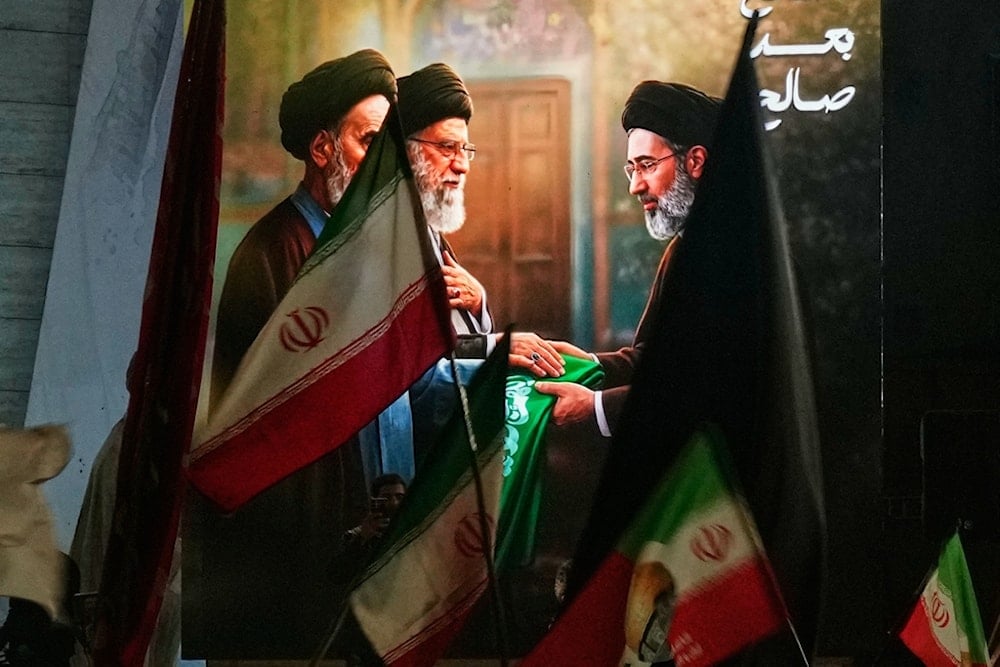
Protesters wave Iranian flags and hold a portrait of the late Iranian Leader Sayyed Ali Khamenei and his son Sayyed Mojtaba Khamenei to support his election as Iran's new Leader in Baghdad, on March 9, 2026. (AP)
The appointment of Sayyed Mojtaba Khamenei as Iran’s leader reflects Tehran’s determination to resist external pressure and continue confronting the United States and “Israel,” according to an analysis by Iranian politics scholar Vali Nasr.
Writing in an opinion article for the New York Times, Nasr argued that the leadership transition signals that Iran is unlikely to yield to calls for government change, despite the ongoing US-Israeli military campaign.
The election of Sayyed Mojtaba, the son of the martyred Leader of the Islamic Revolution Sayyed Ali Khamenei, was interpreted as a move to preserve the Islamic Republic’s core political structure during wartime.
Regime change strategy questioned
Nasr suggested that the Trump administration’s war strategy appears aimed at weakening the Iranian state, with the broader goal of forcing leadership change in Tehran.
US President Donald Trump has previously raised concerns about his goals for regime change.
However, the analysis argues that Iran’s political system has historically proven resilient under external pressure, noting the country’s long experience dealing with war, sanctions, and regional confrontations.
Rather than triggering internal collapse, the war could strengthen national solidarity, Nasr wrote, emphasizing that foreign pressure may shift public sentiment toward defending the nation, pushing many Iranians toward a broader national resistance movement.
Trump under pressure over war timeline
US President Donald Trump is facing growing pressure from some of his advisors to outline a path toward ending the war on Iran, as concerns mount over rising oil prices and the potential political costs of a prolonged war, The Wall Street Journal reported on Tuesday.
Trump has suggested the war could conclude soon, claiming that the operation has already accomplished much of what it set out to achieve. Speaking to reporters in Florida on Monday, he said the United States had progressed rapidly in the war.
Iran’s political structure built to withstand crises
As Nasr explains, Iran’s governance system distributes authority across religious, military, and bureaucratic institutions, allowing the state to function even during periods of intense crisis.
This structure, analysts say, has historically enabled Iran to absorb external pressure while maintaining political continuity.
Nasr warned that if Washington’s goal is to force regime change through military pressure alone, the war could evolve into a prolonged confrontation.
Achieving such an objective, he argued, would likely require far more extensive military involvement, potentially including a ground invasion and long-term occupation.


