
Aoun, Berri emphasize national unity amid Israeli war on Lebanon
 2 Min Read
Lebanese leaders Joseph Aoun and Nabih Berri emphasize unity, reviewing security developments, displacement, and the importance of preserving civil peace.
-
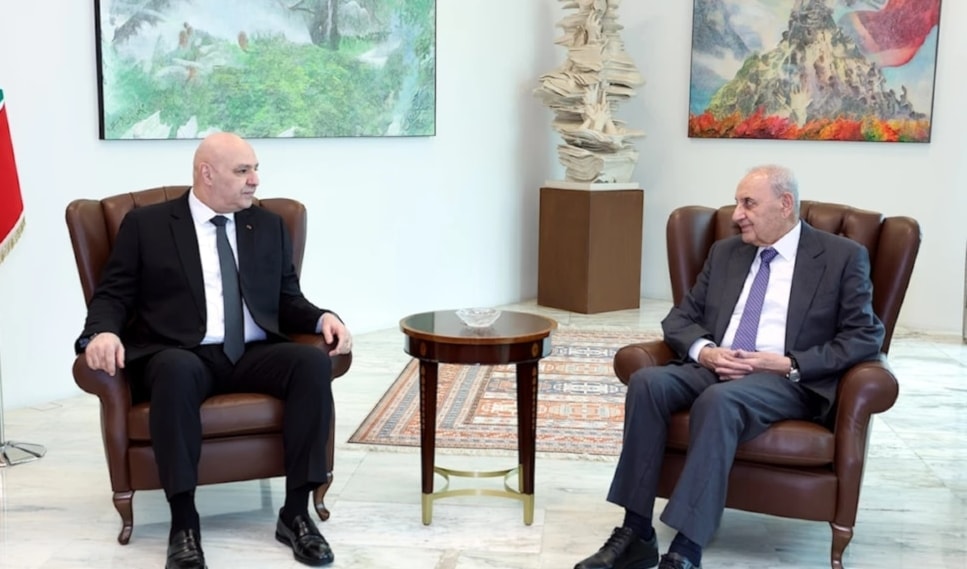
Lebanese President Joseph Aoun and Parliament Speaker Nabih Berri in Baabda Palace, March 22, 2026 (X/@LBpresidency)
Lebanese President Joseph Aoun and Parliament Speaker Nabih Berri emphasized national unity and solidarity among the Lebanese as the country faces relentless Israeli aggression.
During a meeting at Baabda Palace, the two leaders affirmed a unified national stance rejecting the painful experiences of the past and any return to civil war. They also stressed the “importance of preserving civil peace and not being influenced by rumors spread by parties that do not wish Lebanon well.”
The discussions addressed the country’s broader situation in light of ongoing security developments, particularly Israeli escalation and the targeting of bridges linking southern Lebanon to other regions, along with the potential repercussions of such actions.
Aoun and Berri also reviewed the worsening social and humanitarian conditions, as nearly one million residents have been displaced from southern towns and villages subjected to Israeli shelling and destruction.
They positively assessed the public’s support for the displaced, alongside the response efforts led by official institutions and humanitarian and social organizations.
Following the meeting, Berri said the talks involved a comprehensive assessment of the situation from multiple angles. Asked whether he felt reassured about the internal situation, he replied, “With His Excellency the President present, I am reassured.”
Civilian toll, health sector under attack
The ongoing aggression has triggered a severe humanitarian crisis, with large-scale displacement across the country. The death toll has risen to over 1,024, with at least 2,740 others wounded, Lebanon’s Ministry of Health announced on Saturday.
Moreover, Lebanese Health Minister Rakan Nasereddine stated that the number of displaced people has exceeded one million, representing more than 20% of Lebanon’s population.
The health sector has come under sustained pressure as attacks increasingly impact medical infrastructure and personnel.
Nasereddine reported 67 documented attacks on healthcare facilities and services. As a result, 40 healthcare workers and paramedics have been killed, while 96 others have been injured.
Additionally, at least five hospitals have been forced to shut down due to direct attacks or threats, severely limiting access to medical care for affected populations.


