
Aoun warns Israeli strikes signal dangerous escalation in South
 3 Min Read
Lebanon’s President condemns Israeli attacks on southern infrastructure, warning of escalation, collective punishment, and risks of a broader ground invasion.
-
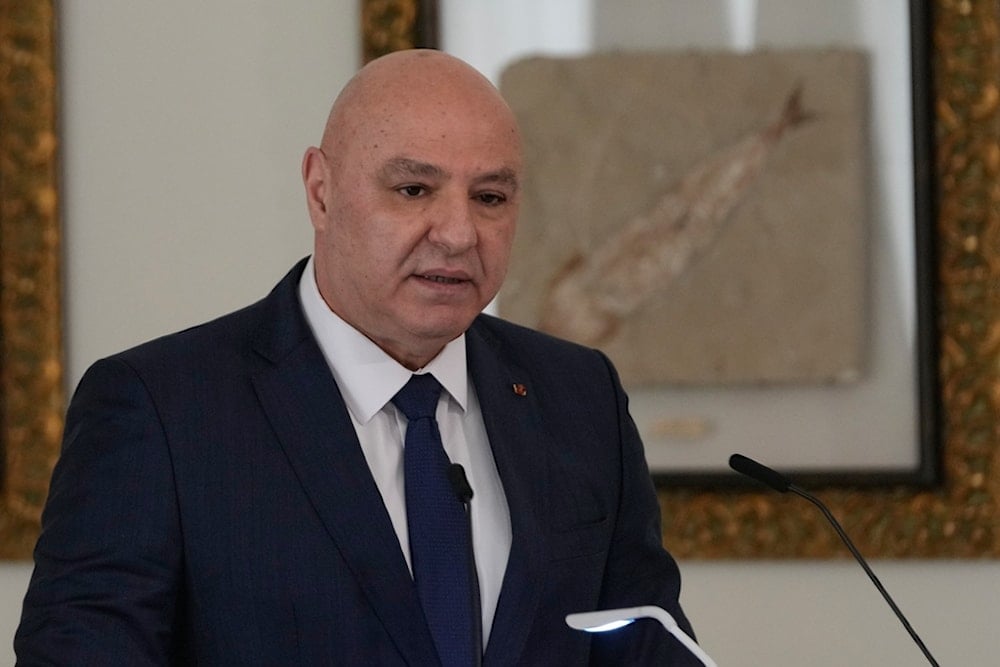
Lebanese President Joseph Aoun speaks during a joint press conference with his Cypriot counterpart Nikos Christodoulides, at the presidential palace in Baabda, east of Beirut, Lebanon, Wednesday, November 26, 2025 (AP)
Lebanese President Joseph Aoun strongly condemned Israeli attacks targeting vital infrastructure in southern Lebanon, describing them as a serious escalation and a direct violation of national sovereignty.
The strikes reportedly hit key civilian structures, including the al-Qasmiyeh Bridge and other major crossings, disrupting essential connectivity across the region.
#WATCH | Footage shows the moment a violent Israeli strike hit the al-Qasmiyah bridge in South Lebanon#SouthLebanon #Lebanon #LebanonUnderAttack pic.twitter.com/w55QhxDa2X
— Al Mayadeen English (@MayadeenEnglish) March 22, 2026
“These attacks constitute a serious escalation and a flagrant violation of Lebanon’s sovereignty, and are a prelude to a ground invasion that Lebanon has long warned against through diplomatic channels,” Aoun stated.
Beirut warns of imminent Israeli invasion
Lebanese officials interpret the latest wave of strikes as part of a broader military strategy that may precede a ground incursion into southern territory.
Aoun emphasized that Lebanon had repeatedly raised concerns through diplomatic avenues, warning that continued aggression could lead to a dangerous expansion of the war.
The targeting of infrastructure, he suggested, is not isolated but part of a calculated escalation aimed at reshaping the situation on the ground.
Collective punishment and international law violations
The Lebanese president further characterized the attacks as a form of collective punishment against civilians, pointing to the systematic destruction of infrastructure, residential areas, and public facilities.
“These actions reflect a dangerous shift toward the systematic destruction of infrastructure, civilian facilities, and residential areas in Lebanese villages, constituting a policy of collective punishment against civilians, which is unacceptable, condemnable, and unjustified,” he said.
He added that such actions “clearly violate the international humanitarian law prohibiting attacks on civilians and their essential facilities.”
The remarks highlight growing concerns over the humanitarian consequences of the strikes, particularly in already vulnerable communities across southern Lebanon.
Targeting of Litani River raises alarms
Particular concern was raised over strikes on bridges along the Litani River, a critical lifeline for transportation and humanitarian access.
Aoun warned that the destruction of these crossings represents an attempt to sever the geographical link between the southern Litani region and the rest of the country.
“Targeting the Litani River bridges, the vital artery for civilian movement, is an attempt to sever geographical connection between the southern Litani region and the rest of Lebanese territory, hindering the arrival of humanitarian aid,” he stated.
He further cautioned that such actions may align with broader plans to establish a buffer zone and consolidate occupation realities within Lebanese territory.
It should be mentioned that since the imposed ceasefire in November 2024, "Israel" has held onto five points along the Lebanese border and invaded Lebanese airspace and territory daily.
Read more: Hezbollah fighters engage in close-quarters combat with Israeli forces
Lebanon urges UN action to deter further aggression
In response to the escalation, Lebanon has called on the international community to take immediate action.
Aoun urged the United Nations and members of the UN Security Council to fulfill their responsibilities and intervene to prevent further attacks.
“In the wake of this escalation, Lebanon calls on the international community, particularly the United Nations and members of the Security Council, to assume their responsibilities and take immediate action to deter Israel from carrying out this attack,” he underscored.
He warned that continued inaction risks emboldening further violations and undermining the credibility of international institutions.
Read more: Hezbollah complicating IOF’s ability to locate missile launch sites


