
Arab League chief condemns Sudan aid convoy attack
 3 Min Read
Arab League chief Ahmed Aboul Gheit denounces the Rapid Support Forces’ attack on a World Food Programme convoy in North Kordofan as a war crime, calling for accountability and protection for civilians.
-
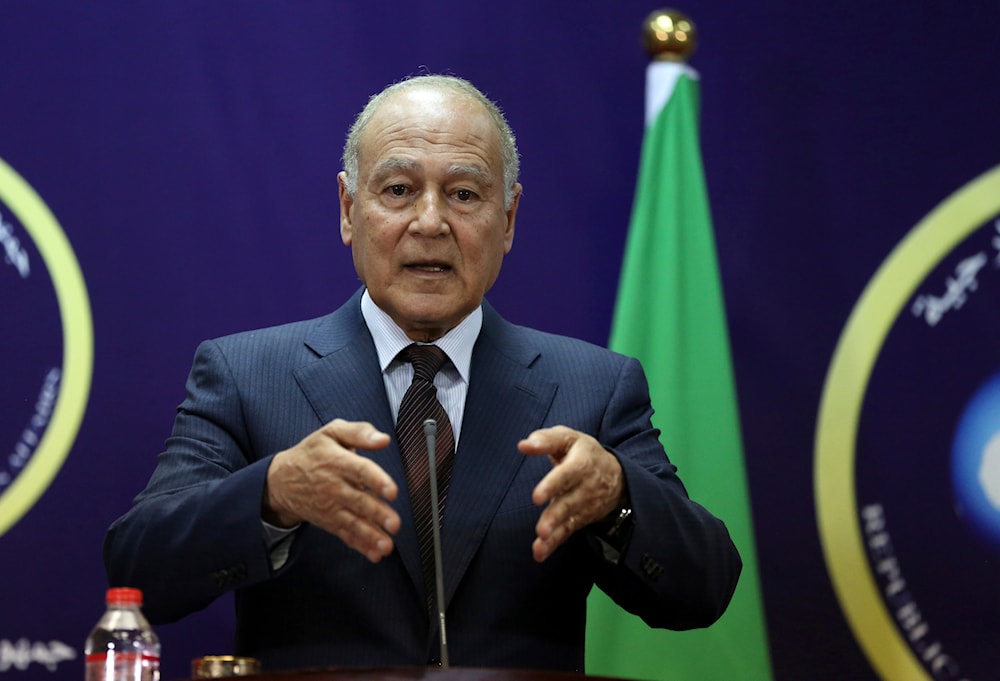
Arab League Secretary General Ahmed Aboul Gheit speaks during a joint press conference with Iraqi Foreign Minister Ibrahim al-Jaafari, in Baghdad on March 15, 2017. (AP Photo/Karim Kadim)
Arab League Secretary-General Ahmed Aboul Gheit strongly condemned the attack on a humanitarian convoy in Sudan’s North Kordofan, carried out by the Rapid Support Forces (RSF). In a statement issued Sunday, Aboul Gheit described the assault as a "full-fledged war crime", emphasizing the need to hold those responsible accountable and to end the culture of impunity.
He also stressed the importance of ensuring full protection for civilians and humanitarian workers amid the ongoing conflict, stating that the Arab League is stepping up efforts to support a comprehensive political solution in Sudan.
On Friday, a World Food Programme (WFP) convoy was struck in a drone attack while transporting life-saving food aid to displaced families near El Obeid, the capital of North Kordofan State. The convoy had departed from Kosti, according to the United Nations Office for the Coordination of Humanitarian Affairs (OCHA).
The attack resulted in one death and several injuries, according to statements from the North Kordofan state government and the Sudanese Doctors Network.
UN and Sudanese officials condemn North Kordofan attack
OCHA expressed deep concern over the incident, reaffirming that the targeted aid was intended for vulnerable civilians affected by the conflict. The Sudanese government also condemned the Rapid Support Forces’ targeting of WFP trucks, calling it a violation of international humanitarian law.
In a statement, the Sudanese Foreign Ministry said the attack constitutes a war crime and flagrant breach of humanitarian norms, urging the international community to condemn the act and ensure those responsible are held accountable.
The attack in North Kordofan highlights the growing risks faced by humanitarian agencies operating in conflict zones across Sudan. Regional and international bodies continue to call for urgent measures to protect aid workers and ensure unimpeded access to populations in need.
Drone strikes reach Al-Obeid
Last month, drone strikes intensified in and around Al-Obeid, the capital of North Kordofan state in central Sudan, as the Rapid Support Forces closed in on the army-controlled city, residents report. At least two recent attacks have caused significant civilian casualties.
Al-Obeid, one of Sudan’s most important cities, lies in the wider Kordofan region that separates the paramilitary Rapid Support Forces’ (RSF) stronghold in Darfur from the army-controlled eastern half of the country. After consolidating control over western Darfur in late October, the RSF shifted its focus to Kordofan, with drone strikes reported weekly in and around al-Obeid.
At the same time, RSF ground forces began taking over towns and villages across the Kordofan region and besieging cities in South Kordofan state, residents said. The force has not yet approached Al-Obeid itself, where daily life continues despite the looming threat and an exodus of residents late last year as the conflict intensified. Army and allied forces remain stationed on the outskirts of the city.


