
Araghchi: Iran, US hold constructive Geneva nuclear talks
 4 Min Read
Iran and Oman both reported constructive discussions in Geneva, outlining basic principles and a possible framework for a nuclear agreement while agreeing to continue negotiations.
-
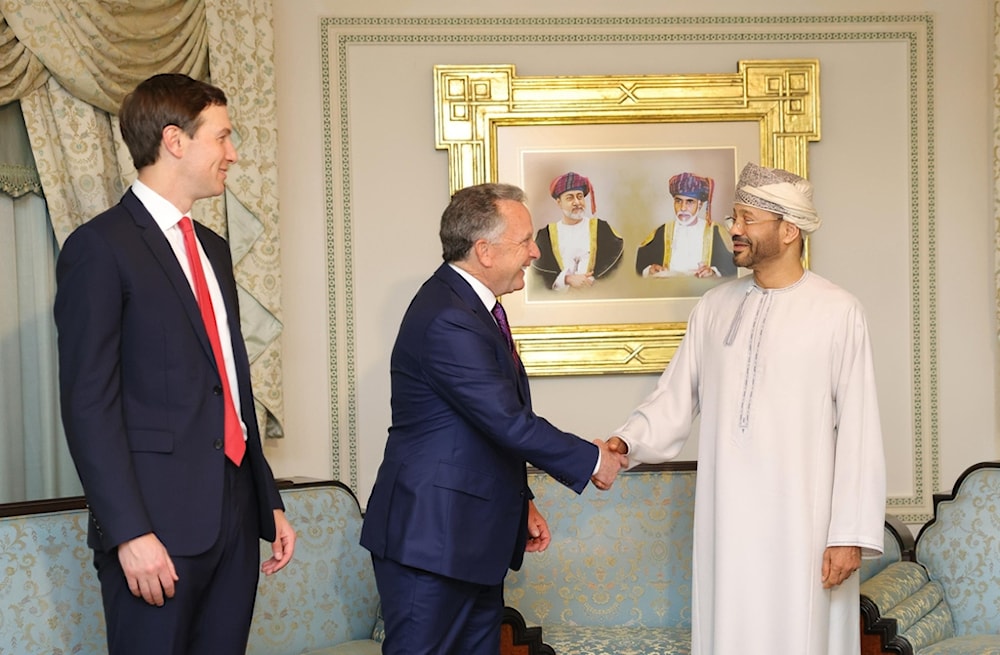
White House special envoy shakes hands with Oman's Foreign Minister during a meeting prior to Iran and U.S. negotiations in Muscat, Oman, Friday, Feb. 6, 2026 (AP)
Iran and the US held serious talks in a constructive atmosphere and exchanged ideas on the Iranian nuclear issue during negotiations in Geneva, Iranian Foreign Minister Seyed Abbas Araghchi said on Tuesday.
"I can say that at this round, compared to the last one, we brought up absolutely serious issues for discussion, the atmosphere was more productive. Various ideas were put up for discussion, and we had serious discussions on these ideas, and finally we found a strategic route that we will follow, along which we will move and reach a text of a possible agreement," Araghchi said on Iranian television, following talks with the United States in Geneva.
According to Araghchi, the parties worked out the basic principles during the Geneva talks that will guide efforts toward a potential agreement on the Iranian nuclear dossier. He cautioned, however, that identifying principles does not necessarily guarantee a final deal.
"The time has not been determined yet. We agreed that the parties will work on the texts of a possible agreement, then we will exchange these texts, and then we will determine the date of the third round of negotiations," Araghchi said.
The minister concluded that there was tangible progress in dialogue with the US compared to the previous round.
Talks focused strictly on nuclear file and sanctions relief
The second round of indirect Iran-US talks in Geneva was held at the Embassy of the Sultanate of Oman, with delegations exchanging messages through Omani mediation.
Iranian officials had earlier confirmed that the agenda was limited exclusively to the nuclear program and the lifting of US-imposed sanctions, rejecting any attempt to broaden discussions beyond those issues.
Tehran also reiterated that uranium enrichment remains a sovereign right and a non-negotiable principle within its civilian nuclear program.
A senior Iranian official told Reuters that the effectiveness of Iran-US nuclear negotiations depends on Washington’s seriousness in lifting sanctions and avoiding what Tehran described as unrealistic demands, adding that Iran entered the talks with “genuine and constructive proposals.”
Iran, US discuss possible role of IAEA
Araghchi also stated that Tehran and Washington discussed the potential role of the International Atomic Energy Agency in the negotiation process.
"We discussed the role that the agency [IAEA] can play between Iran and the United States... Iran has always been prepared to engage in meaningful and result-oriented negotiations," Araghchi said at the Conference on Disarmament in Geneva.
Oman highlights constructive spirit of negotiations
In a statement posted on X, Al-Busaidi emphasized the positive atmosphere surrounding the discussions.
"Today's indirect negotiations between The Islamic Republic of Iran and the United States of America in Geneva concluded with good progress towards identifying common goals and relevant technical issues. The spirit of our meetings was constructive. Together we made serious efforts to define a number of guiding principles for a final deal. The contribution of the IAEA Director General Rafael Grossi was much appreciated. Much work is yet to be done, and the parties left with clear next steps before the next meeting," Al-Busaidi said on X.
Today’s indirect negotiations between The Islamic Republic of Iran and the United States of America in Geneva concluded with good progress towards identifying common goals and relevant technical issues. The spirit of our meetings was constructive. Together we made serious…
— Badr Albusaidi - بدر البوسعيدي (@badralbusaidi) February 17, 2026
IAEA director general Rafael Grossi’s role
The involvement of IAEA Director General Rafael Grossi was highlighted as a key contribution to the technical dimension of the discussions. His participation reflects the continued role of the International Atomic Energy Agency in addressing matters related to Iran’s nuclear program.
Talks Amid Heightened Regional Tensions
The diplomatic engagement comes amid heightened regional tensions. Last week, US President Donald Trump announced that a second US Navy carrier strike group would be deployed to the Middle East if talks fail.
The negotiations also follow the collapse of indirect discussions during last year’s 12-day war waged by the Israeli occupation against Iran, during which nuclear facilities were targeted.
Next steps
While officials described the atmosphere as constructive, Al-Busaidi stressed that substantial work remains ahead.
The parties agreed on clear next steps prior to the upcoming meeting, signaling the continuation of indirect talks between Iran and the US.
The Geneva track remains focused exclusively on nuclear-related matters and the removal of sanctions, with both sides maintaining firm positions as diplomatic efforts continue.


