
Araghchi: Iran decides when and how war will end
 3 Min Read
Iranian Foreign Minister Seyed Abbas Araghchi said attacks on Tehran will not affect Iran’s military strategy, accusing the United States of betraying nuclear negotiations while reaffirming Iran’s right to defend its sovereignty.
-
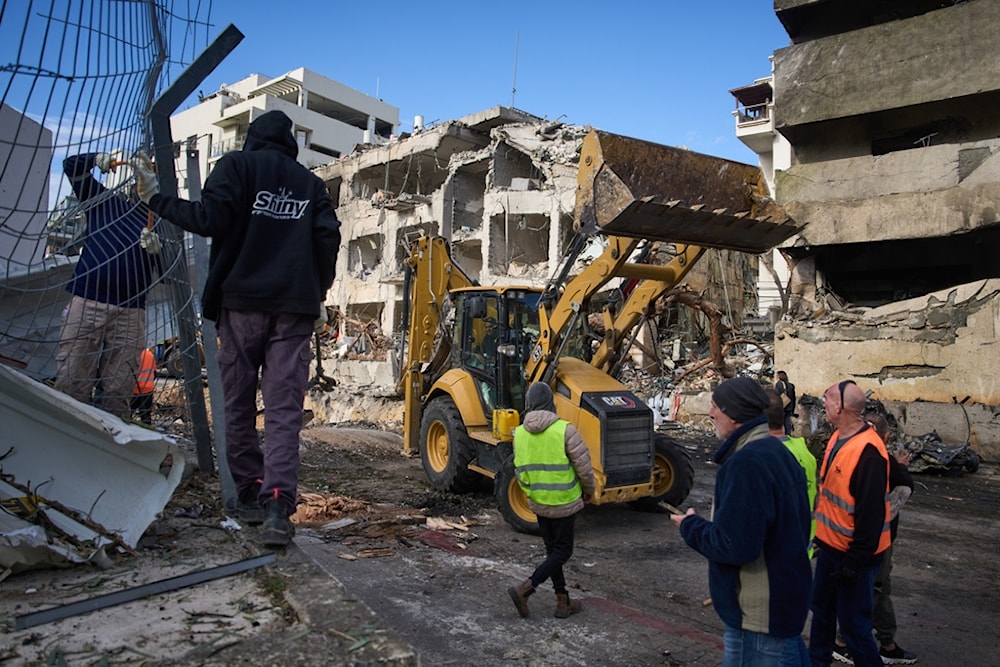
Rescue workers and military personnel work at the scene of a direct hit a day after an Iranian missile struck in Tel Aviv, occupied Palestine, Sunday, March 1, 2026 (AP)
Iranian Foreign Minister Seyed Abbas Araghchi said that Tehran has drawn lessons from past US military experiences in the region, stressing that attacks on the capital would not undermine Iran’s military decision-making.
In a post published on X, Araghchi wrote:
"We've had two decades to study defeats of the U.S. military to our immediate east and west. We've incorporated lessons accordingly.
Bombings in our capital have no impact on our ability to conduct war. Decentralized Mosaic Defense enables us to decide when—and how—war will end."
We've had two decades to study defeats of the U.S. military to our immediate east and west. We've incorporated lessons accordingly.
— Seyed Abbas Araghchi (@araghchi) March 1, 2026
Bombings in our capital have no impact on our ability to conduct war. Decentralized Mosaic Defense enables us to decide when—and how—war will end. pic.twitter.com/E4jrdnDapb
Contact with Omani Foreign Minister
In this context, the Iranian Foreign Ministry reported on Sunday that Araghchi held a phone call with his Omani counterpart, Badr al-Busaidi.
During the call, Araghchi pointed to what he described as the United States’ renewed betrayal of diplomacy amid the nuclear negotiations.
According to the Iranian Foreign Ministry statement, Araghchi affirmed Iran’s determination to defend its sovereignty within the framework of its legitimate right to self-defense against aggression.
Oman’s mediation amid US-"Israel" aggression
The contact between Tehran and Oman comes against the backdrop of ongoing US-"Israel" aggression against Iran, including intensified military escalation under Operation “True Promise 4”.
The Islamic Revolution Guard Corps (IRGC) announced that successive waves of the operation targeted US and "Israeli" military sites across West Asia, describing the strikes as a response to US–"Israeli" aggression. The developments unfolded amid indirect Iran-US nuclear talks that were expected to resume in Vienna, with Muscat playing a mediating role between Tehran and the United States.
US Central Command (CENTCOM) acknowledged American casualties following Iranian strikes on military bases in the region, while Iranian officials maintained that operations would continue within what they describe as the framework of legitimate self-defense.
In parallel, Iranian Foreign Ministry spokesperson Esmail Baghaei said the confrontation was externally imposed on Tehran, asserting that the escalation began shortly before a scheduled nuclear session between Iran and Washington. He stressed that Iran’s military response is aimed at defending sovereignty and territorial integrity, reiterating that decisions regarding the scope and duration of the conflict rest with Iran’s armed forces.
Read More: Sayyed Khamenei's martyrdom turning point for region: Baghaei - Excl.


