
Araghchi: Iran will not retreat from conditions to reopen Hormuz
 4 Min Read
Iranian Foreign Minister Abbas Araghchi says Tehran awaits the US response through mediators, stressing that reopening the Strait of Hormuz depends on Iran's conditions.
-
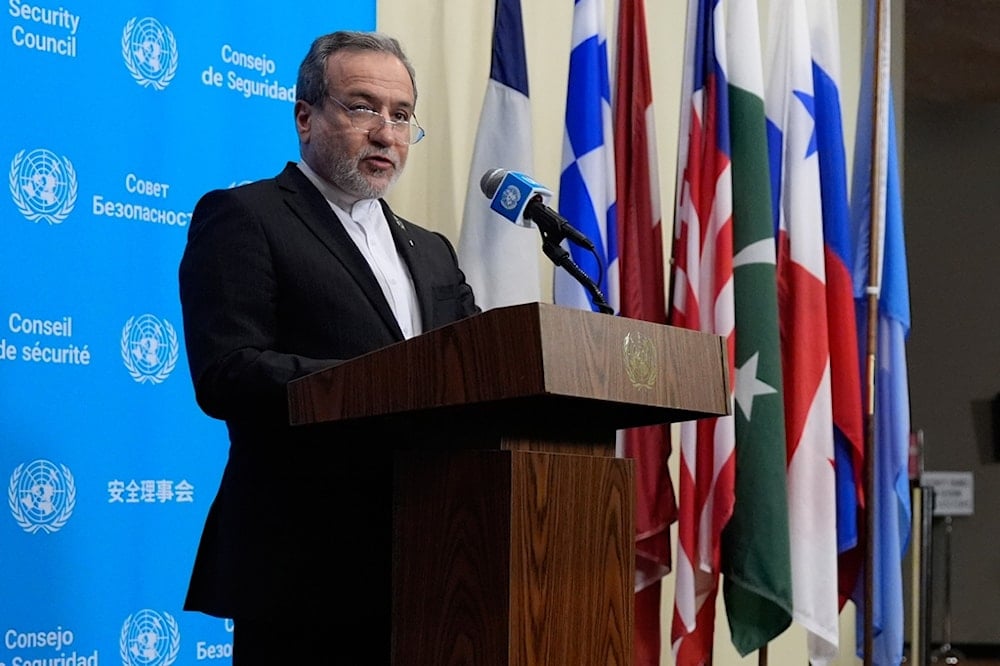
Iranian Foreign Minister Abbas Araghchi speaks to the media during the 81st session of the United Nations General Assembly at United Nations headquarters, Friday, September 25, 2026 (AP)
Iranian Foreign Minister Abbas Araghchi said Tehran is awaiting a final US response through mediators on its conditions for reopening the Strait of Hormuz, stressing that Iran will not back down from its demands.
Speaking to Iran's state television and IRNA, Araghchi said the central focus of Tehran's diplomatic efforts had been to communicate its conditions for reopening the strategic waterway and advance the negotiations.
He explained that Iran had conveyed and fully clarified its conditions during meetings with mediators, who subsequently passed the points on to the US side. Tehran has received an initial reaction from US President Donald Trump, but has yet to receive the mediators' final communication.
"We are waiting for the final views to be conveyed to us through the mediators, and based on that, we will make our decision," Araghchi said.
Iran links Hormuz reopening to its conditions
Araghchi stressed that Iran's position remains unchanged, saying that any move toward reopening the Strait of Hormuz is conditional on the fulfillment of Tehran's demands.
"Our conditions are clear, and any step forward to open the Strait of Hormuz is contingent on meeting these conditions, and we will never retreat from them," he said.
His remarks come after Tehran conveyed a seven-day plan through mediators under which the Strait of Hormuz could be reopened if the necessary conditions were met. According to Araghchi's earlier explanation of the proposal, the initial measures would take four to five days, with the waterway reopening on the sixth day and negotiations beginning on the seventh.
The Iranian Foreign Minister also emphasized Tehran's continued commitment to diplomacy, arguing that Iran has demonstrated its willingness to pursue negotiations while maintaining what it considers its sovereign rights.
"There is no path other than a negotiated solution based on honor and justice, while securing the rights of the Iranian people and meeting their legitimate demands," Araghchi said.
Araghchi stresses Iran's diplomatic record
Araghchi said the Iranian people had demonstrated their strength not only on the military front, but also diplomatically and economically, including in confronting sanctions.
He added that there was no longer any basis for accusing Iran of failing to test the diplomatic route.
"No one in the world today can accuse the Islamic Republic of Iran of not having tested the diplomatic path," he said.
Araghchi maintained that Tehran had never closed the door to diplomacy or negotiations, while stressing that it had also never relinquished its rights.
"Whenever our enemies chose another path, we stood firmly against them on that path as well," he said.
Iran outlines terms for Hormuz reopening
Araghchi told reporters at the United Nations on Friday that the proposal would trigger a seven-day countdown toward reopening the Strait of Hormuz while also ending the war across the region.
“If there is seriousness on the US side to come to a deal and reopen the Strait of Hormuz, everything is now prepared,” Araghchi said.
If Washington agrees to the proposal, the parties could then begin broader talks on “mutually agreed subjects,” Araghchi said, potentially including Iran’s nuclear program.
Tehran has also engaged with Saudi Arabia over the Strait of Hormuz, highlighting the broader regional and economic stakes surrounding the waterway, which has been affected by the seven-month-old war and disruption to oil flows.


