
Araghchi demands evidence for Trump’s 32,000 death toll claim
 4 Min Read
Iran’s foreign minister challenges Trump’s assertion of 32,000 deaths in the January riots, demanding evidence for the claim.
-
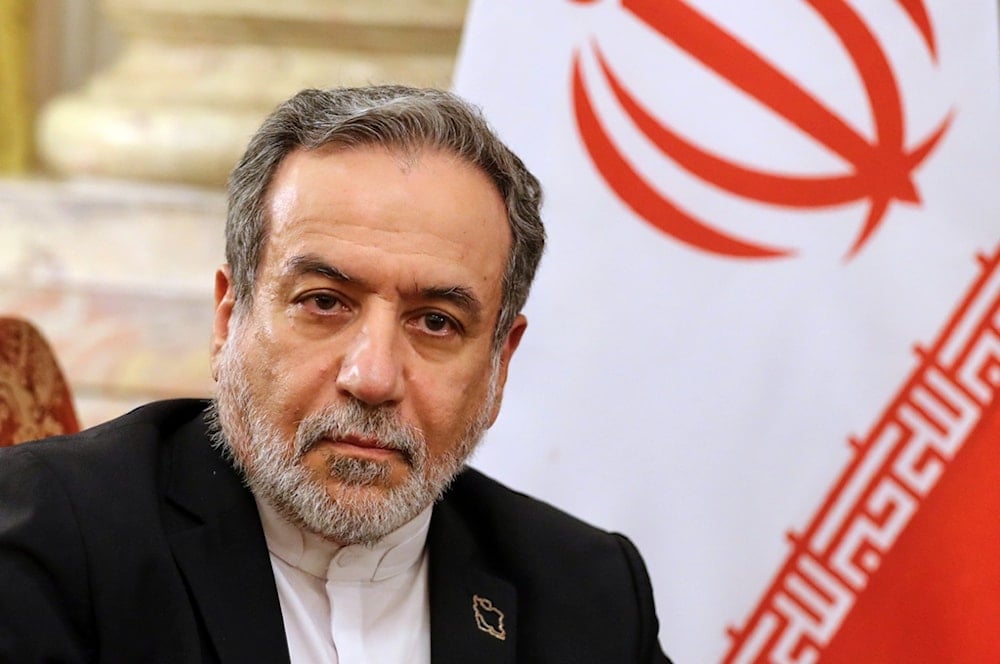
Iranian Foreign Minister Abbas Araghchi at Tahrir Palace in Cairo, Tuesday, Sept. 9, 2025. (AP)
Iran’s Foreign Minister Abbas Araghchi has categorically rejected US President Donald Trump’s claim that 32,000 people were killed during two days of riots in Iran last month, calling on him to provide evidence to substantiate the figure.
In a post published Saturday on his account on the social media platform X, Araghchi said Iran’s government had already released official casualty figures, calling on anyone willing to dispute these figures to provide evidence.
Fulfilling our pledge of full transparency towards our own people, Iran's Government has already published a comprehensive list of all 3117 victims of recent terrorist operation, including about 200 officers.
— Seyed Abbas Araghchi (@araghchi) February 21, 2026
If anyone disputes accuracy of our data, please share any evidence.
On January 26, Iranian Foreign Ministry spokesperson Esmaeil Baghaei dismissed similar reports circulated by anti-Iran outlets as a “big lie," accusing hostile actors of attempting to manufacture casualty figures after failing to achieve their objectives on the ground.
A Hitler-style BIG LIE: isn't this the number they planned to kill in the streets of Iran?!
— Esmaeil Baqaei (@IRIMFA_SPOX) January 25, 2026
They failed, though, and now they're trying to FAKE it in the media. Truly vicious! pic.twitter.com/unbqVKEUzJ
Trump had alleged during a Friday news briefing that 32,000 people were killed in the January riots in Iran. The remarks came as he addressed a Supreme Court ruling striking down his sweeping tariffs. He did not cite any source for the casualty figure.
Iran January riots 2026: official casualty figures
According to Iran’s Foundation of Martyrs and Veterans Affairs, a total of 3,117 people lost their lives during the January unrest. In a statement issued on January 21, the foundation said 2,427 of those killed were innocent civilians and security personnel.
Iranian officials have repeatedly asserted that the unrest is a foreign-backed terrorist operation, with evidence and official statements linking the violence to the US and the Israeli regime.
Iranian authorities have also pointed to statements by US and Israeli officials as evidence of foreign involvement in the unrest.
Former US Secretary of State Mike Pompeo tweeted at the time: “Happy New Year to every Iranian in the streets. Also, to every Mossad agent walking beside them.”
The Iranian regime is in trouble. Bringing in mercenaries is its last best hope.
— Mike Pompeo (@mikepompeo) January 2, 2026
Riots in dozens of cities and the Basij under siege — Mashed, Tehran, Zahedan. Next stop: Baluchistan.
47 years of this regime; POTUS 47. Coincidence?
Happy New Year to every Iranian in the…
In a Farsi-language social media post, Israel’s intelligence agency Mossad also encouraged rioters to “Go out together into the streets. The time has come,” adding that Mossad agents are with the rioters “not only from a distance and verbally. We are with [them] in the field.”
Unrest in context
The unrest initially began in late December 2025 as peaceful demonstrations driven by economic pressures, including rising inflation, currency depreciation, and sanctions-related hardship.
Authorities maintain that these early protests were permitted under police protection and that President Masoud Pezeshkian personally engaged with representatives of demonstrators, instructing security forces to exercise restraint.
However, the situation later shifted after organized networks intervened to exploit public grievances and redirect them toward violence and chaos. Russia’s state-owned TASS reported that forensic examinations identified Israeli military-grade ammunition in the bodies of children killed during the riots.
The report cited the killing of an eight-year-old girl in Isfahan and a three-year-old child in Kermanshah, both fatally shot while accompanying family members during routine daily activities.
Rising US-Iran tensions amid death toll dispute
Tensions are still rising between Tehran and Washington, particularly following a report that US officials discussed the assassination of Iran’s Leader, Sayyed Ali Khamenei, and his son, Mojtaba.
According to Axios, citing an unnamed adviser to President Donald Trump, contingency plans targeting Iran’s leadership were presented to Trump several weeks ago.
The report, if confirmed, signals a dramatic escalation in Washington’s aggressive posture toward Iran, raising concerns about the normalization of assassination as a policy instrument.
At the same time, Trump has faced bipartisan criticism in the US over increasingly confrontational rhetoric toward Iran and reported military deployments to the region, including additional naval and air assets.
The US-backed unrest and the amplification of disputed casualty figures form part of a broader campaign to manufacture consent for war against Iran, even as substantial segments of the US public and political establishment push back against the prospect of another conflict that could escalate into regional war.
Read More: Trump faces bipartisan backlash over Iran war rhetoric, buildup


