
Araghchi says Iran, US were 'inches away' from signing an MoU
 3 Min Read
Iran’s foreign minister Abbas Araghchi says US-Iran talks in Islamabad were close to an agreement but collapsed due to “maximalism” and shifting demands.
-
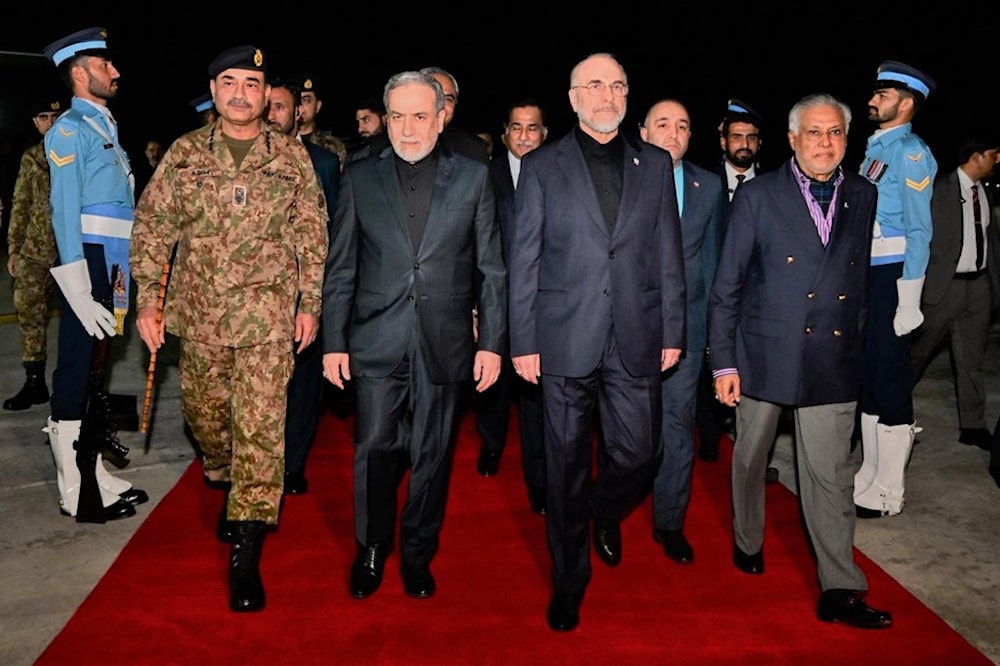
Iranian Parliament Speaker Mohammad Bagher Ghalibaf and Foreign Minister Abbas Araghchi with Pakistani Foreign Minister Ishaq Dar and Army Chief Field Marshal Gen. Asim Munir at Nur Khan airbase in Rawalpindi, Pakistan, Saturday, April 11, 2026 (AP)
Iranian Foreign Minister Abbas Araghchi has said that high-level talks with the United States in Islamabad came “just inches away” from a draft understanding before collapsing amid what he described as shifting demands and obstruction.
In a post on X, Araghchi said the negotiations marked the most intensive engagement between the two sides in 47 years, "Iran engaged with [the] US in good faith to end war," he wrote.
“But when just inches away from ‘Islamabad MoU’, we encountered maximalism, shifting goalposts, and blockade,” Araghchi added. Iran, he said, believes Washington failed to draw lessons from the negotiations, saying: “Zero lessons earned.”
“Good will begets good will. Enmity begets enmity,” the Iranian Foreign Minister concluded.
In intensive talks at highest level in 47 years, Iran engaged with U.S in good faith to end war.
— Seyed Abbas Araghchi (@araghchi) April 12, 2026
But when just inches away from "Islamabad MoU", we encountered maximalism, shifting goalposts, and blockade.
Zero lessons earned
Good will begets good will.
Enmity begets enmity.
US-Iran talks collapse
Iranian state TV announced early on Sunday that “despite the numerous initiatives presented by the Iranian side, the excessive and illogical demands of the American side prevented progress in the negotiations.” It added that the Iranian delegation engaged in continuous and intensive negotiations that lasted 21 hours with the aim of safeguarding the national interests of the Iranian people.
For its part, Iran’s Tasnim News Agency reported that Washington sought to secure concessions it had failed to achieve through military escalation, including demands related to Iran’s enriched uranium and control over the Strait of Hormuz.
According to Tasnim, the Iranian delegation attempted to advance a joint negotiating framework, but US demands ultimately stalled progress.
US team leaves Islamabad without agreement
US Vice President JD Vance announced on Sunday at dawn that negotiations with Iran lasted 21 hours, but ultimately ended without reaching an agreement, failing to produce a satisfactory outcome as the US delegation headed back to Washington.
Standing near US Special Envoy Steve Witkoff and Trump’s son-in-law and White House advisor Jared Kushner, Vance spoke with members of the media before his departure.
Vance alleged that core objectives were not achieved despite what he claimed was "significant flexibility" from the US side, claiming that Iran "chose not to accept our terms" and saying the proposal is a "method of understanding that is our final and best offer. We’ll see if the Iranians accept it.”
"We've had a number of substantive discussions with the Iranians, that's the good news. The bad news is that we have not reached an agreement and I think that's bad news for Iran much more than it's bad news for the United States of America," Vance said, adding, "We just could not get to a situation where the Iranians would accept our terms."


