
Araghchi: Strait of Hormuz management to reflect new realities
 3 Min Read
Iranian FM Abbas Araghchi warns against renewed war, urging a total ceasefire across all fronts and regional security free from foreign interference.
-
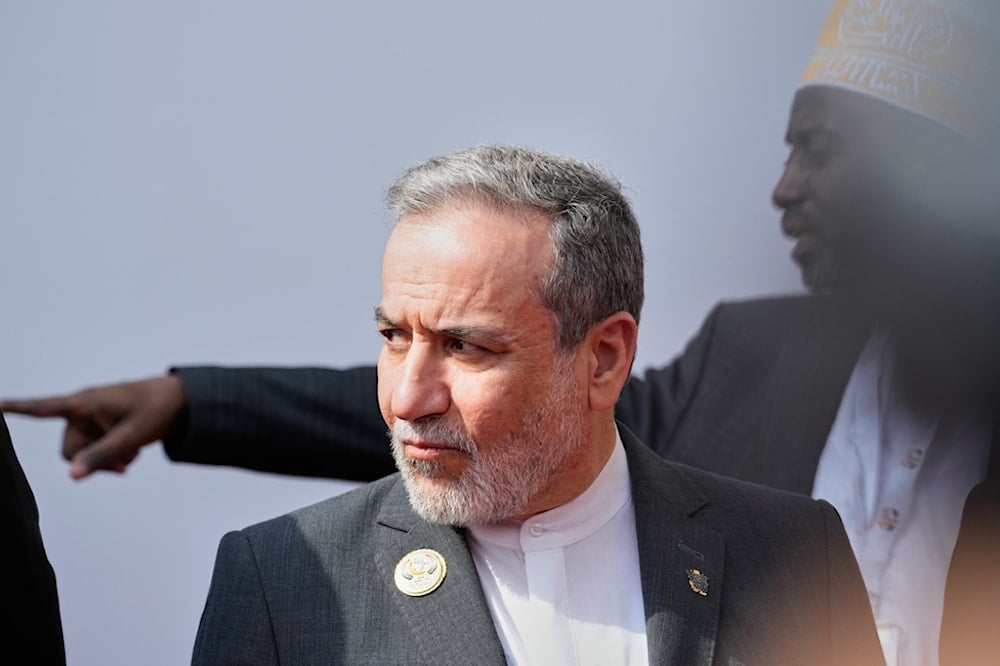
Iranian Foreign Minister Abbas Araghchi, arrives the opening session of the 52nd Council of Foreign Ministers of the Organization of Islamic Cooperation (OIC) in Baghdad, Iraq, Saturday, Oct. 17, 2026. (AP Photo/Hadi Mizban)
Iranian Foreign Minister Abbas Araghchi has warned that those who failed in their previous aggression against Iran have no choice but to accept the country's authority, stressing that Tehran's policies will remain unchanged regardless of whether war resumes.
Araghchi said Iran was already looking beyond the prospect of renewed war, emphasizing that regional peace and stability could only be achieved through peaceful coexistence among regional countries without foreign interference.
“If there is rationality, they will not try military war against Iran again. They tried it twice and saw the result,” he said, as reported by Iranian news outlet IRIB.
The Iranian foreign minister also stressed that a ceasefire must encompass all fronts, arguing that stability and an end to hostilities cannot be achieved through partial arrangements.
On the Strait of Hormuz
Araghchi said the management of the Strait of Hormuz through cooperation between Iran and Oman had replaced previous arrangements, noting that the strategic waterway now faced new realities, as per IRIB.
The strait had previously been kept safe through the responsible management of Iran and Oman without obstructing passage, he said. However, its routes and management mechanisms would now be reviewed in light of the new circumstances and ongoing consultations between the two countries.
Araghchi's remarks came as he warned against renewed military aggression, saying that those issuing hostile rhetoric should not repeat an option that had already failed.
Iran's approach to the Strait of Hormuz would be shaped by the changed conditions, while coordination with Oman would remain central to discussions over its management, he added.
Iran calls for comprehensive ceasefire across all fronts
Araghchi reiterated that a ceasefire could only be achieved through a complete halt to the war across all fronts, stressing that regional stability must be addressed comprehensively rather than through partial arrangements.
He also said Iranian missiles had destroyed dozens of US fighter jets on the ground, citing the outcome of the confrontation as evidence of Iran's military capabilities.
The foreign minister said Tehran welcomed any move toward establishing endogenous security, in which regional countries rely on their own capabilities rather than foreign powers, to safeguard their security.
Iran has consistently maintained that lasting stability requires an end to hostilities across all fronts, Araghchi said, linking this position to Tehran's broader call for regional countries to assume responsibility for their own security.
'Foreign military presence undermined regional security'
Araghchi said the security structure adopted by some regional countries and built on foreign intervention had collapsed, arguing that US military bases in the region had failed to provide security and had instead undermined it.
He stressed that Iran's policies would remain unchanged whether or not war resumed, adding that Tehran was prepared to cooperate with all regional countries, particularly those in the Gulf.
The Iranian foreign minister said peaceful coexistence among regional states without foreign interference was the only path toward peace and stability.
His remarks underscored Tehran's position that regional security should be built through cooperation among neighboring countries rather than reliance on foreign military deployments.
Read more: Iran: US suffered strategic defeats; ships no longer passing Hormuz


