
Aramco shuts 400,000 bpd Jizan refinery after Yemen strikes
 2 Min Read
Saudi Aramco closed its Jizan refinery after Yemeni retaliatory strikes caused significant damage, with repairs expected to continue through mid-August.
-
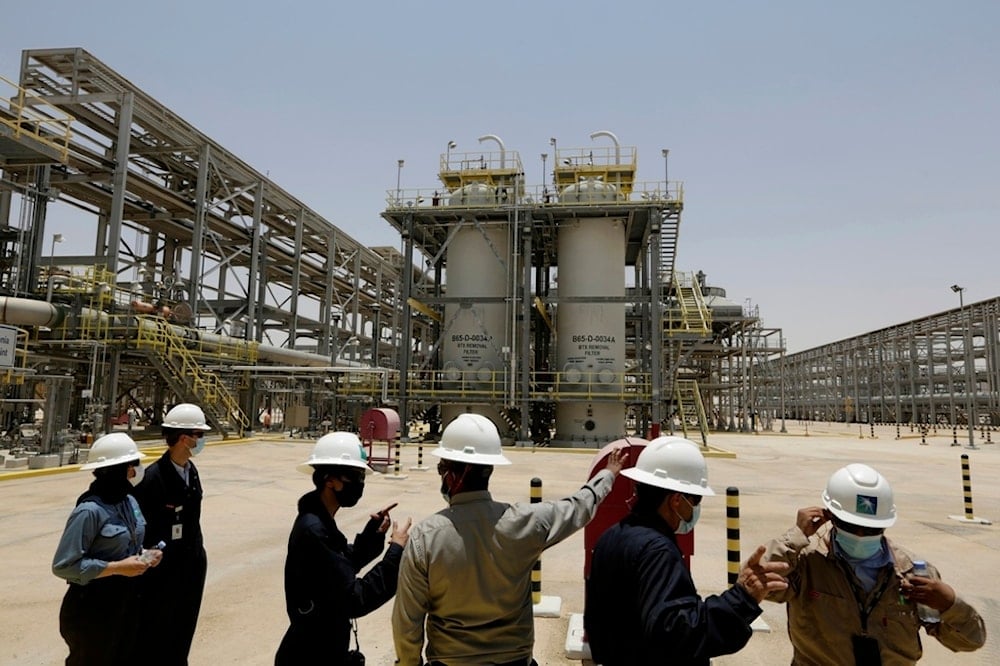
Saudi Aramco engineers and journalists look at the Hawiyah Natural Gas Liquids Recovery Plant in Hawiyah, in the Eastern Province of Saudi Arabia on June 28, 2021. (AP Photo/Amr Nabil)
Saudi Aramco moved to close its Jizan oil refinery in the southwest corner of the Kingdom after Yemen's retaliatory strikes caused significant damage to the facility, according to a note from the Industrial Info Resources consultancy on Tuesday.
The Jazan oil refinery processed 400,000 barrels per day. Yemen's attacks damaged the facility's Integrated Gasification Combined Cycle complex and tank farm area, causing a fire that has been burning since the target.
The consultancy note stated that Aramco plans to finish repairs of the refinery and restart operations by August 15.
🛰🇸🇦 Chinese Beijing-3A satellite imagery captured yesterday shows a large fire still raging at Saudi Aramco's Jazan Oil Refinery, three days after it was struck by Houthi drones and missiles. Thick black smoke continues to billow from an oil storage tank at 17.286648, 42.385668. https://t.co/SHtEQxaurs pic.twitter.com/Jj4ntwhvhC
— Egypt's Intel Observer (@EGYOSINT) July 27, 2026
Yemen targets Saudi assets
The Yemeni Armed Forces' spokesperson, Brigadier General Yahya Saree, announced on Saturday that Sana'a carried out two attacks against Saudi assets in response to Riyadh's “blatant and criminal" aggression.
The first operation targeted the Jizan facility using dozens of ballistic missiles and drones, and the second strike was against Aramco-affiliated facilities in Yanbu with ballistic and cruise missiles, as well as drones.
The Yemeni Armed Forces targeted the facilities in Yanbu again on Monday, stating that its fighters "struck several targets and critical points along the supply and transport routes for crude oil from eastern Saudi Arabia to Yanbu".
Yanbu loading volumes dropped almost 40 percent after July 19, falling from about 5.16 million barrels per day to around 3.09 million barrels per day, as of Windward's analysis of Vortexa data.
Saree stated that both operations successfully achieved their objectives, delivering accurate and direct strikes on their intended targets.
The Yemeni Armed Forces spokesperson emphasized that Sana'a's strikes were in response to the Saudi aggression against the country, explaining that airstrikes carried out by Saudi Arabia targeted the city and port of Hodeidah and Kamaran Island.
Saree further described the aggression as a violation of Yemen’s sovereignty, with material and incorporeal damage reported. Alongside military retaliations, Yemen also initiated a maritime blockade on Saudi Arabia until its blockade against the Yemeni people is lifted.
Read more: Sanaa transport minister says Saudi assault has crippled Red Sea trade


