
Attack in Syria kills 3 Americans: 2 soldiers, 1 translator
 5 Min Read
Three Americans were killed in a gun attack on a joint US-Syrian interim forces patrol near Palmyra.
-
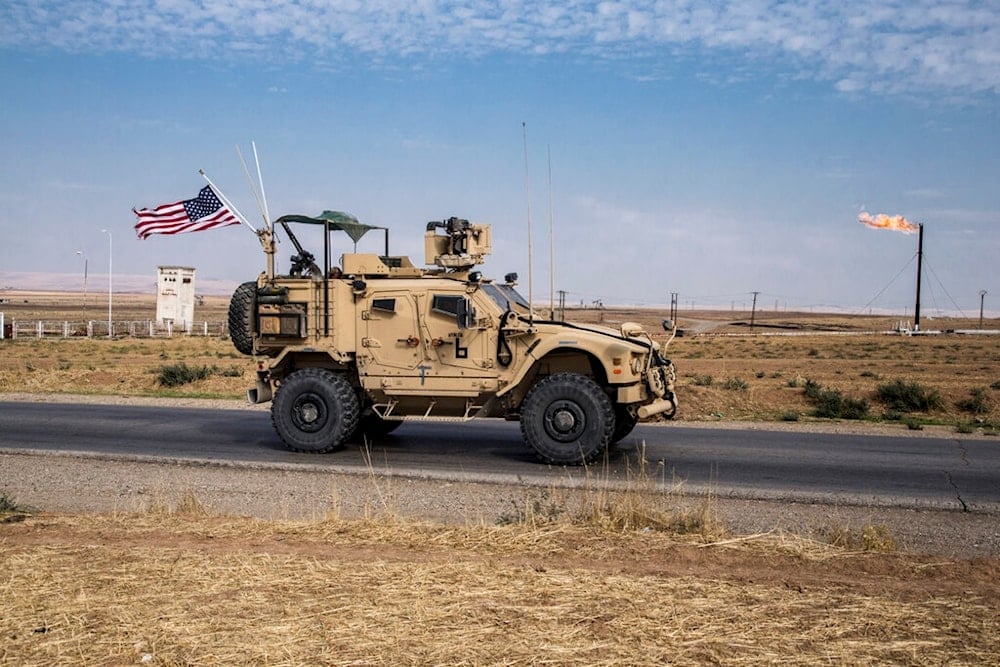
In this Oct. 28, 2019, file photo, U.S. forces patrol Syrian oil fields, in eastern Syria. (AP)
An attack attributed to the Islamic State group has left three Americans dead in central Syria, US Central Command (CENTCOM) said on Saturday, updating earlier reports that had only confirmed injuries.
According to the US military, a lone ISIS gunman opened fire on US personnel during an ambush, killing two service members and a US civilian, and injuring three additional troops. The attacker was later killed.
"Two US service members and one US civilian were killed, and three service members were injured, as a result of an ambush by a lone ISIS gunman in Syria. The gunman was engaged and killed," CENTCOM said in a post on X.
U.S. Personnel Ambushed by ISIS Gunman in Syria
— U.S. Central Command (@CENTCOM) December 13, 2025
TAMPA, Fla. – On Dec. 13, two U.S. service members and one U.S. civilian were killed, and three service members were injured, as a result of an ambush by a lone ISIS gunman in Syria. The gunman was engaged and killed.
As a matter…
Commenting on the incident, Syrian Interior Ministry spokesperson Nour al-Din al-Baba said that local security forces had issued warnings in the Badia region about a possible ISIS breach, which the US-led coalition reportedly did not fully heed.
According to the spokesperson, a lone attacker opened fire at a Badia facility in Palmyra. Security forces and coalition personnel engaged the assailant, neutralizing him. Authorities will investigate whether he was formally linked to ISIS or inspired by its ideology, claiming he held no leadership role within local security structures.
On another note, three local Syrian officials and the Interior Ministry confirmed to Reuters that the man who attacked Syrian and US forces in Palmyra was a member of Syrian security forces. The ministry noted he did not hold any leadership role within the force, but did not clarify whether he was a junior member.
Palmyra Ambush
Earlier on Friday, Syrian state media and US officials had reported that Syrian interim government forces and US military personnel were wounded during gunfire targeting a joint patrol near Palmyra in central Syria. Those reports did not initially mention fatalities, indicating that the casualties were later confirmed as deaths following medical evacuation.
Syrian media said the attack occurred while the joint force was conducting a field patrol, prompting temporary closures along the Deir ez-Zor–Damascus international highway and heightened aerial activity as the area was secured. US helicopters were reported to have evacuated the wounded to the al-Tanf military base in southeastern Syria.
Reacting to the attack, US Secretary of War Pete Hegseth issued a forceful statement, confirming that the assailant had been killed and warning against future attacks on American personnel.
"The savage who perpetrated this attack was killed by partner forces," Hegseth wrote. "Let it be known, if you target Americans — anywhere in the world — you will spend the rest of your brief, anxious life knowing the United States will hunt you, find you, and ruthlessly kill you."
The savage who perpetrated this attack was killed by partner forces.
— Secretary of War Pete Hegseth (@SecWar) December 13, 2025
Let it be known, if you target Americans — anywhere in the world — you will spend the rest of your brief, anxious life knowing the United States will hunt you, find you, and ruthlessly kill you. https://t.co/P7D9NrWpAL
CENTCOM did not disclose further details about the identities of those killed or the precise location of the incident.
Strategic Backdrop
The deadly ambush comes amid a broader shift in Syria’s political landscape following the rise of a new administration under Ahmad al-Sharaa, which has moved toward closer coordination with Washington. This represents a sharp departure from the previous government’s position, which had formally rejected the US military presence as an illegal occupation.
Despite this political realignment, regional observers continue to argue that the US deployment in Syria extends beyond its stated objective of countering ISIS. Critics contend that Washington’s sustained military footprint, particularly around al-Tanf and across eastern Syria, is tied to control over key transit corridors, oil- and gas-rich areas, and leverage over Syria’s post-war economic and security arrangements.
Although ISIS was defeated as a territorial entity years ago, US forces have remained in Syria and, in some areas, consolidated their presence. Detractors argue that the normalization of US military activity under the new administration risks legitimizing a deployment that has coincided with prolonged economic pressure, restricted access to national resources, and the continued erosion of Syrian sovereignty.
Recent developments have reinforced these concerns, with Washington signaling no intention to withdraw its forces. Instead, US troops have strengthened their positions around strategic nodes such as al-Tanf and parts of eastern Syria, while expanding coordination with the new authorities and maintaining influence over key border crossings and energy-rich regions.
These moves come as discussions continue in Washington over easing certain sanctions, a shift that critics say is aimed less at restoring Syrian sovereignty than at reshaping post-war Syria in line with US strategic and economic priorities.
Read more: US Congress advances bill to repeal Caesar Act sanctions on Syria


