
US Congress advances bill to repeal Caesar Act sanctions on Syria
 3 Min Read
The US House has passed a bill to repeal the Caesar Act sanctions on Syria, signaling a shift in Washington's approach following the fall of Bashar al-Assad.
-
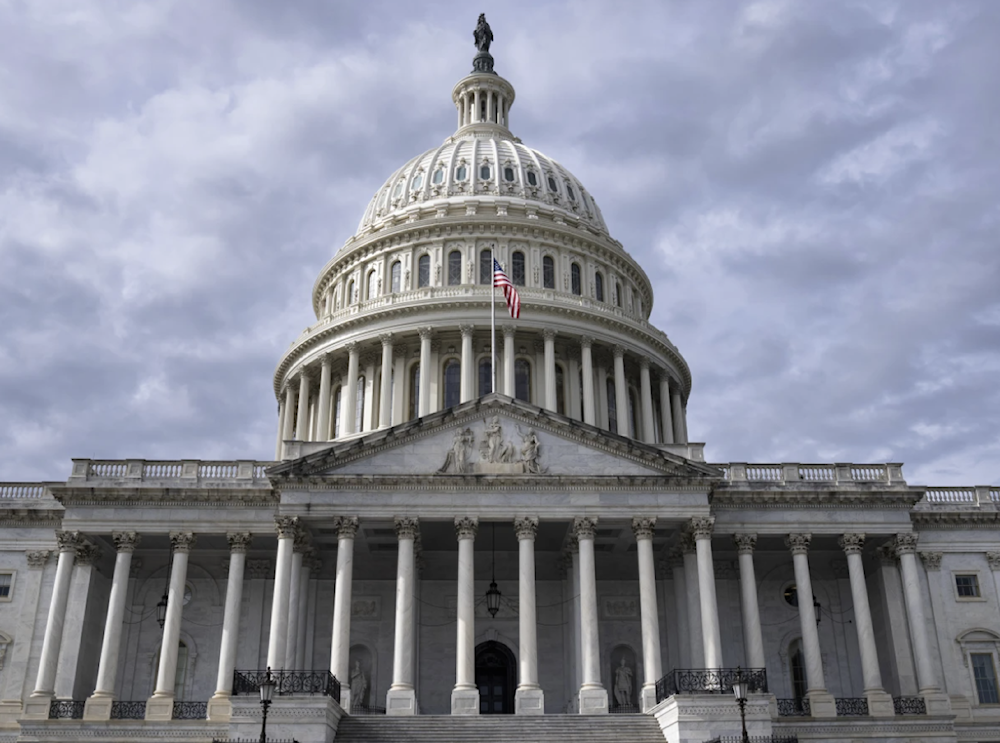
The Capitol is seen in Washington on November 4, 2024. (AP)
The US House of Representatives has passed a bill aimed at repealing the Caesar Act sanctions imposed on Syria, marking a major shift in Washington's approach to the country following the ouster of former president Bashar al-Assad.
Last month, the US Treasury announced a 180-day suspension of the enforcement of key provisions of the Caesar Act sanctions on Syria, implementing a partial pause that maintains the restrictions solely for transactions that involve Russia and Iran.
The proposal to roll back the sweeping sanctions was passed as part of the National Defense Authorization Act (NDAA), a broader defense spending package. The measure, which had long been used to strangle Syria’s economy under the pretext of punishing the former government, now heads to the Senate for a final vote.
Turning the page on the Caesar Act
“With this NDAA, as many know, we are repealing sanctions on Syria that were placed there because of Bashar al-Assad and the torture of his people,” said Representative Brian Mast of Florida during the House session. He added that the repeal offers Syria “a chance to chart a post-Assad future,” though he noted the White House retains the authority to reimpose sanctions if deemed necessary.
Since the fall of al-Assad in December 2024, Washington has taken steps to reverse some of its most aggressive measures against Damascus. Trump recently met with Syria’s new president, Ahmad al-Sharaa, and lifted several sanctions by executive order, but full repeal requires congressional approval.
The repeal of the Caesar Act has been a key demand of the new Syrian leadership, which has argued that the sanctions only deepened the suffering of ordinary Syrians and obstructed the country’s recovery.
Syrian Central Bank Governor Abdulkader Husrieh recently called the lifting of sanctions a “miracle” and stressed that economic stability would remain impossible as long as restrictive measures continue.
Humanitarian and regional reactions
Human rights organizations and economic observers have welcomed the move to repeal the Caesar Act. Many argued that the sanctions collectively punished the Syrian population and obstructed access to basic services, rebuilding efforts, and humanitarian aid.
The United Nations Security Council recently voted to lift sanctions on President al-Sharaa and Interior Minister Anas Khattab, who previously had terrorist designations.
The bill will now move to the US Senate, where it is expected to be voted on before the end of the year. If passed, it will formally end one of the most punishing sanction regimes imposed during the 13-year-long war on Syria.


