
Axios details US kidnapping of Venezuela's President Maduro
 3 Min Read
Axios reports on the details leading up to the kidnapping of Venezuelan President Nicolas Maduro.
-
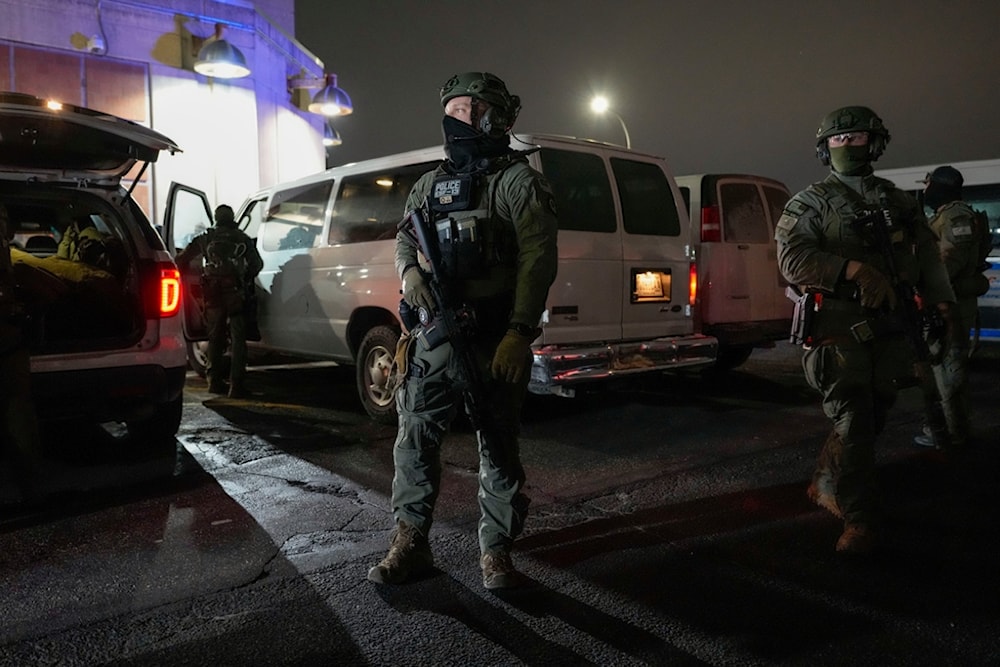
Federal law enforcement personnel patrol outside the Metropolitan Detention Center as they await the arrival of kidnapped Venezuelan President Nicolas Maduro, Saturday, January 3, 2026, in New York. (AP Photo/Yuki Iwamura)
Axios on Sunday provided a detailed report of how US President Donald Trump personally authorized the kidnapping of President Nicolás Maduro, an operation Caracas has condemned as a flagrant violation of national sovereignty and part of a long-standing US campaign aimed at forcing political capitulation and securing access to Venezuela’s oil wealth.
Trump said he issued the order at 10:46 p.m. ET, pairing it with a message to the forces involved: "Good luck and godspeed."
How the raid happened
According to Axios, the order set roughly 150 aircraft into motion and culminated in a commando-style raid on a fortified compound in Caracas. Trump claimed he watched the operation unfold live from his Mar-a-Lago residence.
Trump alleged that US forces cut power to the area and that the assault team encountered "a lot of gunfire" before taking control of the compound. He also claimed that Maduro and his wife, Cilia Flores, attempted to reach a reinforced safe room, adding that the team had prepared to breach the door if necessary, saying it took "47 seconds, they say, on average."
Axios reported that Maduro was then flown from Venezuela and later shown blindfolded aboard the USS Iwo Jima in images shared by the White House and Trump.
Oil motive
While US officials framed the raid through a counternarcotics lens, the operation follows years of US sanctions targeting Venezuela’s state oil sector and repeated disputes over licensing foreign oil activity. In Caracas, this pressure campaign is widely viewed as an effort to coerce political change and reopen access to the country’s energy resources.
Venezuela holds the world’s largest proven crude oil reserves, yet its oil industry has been severely constrained by sanctions, underinvestment, and deteriorating infrastructure.
Reuters and other outlets noted that the operation immediately triggered renewed speculation over how a forced leadership change could reshape control of Venezuela’s oil sector and investment access. According to Axios, the Trump administration itself signaled plans to consult US oil executives about expanding Venezuelan output.
US pressure campaign
US officials have long relied on drug trafficking allegations to justify escalating measures against Caracas, including a US reward offer that the State Department said was increased to up to $50 million for information leading to Maduro’s arrest.
Caracas and its allies reject this narcotics framing as political cover for a coercive regime-change strategy, pointing instead to the strategic stakes surrounding oil flows, sanctions waivers, and repeated US disputes over who is permitted to operate in Venezuela’s petroleum sector. Sanctions policy and oil-sector licensing, including Chevron-related waivers and OFAC restrictions, have remained central tools of Washington’s leverage.
Trump has said the United States was "going to be running" Venezuela, while also linking next steps to contacts with Vice President Delcy Rodriguez. Trump claimed Rodriguez appeared "willing to do what we think is necessary to make Venezuela great again."
But Rodríguez rejected Washington’s posture, publicly reaffirming that Maduro remained the country’s legitimate president and declaring that Venezuela would be "nobody’s slave and nobody’s colony."
Read more: US attack on Caracas, Maduro 'disrupted peace in region': Venezuela FM


