
Blockade on Iran will have major regional, global repercussions: Iran
 4 Min Read
Iran warns of major regional and global consequences after the US imposes a naval blockade, as Tehran reports strikes on US assets in the Strait of Hormuz.
-
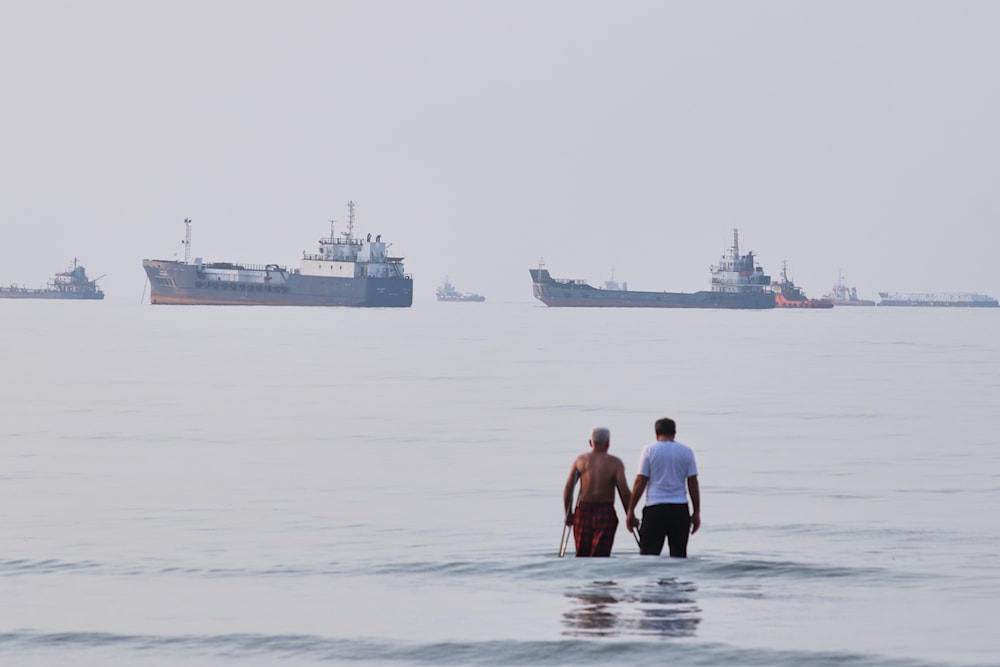
Two men wade in the waters of the Strait of Hormuz with vessels anchored in the background, off Bandar Abbas, Iran, July 12, 2026 (AP)
Iran has issued a stark warning that the US naval blockade imposed on its ports will trigger severe and unforeseen repercussions for both the region and the global economy, while its armed forces have begun direct strikes against US naval assets in the Strait of Hormuz.
Citing a military source, the Iranian news agency Noor News stated on Tuesday that the blockade would inevitably lead to the closure of key maritime corridors. “The response to this siege will be outside all calculations and beyond the imagination of its planners,” the source said, adding that the consequences would not be confined to Iran alone.
In a significant escalation, the source announced that Iranian military forces have initiated operations targeting US vessels in the region. According to the report, US ships in the Strait of Hormuz were struck directly with cruise missiles early on Tuesday.
Iran targets oil tankers violating Strait of Hormuz closure
From the early hours of the morning, Iran launched waves of artillery and missile barrages aimed at multiple US military installations and facilities in the area. Tehran described the strikes as a direct response to American aggression, which had previously targeted coastal stations and several military centers in southern Iran.
Separately, Iran’s Islamic Revolution Guard Corps (IRGC) reported that two giant oil tankers had been hit and disabled in the Strait of Hormuz after ignoring warnings from the strait’s security control center and transiting through a mined corridor. The IRGC claimed the tankers had been “deceived by the United States,” having switched off their navigation systems and attempted passage via an illegal route, thereby endangering maritime traffic.
Over the past several days, US strikes have intensified against economic infrastructure and sites in southern Iran, prompting Tehran’s forces to retaliate by targeting strategic US positions across the Gulf and intercepting vessels attempting unauthorized transits through the Strait of Hormuz.
Trump reinstates blockade on Iran, demands compensation for 'protecting shipping'
Iran's move comes in response to Trump claiming that the US is in control of the Strait of Hormuz, while asking for reimbursement for cargo passing through the Strait.
US President Donald Trump announced that the US will reinstate the naval blockade on Iran, while insisting the Strait remains "OPEN, and will remain OPEN, with or without Iran".
In a post on TruthSocial on July 13, Trump claimed that "The Hormuz Strait is OPEN, and will remain OPEN, with or without Iran. We are reinstating the THE IRANIAN BLOCKADE, so named because it is only stopping Iran’s ships or customers from entering or leaving".
He went on to claim that "All other countries will have fair and open use of the Strait. The U.S.A. will be, from this point forward, known as 'THE GUARDIAN OF THE HORMUZ STRAIT,' but as such, and as a matter of FAIRNESS, will be reimbursed, at the rate of 20% on all cargo shipped, for any and all costs necessary to do the job of providing safety and security to this very volatile section of the World."
On July 14, President Donald Trump called on Gulf nations to reimburse the United States for its military operations in the Strait of Hormuz, citing the high cost of protecting regional allies amid ongoing tensions with Iran.
Speaking to reporters in the Oval Office, Trump argued that Washington is expending significant resources to secure the strategic waterway and that compensation from regional states is now due.
"I want to be reimbursed because we're protecting a very rich portion of the world. We're spending money, so… we are going to be reimbursed for protection," Trump said.
The President specifically named Saudi Arabia, the United Arab Emirates, Qatar, Bahrain, and Kuwait as beneficiaries of US military commitments, adding that Washington is also safeguarding "Israel".
"We're protecting allies… including Israel, including Saudi Arabia, including Qatar, including UAE. We're protecting all of them, and we've done a very effective job," he stated.


