
Bolivia’s ex-President Arce jailed pending corruption trial
 3 Min Read
Bolivian ex-President Luis Arce has been placed in five-month pre-trial detention over alleged embezzlement from the Indigenous Fund during his time as minister.
-
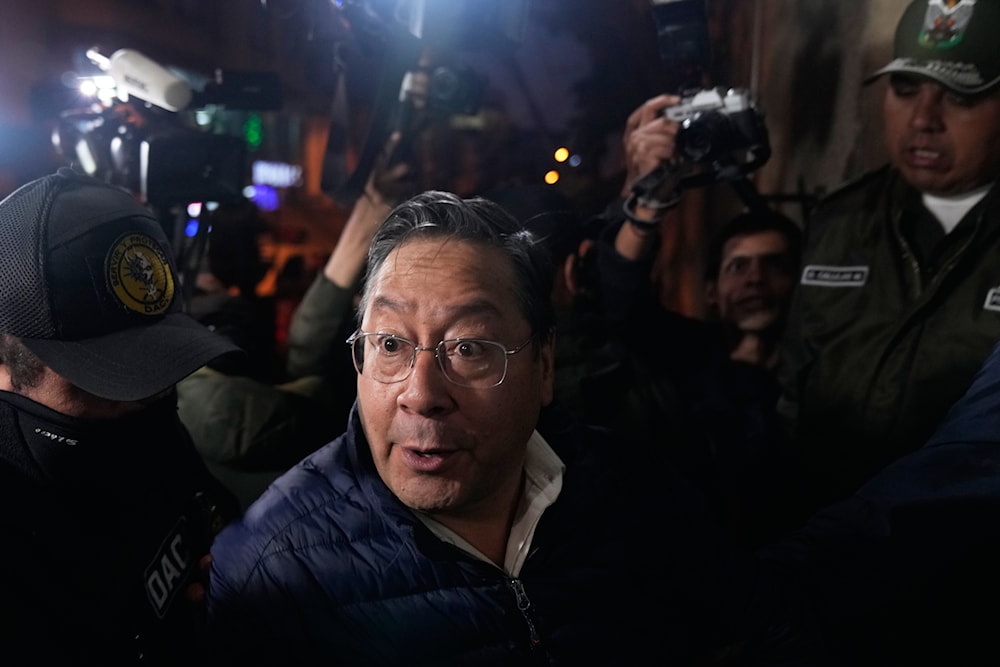
Police officers escort former President Luis Arce to San Pedro Prison after his arrest as part of a corruption investigation in La Paz, Bolivia, Friday, Dec. 12, 2025 (AP)
A Bolivian judge on Friday ordered former President Luis Arce to be held in pre-trial detention for five months following his detention earlier this week as authorities investigate alleged embezzlement during his tenure as economy minister, Reuters reported.
Arce, who stepped down last month, will be held in a La Paz prison and faces potential charges over alleged economic misconduct involving the diversion of funds intended for projects in Indigenous communities under the Indigenous Fund while he served under former President Evo Morales. A hearing has been scheduled for May 12, 2026.
The investigation centers on purported irregular disbursements from the Indigenous Fund, which was established to finance development projects for Indigenous communities. Local media, citing investigators, reported that evidence presented in the case links Arce to the alleged misappropriation of public funds.
Arce was detained by police on Wednesday and has denied any wrongdoing, telling the judge that he attended only one meeting of the fund “by chance” and was unaware of the proceedings highlighted by prosecutors during the virtual hearing.
The judge clarified that during his pre-trial detention, Arce will be held separately from sentenced inmates and will be allowed to request temporary leave from the prison for health reasons if necessary.
The scandal at hand
The scandal centers on allegations that billions of bolivianos meant to support rural and Indigenous community development were misused by officials overseeing the Indigenous Fund, a government body set up to finance social and infrastructure projects. Audits and investigations have shown that many projects were never completed, and large sums were diverted into private accounts or spent on unexecuted initiatives.
In recent legal action, authorities revived the long‑dormant probe and allege that key figures from past administrations played a central role in authorizing these irregular disbursements. What had surfaced in 2017 as a major case of financial mismanagement has now expanded into accusations implicating senior political leaders from earlier governments.
Supporters of the anti‑corruption effort argue that this crackdown is necessary to recover misspent public resources and restore trust in state institutions. They point to evidence of “ghost projects” and missing funds as justification for detentions and prosecutions.
Critics, however, contend the renewed focus on the scandal may be politically motivated, saying investigations are being used to target opponents after a shift in national leadership. This has intensified debate over the intersection of justice and politics in Bolivia’s ongoing efforts to address corruption.


