
Burnham wins Makerfield seat, deepening Labour leadership crisis
 4 Min Read
Andy Burnham's decisive Makerfield byelection victory intensifies pressure on Keir Starmer as Labour faces growing calls for leadership change.
-
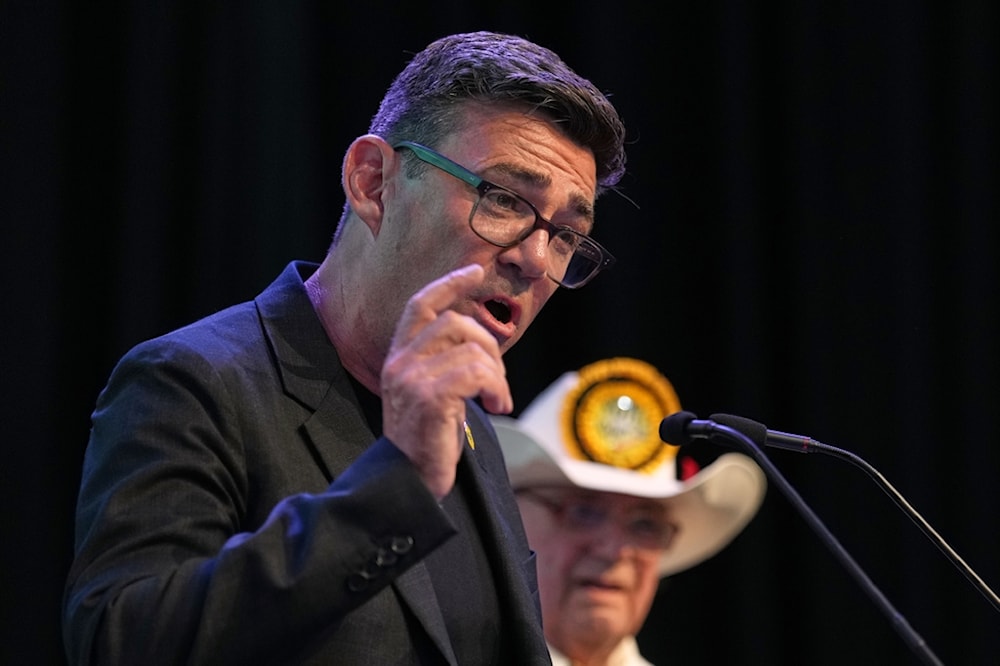
Labour Party's Andy Burnham speaks after winning the Makerfield by-election in Wigan, England, Friday, June 19, 2026. (AP Photo/Jon Super)
Greater Manchester Mayor Andy Burnham secured a commanding victory in the Makerfield byelection on Thursday, defeating Reform UK candidate Robert Kenyon by 9,231 votes in a result that is expected to intensify debate over the future leadership of Britain's governing Labour Party.
Burnham won 54% of the vote, compared with 35% for Reform UK, while the newly formed Restore Britain party secured 7%. Turnout reached 58.75%, six percentage points higher than during the 2024 general election, with 45,510 votes cast.
The scale of the victory was notable, with Burnham receiving more than 6,100 votes beyond the combined total secured by Reform UK and Restore Britain.
The result marks Burnham's return to Westminster nearly a decade after leaving Parliament, reinforcing his standing among Labour members and lawmakers at a moment of growing uncertainty surrounding Prime Minister Keir Starmer's leadership.
Read more: UK PM Starmer announces social media ban for children under 16
Victory speech centers neglected regions
Addressing supporters after the result, Burnham said the vote represented a demand for political change and greater representation for communities outside London's political center.
"The result could be a turning point," he said, adding that voters had "voted for change, they have voted for more power for the north and everywhere forgotten by Westminster."
Burnham argued that Labour now faces a critical moment, describing the election as the party's "final chance to change."
"There will be no second chance but it is a chance now from this result tonight to build a new politics based on unity and hope, turning away from the path that takes us to a divided politics of the kind we see in the United States," he said.
The former cabinet minister said voters repeatedly expressed frustration that "the country works for other people and other places but not for here."
"That changes tonight," Burnham declared. "This result changes that."
Leadership pressure grows on Starmer
The byelection result is likely to fuel speculation over a potential challenge to Starmer's leadership.
While Burnham is widely viewed as the strongest potential alternative should a formal contest emerge, reporting by The Guardian indicated that some of his allies prefer avoiding an immediate confrontation and instead allowing Starmer time to determine his future.
“We’re trying to hold that back. We can’t have a Boris Johnson-style collapse. If they’re trying to force Keir’s hand with a kamikaze approach it will ultimately be counterproductive,” a senior campaign figure revealed to The Guardian.
An ally of Burnham also told the outlet that he is seeking to have the transition be "as bloodless as possible."
The result nevertheless strengthens Burnham's position considerably. His victory demonstrated an ability to unite a broad coalition of voters at a time when Labour faces mounting pressure from Reform UK and declining confidence among sections of its traditional support base.
Burnham, a former health secretary who served under Tony Blair and Gordon Brown, pledged that Makerfield would remain central to his political mission.
"Makerfield will never be a stepping stone to me – but instead will be my touchstone," he told supporters.
Read more: 50,000 march in London behind Robinson as Starmer government teeters
Labour confronts Reform UK surge
The outcome also reflected significant shifts in Britain's political landscape.
Conservative, Liberal Democrat, and Green candidates collectively secured only 3% of the vote, down sharply from the combined 22% those parties achieved in the constituency during the 2024 general election.
Political observers suggest Burnham benefited from tactical voting by constituents seeking to prevent a Reform UK victory.
Attention is now turning toward the Greater Manchester mayoralty, where Labour is expected to face another major electoral test against Reform UK. A mayoral byelection involving approximately two million voters is expected to take place on July 30.


