
Canada picks Germany's TKMS for largest submarine deal in its history
 4 Min Read
Canada has chosen Germany's TKMS over South Korea's Hanwha Ocean to build 12 submarines, its largest defense procurement ever.
-
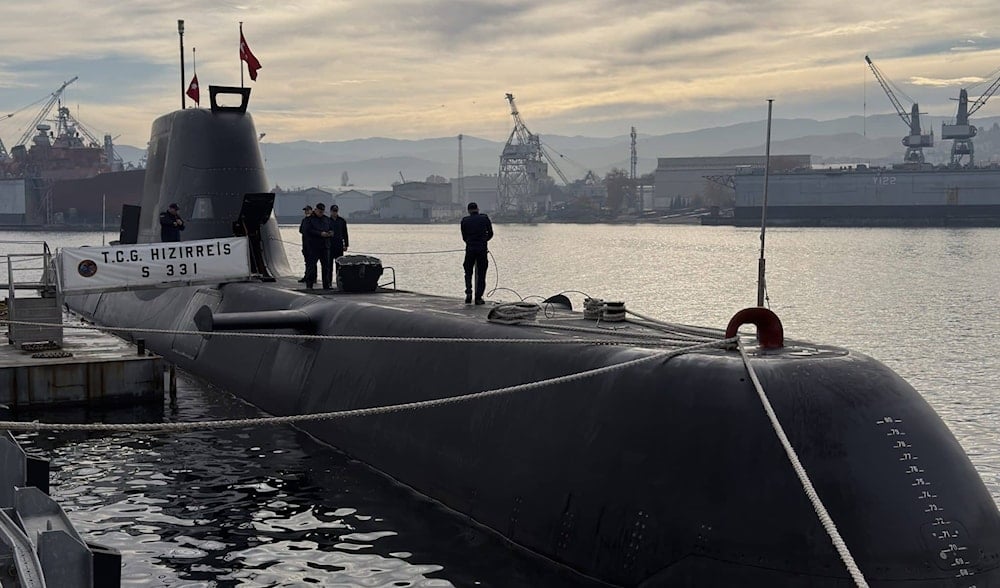
TCG Hizirreis, the second Reis-class AIP submarine (Credit: TKMS)
Canada has selected Germany's ThyssenKrupp Marine Systems (TKMS) to build up to 12 new submarines, marking the largest defense procurement in the country's history, the Financial Times reported.
Prime Minister Mark Carney made the announcement Monday in Halifax, just before departing for a NATO summit in Ankara, Turkey.
The contract, tied to Canada's Patrol Submarine Project, will replace the aging Victoria-class fleet purchased in 1998. Ottawa says only one in four of its current submarines is seaworthy.
Deal details still being finalized
Carney did not disclose a total cost, saying negotiations with TKMS would take several months. Estimates vary widely across sources. Canada's Globe and Mail put the submarines' cost at CA$20-30 billion ($14-21 billion), with total lifetime maintenance and operations reaching CA$40-50 billion ($28-35 billion) more.
Germany's DPA news agency cited a figure of roughly €20 billion ($22.8 billion) for the vessels and support combined. Public broadcaster CBC reported the purchase price could reach $24 billion Canadian, with the full program, including decades of maintenance, potentially exceeding $100 billion.
If talks with TKMS collapse, Canada has said it retains the option to turn to Hanwha Ocean's KSS-III, the South Korean bid that lost out in the competition.
TKMS' proposal, developed jointly with Norway, centers on the Type 212CD, a conventionally powered, under-ice-capable submarine already in service with the German and Norwegian navies.
German Defense Minister Boris Pistorius said the arrangement would eventually give Canada, Germany, and Norway a combined fleet of 24 submarines, calling it the world's largest and most modern conventional submarine force.
Economic incentives attached to the bid
Beyond the military package, German and TKMS officials have pointed to broader economic pledges.
Figures obtained by CBC put the potential impact at $86 billion in GDP growth and over 654,000 job-years of employment across the deal's lifespan, with as many as 50,000 jobs created within five years.
The offer reportedly includes new submarine maintenance facilities on both Canadian coasts, torpedo and anti-torpedo manufacturing centers, a possible hypersonic missile testing facility, domestic production of propulsion systems and batteries, agreements with four Indigenous development organizations, and unrelated investments in Manitoba's Port of Churchill and an Alberta carbon capture project.
TKMS shares rose 11 percent following the announcement.
Part of wider NATO push
The announcement lands just ahead of the NATO summit, where member states face continued pressure from Washington to raise military spending. Canada has already reached NATO's 2 percent GDP defense spending benchmark and has pledged to hit 5 percent by 2035.
Carney is expected to present the submarine deal alongside a proposed defense investment bank meant to ease NATO members' access to arms-industry financing.
Analysts cited by CBC describe the choice as reinforcing Canada's alignment with Europe at a moment when Washington's commitment to the alliance is increasingly in question.
Carleton University's Philippe Lagassé told CBC that selecting the German-Norwegian bid signals deeper integration into NATO and potential Arctic defense cooperation with Nordic states, whereas the Korean option would have pointed toward closer Indo-Pacific ties.
Speaking to CBC, former Canadian diplomat Marius Grinius called the outcome a squandered opportunity in the Indo-Pacific, arguing Canada's long-term interests lie in the region despite NATO considerations.
Carney reportedly spoke with South Korean President Lee Jae Myung over the weekend and acknowledged the decision would disappoint Seoul, but insisted Canada remains committed to its Indo-Pacific strategy through other bilateral initiatives.


