
CENTCOM claims US never required Kiev's assistance against Iran drones
 2 Min Read
US CENTCOM chief Adm. Brad Cooper denied reports that Ukraine assisted Washington in countering Iranian drones, rejecting allegations raised during a House hearing on the US aggression against Iran.
-
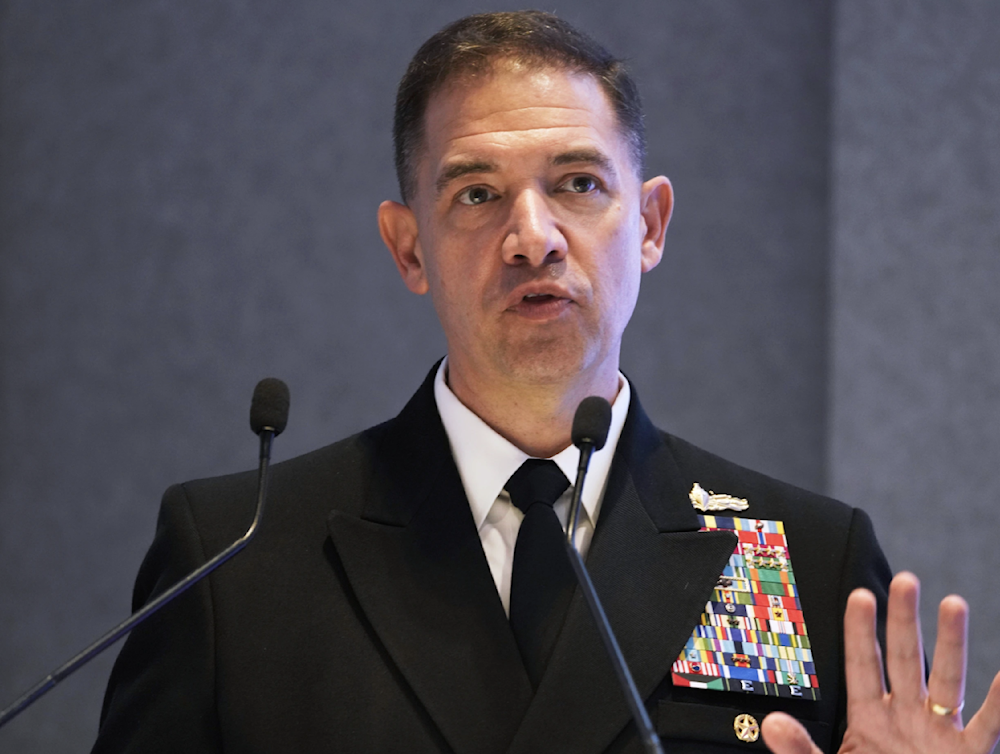
U.S. Navy Vice Adm. Brad Cooper, speaks at an event at the International Defense Exhibition and Conference in Abu Dhabi, United Arab Emirates, Feb. 21, 2023. (AP Photo/Jon Gambrell, File)
US Central Command (CENTCOM) chief Adm. Brad Cooper denied reports claiming Ukraine had assisted the United States in countering Iranian drones.
Speaking during a House hearing on Tuesday, Cooper rejected assertions made by a US lawmaker, who said Washington had relied on Kiev’s assistance despite repeated claims about the effectiveness of US missile defense systems.
The lawmaker had revealed that the US needed Ukrainian support to combat Iranian drones during the early stages of the aggression against Iran.
“That’s not accurate,” Cooper responded.
Ukrainian President Volodymyr Zelensky revealed in March that Kiev had received a request from the United States for “specific support in protection against” drones targeting American assets in the region.
Iran reports Ukrainian presence in Gulf during war
In March, an Iranian political-security source told Al Mayadeen that intelligence confirmed the existence of Ukrainian troops in the UAE and Kuwait, both of which saw strikes on the US military bases on their territories. The UAE also launched attacks against Iran throughout the war.
The source noted that Iranian strikes on US-Israeli assets in the UAE and Kuwait directly targeted American and Ukrainian forces based on specific coordinates.
During the same period, Zelensky was on a tour of West Asia in recent days, landing several defense deals with key states.
Zelensky, at the time, inked a deal with Saudi Arabia, stating in a statement that the deal “lays the foundation for future contracts, technological cooperation, and investment" that can benefit both nations.
He inked deals with both the UAE and Qatar, both seeking joint expertise on areas of defense, as US-linked sites in the Gulf came under retaliatory Iranian attacks.
Read more: US allies worry Ukraine arms plan amid Iran war strain


