
US allies worry Ukraine arms plan amid Iran war strain
 5 Min Read
European allies are raising concerns over a US program funding weapons for Ukraine, as Iran-related operations strain Washington's stockpiles and delay deliveries.
-
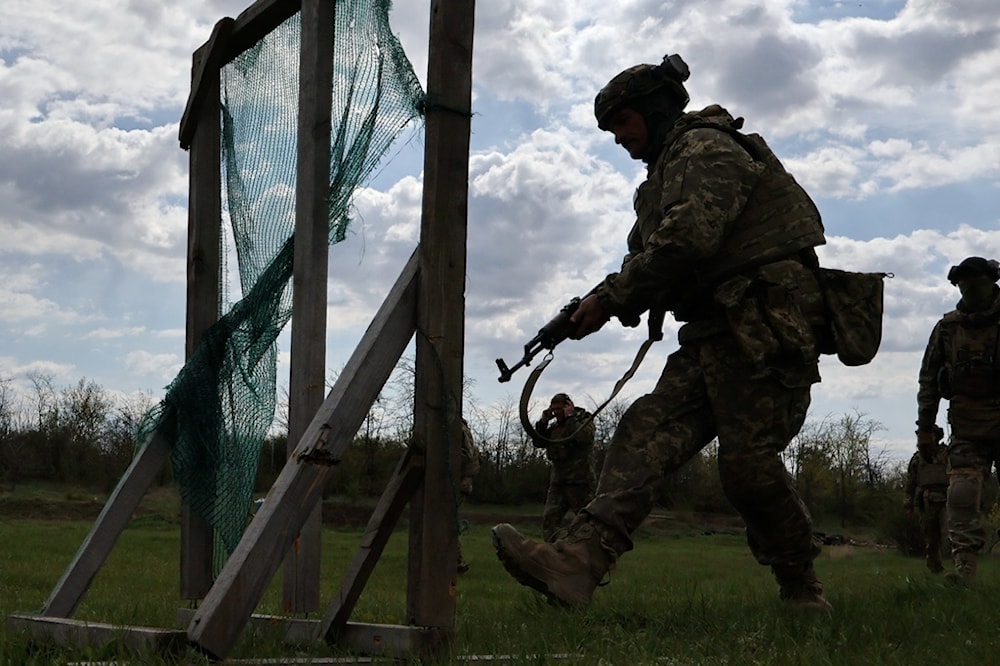
In this photo provided by Ukraine's 65th Mechanized Brigade press service, recruits practice military skills at a training ground near the frontline in the Zaporizhzhia region, April 29, 2026 (Ukraine's 65th Mechanized Brigade via AP)
US allies in Europe are increasingly concerned about a signature Trump administration program to arm Ukraine, as the war involving Iran depletes American weapons stockpiles and raises questions about how the Pentagon is managing military spending, according to diplomats, officials, and congressional aides.
The main point of concern is whether the United States can sustain long-term weapons deliveries to Ukraine while simultaneously supporting its own and the Israeli occupation's ongoing aggression in West Asia, which has placed additional pressure on precision-guided munitions and air defense systems.
A key issue driving concern is the growing delay in US weapons sales and deliveries, linked to the rapid use of precision weapons during the wars on Iran and Lebanon alongside the Israeli occupation.
Although officials said the Trump administration has not diverted equipment already pledged to Ukraine since the war on Iran began, European governments fear that existing shortages could eventually slow shipments.
NATO-backed PURL program under scrutiny
These concerns are particularly sensitive given Europe’s central role in funding and coordinating military assistance to Kiev.
European countries currently finance US arms for Ukraine through the Prioritized Ukraine Requirements List (PURL), a NATO-brokered initiative designed to ensure delivery of advanced American systems such as air defense interceptors.
The program has already mobilized more than $5.5 billion from allied contributions, according to NATO officials, and has been described as a key mechanism for sustaining Ukraine’s battlefield capabilities.
However, some European states are reportedly becoming more cautious about committing additional funds, reflecting uncertainty over future US production capacity and delivery timelines.
Pressure on US defense supply chains
The Trump administration has also pushed NATO allies to purchase more American weapons for their own defense needs, as member states increase military spending targets.
But officials warn that limited Pentagon stockpiles are now affecting delivery schedules not only for Ukraine but also for allied countries in Europe and Asia, with some systems potentially delayed for years.
A Pentagon official said the list of weapons available through PURL is coordinated with Ukraine, the US European Command, and senior defense officials to balance battlefield needs with US readiness.
The concerns over weapons deliveries come amid growing political friction between Washington and European capitals, particularly over US military actions in Iran and their global economic impact.
While NATO officials say contributions to the program continue and that weapons are still reaching Ukraine’s air defense systems, lawmakers in the United States have also begun scrutinizing unspent funds allocated for Ukraine assistance, adding further pressure on the Pentagon’s procurement strategy.
US warns allies of weapons delays
The Pentagon has warned that several US allies will face delays in receiving advanced weapons systems, as Washington reassesses its inventory following heavy usage during the war on Iran, the Financial Times reported earlier in May.
Officials from countries including the United Kingdom, Poland, Lithuania, and Estonia have been informed that deliveries of key missile systems may be pushed back. The report, citing multiple sources familiar with the discussions, also indicated that similar delays could affect US partners in Asia, notably Japan and South Korea.
The Pentagon said it was “carefully evaluating new requests for equipment from partners as well as existing arms transfer cases to ensure alignment with operational needs.”
Among the systems impacted are munitions for HIMARS launchers and NASAMS air defense platforms, in addition to other high-demand missile technologies. The reassessment reflects mounting pressure on US stockpiles after sustained military activity in West Asia, forcing Washington to increasingly prioritize its own reserves over foreign deliveries.
Stockpile strain widens
The slowdown in deliveries is already raising concerns in Europe and beyond. Ukraine, which continues to face ammunition shortages in its war with Russia, is expected to be further affected. A senior Ukrainian official told the Financial Times that US weapons shipments to Kiev had experienced delays since the start of the war on Iran.
Recent analyses point to the scale of the drawdown. A study by the Center for Strategic and International Studies (CSIS) found that US forces expended thousands of advanced munitions over the course of the war, including Tomahawk cruise missiles, Patriot interceptors, and THAAD systems.
Estimates cited in the assessment indicate that more than 850 Tomahawk missiles alone were used, alongside thousands of Patriot missiles, driving total costs into the tens of billions of dollars.
These systems form a core part of US strategic military planning, and their depletion has heightened concerns about long-term readiness. Analysts note that stockpiles had already been under pressure prior to the war, largely due to sustained military support for Ukraine, leaving inventories below optimal levels even before the latest escalation.
The situation has also intensified debate in Washington over the country’s readiness to respond to potential crises elsewhere, particularly in the Indo-Pacific. Analysts warn that depleted inventories could weaken deterrence in the event of tensions with China over Taiwan, with some warning that the United States may face constraints in sustaining multiple theaters simultaneously.


