
China orders refineries to ignore US sanctions on Iran oil purchase
 5 Min Read
China has rejected US sanctions on Iranian oil imports, ordering domestic refiners and banks to ignore Washington’s measures.
-
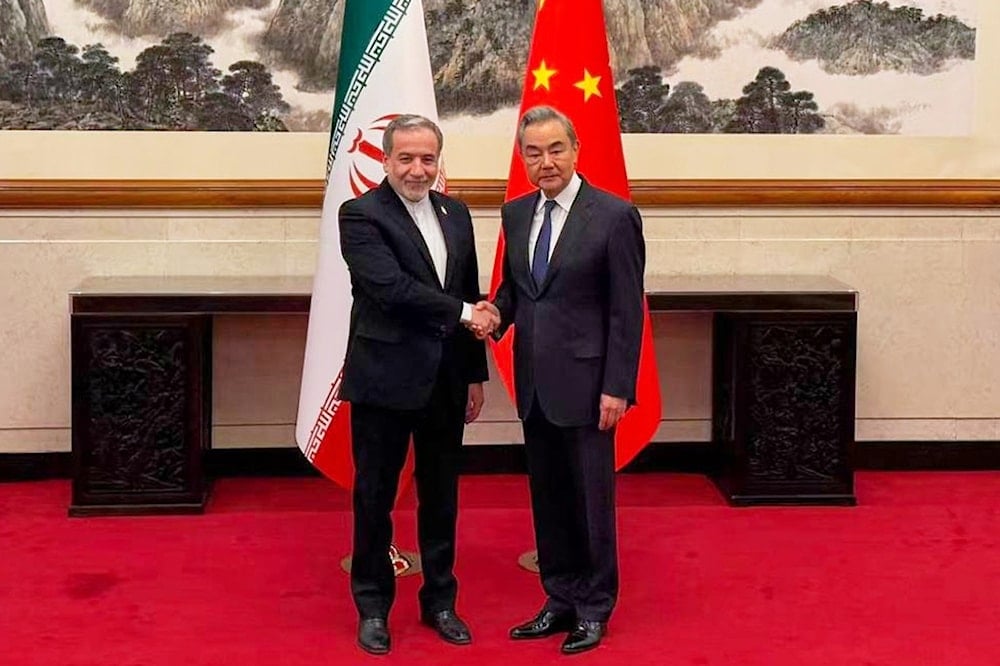
China's Foreign Minister Wang Yi, right, meets with Iran's Foreign Minister Abbas Araghchi in Beijing, China, Wednesday, May 6, 2026 (Telegram channel of the Iranian Foreign Minister via AP)
China has moved to explicitly reject US sanctions targeting Iranian oil imports, instructing domestic refineries and financial institutions not to comply with Washington’s unilateral measures, in a significant assertion of economic sovereignty, CNN reported.
The decision comes ahead of a visit to Beijing by Iran’s foreign minister, Abbas Araghchi, and amid escalating US pressure on Chinese companies accused of continuing to purchase Iranian crude despite sanctions.
According to Chinese state media, the commerce ministry for the first time invoked its 2021 anti-foreign sanctions law, framing the step as a legal response to what Beijing describes as US “long-arm jurisdiction” over global trade.
China rejects unilateral US sanctions framework
The Chinese commerce ministry ordered domestic refineries and banks to reject the enforcement or recognition of US sanctions on Iranian oil, marking a rare and direct institutional challenge to Washington’s sanctions regime.
The move targets multiple Chinese entities, including major independent refiners that have continued importing Iranian crude despite repeated US penalties.
Washington has intensified pressure in recent months, sanctioning several Chinese firms and accusing them of indirectly supporting Iran’s energy exports under the ongoing US-Israeli war on Iran.
US Treasury officials have also attempted to link Chinese energy purchases from Iran to broader regional instability, including the situation in the Strait of Hormuz, where shipping flows have been heavily disrupted.
Energy trade becomes a legal and political battleground
China’s position reflects its broader rejection of unilateral sanctions and its insistence that international trade must not be subject to what it considers extraterritorial enforcement by the United States.
Beijing has consistently argued that energy cooperation with Iran falls within legitimate sovereign economic relations and should not be politicized.
The latest measures also underscore growing alignment between Beijing and Tehran, as both sides face increased pressure from Washington in the energy and financial sectors.
Araghchi visit underscores deepening ties
Iranian Foreign Minister Abbas Araghchi’s visit to Beijing this week highlights the strengthening diplomatic coordination between the two countries amid continued US escalation.
The meeting with Chinese Foreign Minister Wang Yi comes as both sides seek to coordinate responses to sanctions pressure and maintain stability in energy trade flows.
The timing of the visit, ahead of a planned US-China summit, adds further geopolitical weight, as energy security and sanctions policy remain central points of tension between Washington and Beijing.
Larry Johnson: China moves beyond diplomatic restraint
In comments to Al Mayadeen, former CIA analyst Larry Johnson said China’s latest move reflects a sharp escalation in its response to US sanctions policy, marking a departure from its traditionally cautious diplomatic posture.
Johnson explained that Beijing issued what he described as a “blocking order” under its 2021 legal framework on countering the extraterritorial application of foreign laws. He noted that this is the first time China has used such measures in a direct prohibition order against US sanctions compliance.
“Beijing has already made its position quite clear,” Johnson said, adding that China has ordered “Chinese refineries, Chinese banks not to comply at all with US sanctions and threats of sanctions.”
He stressed that the scope of the measure is unprecedented, stating that it “explicitly bans Chinese entities from recognizing, enforcing, or complying with US sanctions” targeting several firms, including major refiners such as Hengli Petrochemical and Shandong-based teapot refineries.
Johnson described the development as a turning point, saying, “This is quite an unusual move on the part of China, who is usually pretty diplomatic and pretty restrained. But not yesterday.”
He added that the decision reflects Beijing’s legal and political framing of US actions, arguing that China is “sending a very strong message to the United States that it has engaged in illegal, illicit actions that have no basis under international law.”
According to Johnson, Beijing is rejecting what it sees as Washington’s attempt to impose unilateral jurisdiction globally. “China is not about to sit by and be lectured by an international lawbreaker about what is international law,” he said, particularly in relation to Iran and maritime trade.
He further noted that China and Russia are increasingly aligned in their assessment of US policy, stating that both countries view Washington as acting “in contravention of international law” and are “not going to countenance it or excuse it in any form or fashion.”
Read more: China 'reliable strategic partner of Iran': Wang Yi to Araghchi


