
Colombia recognizes 'Israel's' sovereignty over occupied Golan Heights
 6 Min Read
Colombia recognizes "Israel's" sovereignty over the occupied Golan Heights, following the US decision in 2019 to recognize the territory as "Israeli".
-
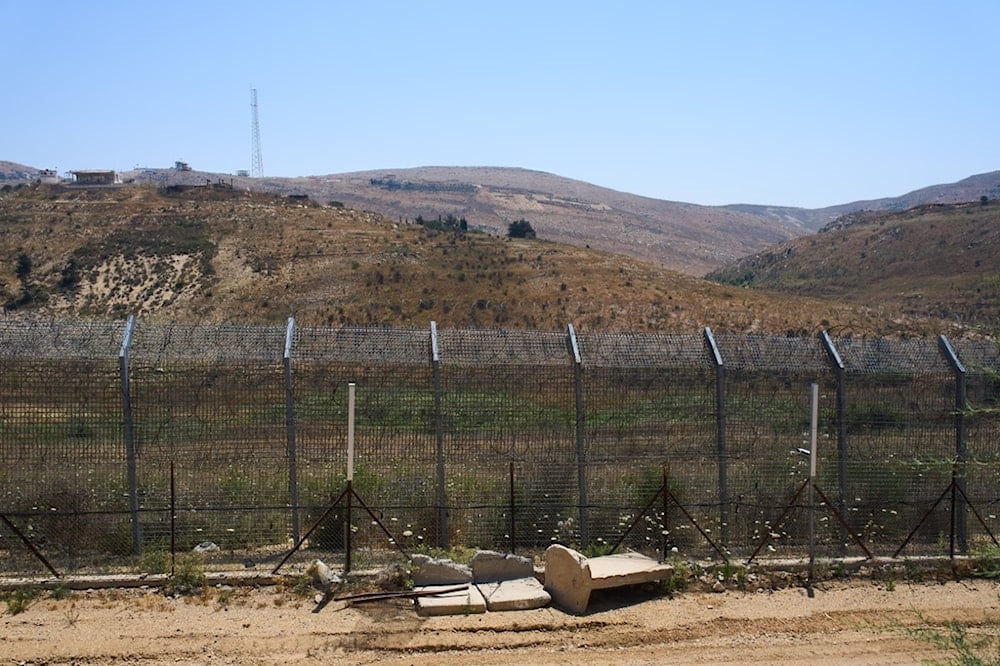
The border between Syria and the Israeli-controlled Golan Heights town of Majdal Shams is seen Tuesday, July 21, 2026. (AP Photo/Ariel Schalit)
Colombia has become the second country in the world, after the United States, to recognize "Israel's" sovereignty over the occupied Golan Heights, the Colombian Foreign Ministry said Monday.
"Given the ongoing regional instability in the Middle East and the strategic importance of the Golan Heights for Israel's security, the Colombian government recognizes Israel's sovereignty over this territory, as well as the state's right to defend itself against external threats," the ministry said.
The decision was issued under an agreement between Colombia and "Israel" on August 8, one day after the inauguration of President Abelardo de la Espriella, the ministry added.
'Israel' behind Colombia's new presidency
The recognition of Israeli sovereignty after the inauguration of Colombia's president comes as no surprise when the president-elect has pledged to restore diplomatic relations with "Israel".
It also coincides with renewed statements by outgoing President Gustavo Petro that Israeli entities played a role in manipulating Colombia's presidential election, through software that altered vote counts, saying that the president-elect lacks democratic legitimacy, and raising questions over the political calculations behind Bogota's swift decision.
In a statement, Petro stated that Israeli-developed software, financed through proceeds from cocaine trafficking to the United States and private Israeli intelligence funds, was used to replace legitimate votes cast by Colombian citizens, changing the outcome of the election in favor of right-wing candidate De La Espriella.
According to Petro, the software had been pre-installed within private companies responsible for processing election results and may have altered as many as 1.8 million votes.
He said that left-wing candidate Iván Cepeda had won the election based on the ballots cast at polling stations, but a different result was ultimately announced. Petro described the use of the Israeli software as a violation of Colombia's national sovereignty.
Golan Heights remain subject to international dispute
The Syrian Golan Heights were under its sovereignty until 1967, when Israeli forces occupied the territory during the Six-Day War. Following the 1973 October War, the two sides reached an armistice and separation of forces agreement, while United Nations peacekeeping positions were established in the Golan Heights in 1974.
In March 2019, then-US President Donald Trump formally recognized the Golan Heights as part of "Israel", making the United States the first foreign country to recognize Israeli sovereignty over the territory.
Following the US decision, the majority of UN Security Council members expressed regret and reaffirmed their position that the Golan Heights is occupied Syrian territory.
Back in 2025, the Syrian Foreign Ministry stressed that Damascus’ participation in any "talks related to technical matters that may affect the security of Syria and the region" does not mean "the abandonment of Syria’s firm right to the occupied Golan."
In an official statement, the ministry reiterated that "the Golan will remain Syrian land, and there is no legitimacy for the Israeli occupation there." It also thanked countries that backed a UN General Assembly resolution calling for "ending the Israeli occupation of the occupied Syrian Golan," saying the support reflected international commitment to resolutions affirming the Syrian people’s right to their occupied territory.
During a visit to an Israeli hospital to meet soldiers wounded in confrontations in southern Syria, Israeli Prime Minister Benjamin Netanyahu said the territory was considered essential to the security of settlers and outlined the conditions he said would be necessary for any future agreement.
"What we expect Syria to do, of course, is to establish a demilitarized buffer zone from Damascus to the buffer zone area, including, of course, the approaches to Mount Hermon and the summit of Mount Hermon. We hold these territories to ensure the security of the citizens of Israel, and that is what obligates us. In a good spirit and understanding of these principles, it is also possible to reach an agreement with the Syrians."
Syria open to 'long-term' negotiations with 'Israel'
Speaking in mid April of this year, at a diplomatic forum in the Turkish city of Antalya, Syrian President Ahmed al-Sharaa said his government could entertain "long-term negotiations" with "Israel" over the Golan Heights if it agrees to pull back from recently captured Syrian lands.
Since the collapse of former Syrian president Bashar al-Assad's government in December 2024, Israeli forces have moved into a UN-patrolled buffer zone that had previously separated "Israeli" and Syrian military positions on the strategic plateau.
Al-Sharaa stated that Syria seeks either to establish new arrangements that would reactivate the existing disengagement agreement or to conclude a fresh accord that would ensure the security of both parties.
"If we reach an agreement, we could enter into long-term negotiations to resolve the issue of the occupied Golan," the Syrian leader told attendees at the diplomatic gathering.
'Israel' approves $334 mln Golan settlement plan
Meanwhile, in late April, the Israeli regime has approved a $334 million plan to expand illegal settlements in the occupied Syrian Golan Heights, Human Rights Watch (HRW) said, warning that the decision amounts to a clear statement of intent to commit war crimes.
The plan, adopted by the Israeli cabinet on April 17, aims to expand the settlement of Katzrin, founded in 1977, into what Israeli officials have described as the Golan's "first city," with a stated goal of relocating 3,000 new Israeli settler families to the occupied territory by 2030.
The plan covers infrastructure, housing, public services, and academic facilities, including a new university branch and specialized medical facilities.
"Israel's cabinet has put public money behind a war crime in Syria at the same time as it is turbocharging settlement expansion in the West Bank alongside continued impunity for violence against Palestinians there," said Hiba Zayadin, senior Syria researcher at Human Rights Watch. "A permanent population transfer into Syrian territory violates international norms with grave implications for long-displaced Syrians."
Read more: Southern Syria under Israeli fire: Is a new occupation taking shape?


