Condemnations pour in after Sayyed Khamenei's martyrdom
 9 Min Read
Yemeni and Iraqi leaders say Sayyed Khamenei's martyrdom will strengthen the path of resistance, affirming that the blood of the martyrs will not be shed in vain.
-
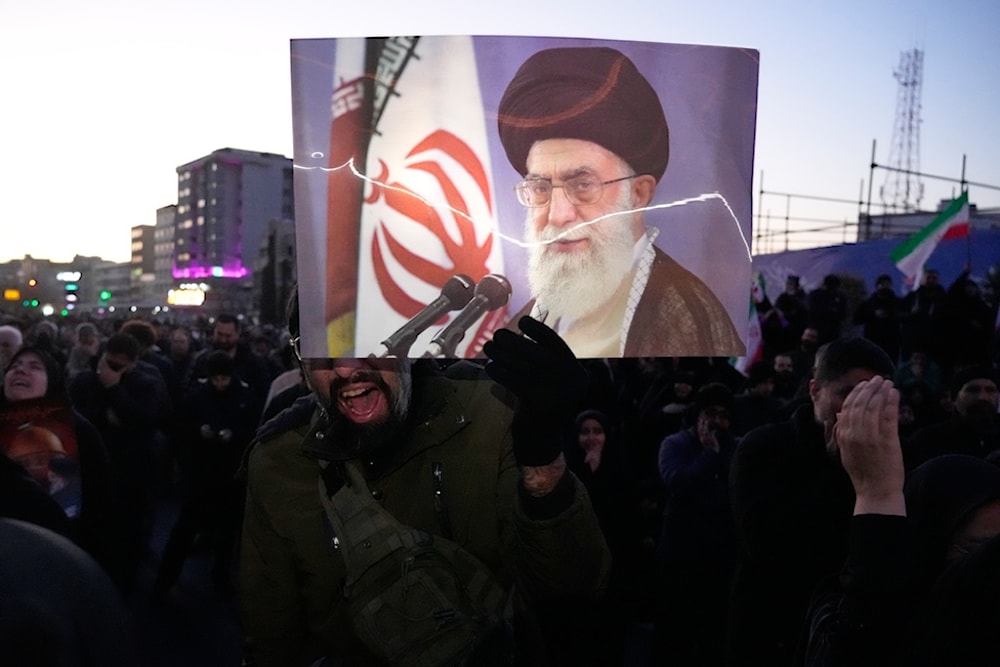
Iranians mourn in a gathering after state TV officially announced the martyrdom of Iran's Leader Sayyed Ali Khamenei, shown in the poster, in Tehran, Iran, Sunday, March 1, 2026 (AP)
Officials and political factions in Yemen and Iraq have issued strong statements of condolence following the martyrdom of the Leader of the Islamic Revolution and the Islamic Republic of Iran, Sayyed Ali Khamenei, vowing that his legacy of resistance will endure and that the blood of the martyrs will not be shed in vain.
Yemen: The blood of martyrs will not be shed in vain
The Supreme Political Council in Yemen affirmed that "the martyrdom of the Leader of the Revolution and the Islamic Republic of Iran, Sayyed Ali Khamenei, will increase the Iranian people in strength and determination, and the path of jihad and defending what is right will continue without retreat."
It added that "Sayyed Khamenei embarked on a long freedom-fighting journey confronting the enemies of the Islamic nation, the Zionists and the Americans, and concluded his life with martyrdom at the hands of the enemies of God and the killers of the prophets."
The council condemned the act as "a blatant violation of all international laws and norms and a manifestation of the ongoing unjust assault on the Islamic Ummah."
It stressed that "this crime confirms that the blood of the martyrs will not be shed in vain and that the revolutionary will embodied by the martyr will remain a torch guiding the nation."
On its part, the Political Bureau of Ansar Allah in Yemen also affirmed its "full support for Iran and its commitment to proceed alongside all the free people of the nation in the battle of the Promised Victory and the sacred Jihad."
Iraq declares three days of national mourning
The Iraqi government, through its official spokesperson Bassem al-Awadi, expressed condolences on the martyrdom of Sayyed Khamenei, "following a blatant aggression, an act condemned for violating all human and ethical norms and clearly breaching international laws and conventions.”
Iraq also renewed a serious call for the immediate and unconditional cessation of military actions, warning that ongoing operations are driving the region toward unprecedented levels of violence, inflaming the struggle, and undermining international peace and security.
The government has declared three days of nationwide mourning.
Sayyed al-Sistani: Unity in the face of aggression
Iraq’s top religious authority, Sayyed Ali al-Sistani, also extended his condolences to the Iranian people and Muslims worldwide over Sayyed Khamenei’s martyrdom.
He stated that “there is no doubt that the enemies intended, through his martyrdom and the launching of wide-scale military aggression against Iran, to inflict severe harm on this dear country.”
Sayyed al-Sistani called on the Iranian people to preserve unity and close ranks, stressing that they must not allow aggressors to achieve their objectives.
Fully-fledged terrorist crime: PMF Authority chief
Falih al-Fayyadh, head of Iraq’s Popular Mobilization Authority, mourned Sayyed Khamenei after his martyrdom in a "treacherous American-Zionist aggression," which he described as a "fully fledged terrorist crime that constitutes a blatant violation of international laws and humanitarian norms.”
He stressed that “this sinful aggression does not target a leader alone, but rather a high religious and political position, in a desperate attempt to break the will of peoples and silence the voice of resistance.”
He added that “the martyr, for decades, was a symbol of steadfastness and resilience, a firm leader in confronting projects of hegemony and colonialism. He never altered his path nor compromised on the nation’s principles, until he concluded his journey with martyrdom, which he long regarded as the highest badge of honor.”
CF: His blood will remain a beacon for generations
On its part, the Iraqi Coordination Framework mourned Sayyed Khamenei, stating, "The blood of the martyred leader and Imam will remain a beacon for all generations and a continuous cry in the face of tyranny and usurpers."
"With deep sorrow and profound grief, we mourn the passing of the martyred leader Imam, Sayyed Ali Khamenei," affirming that "the blood of the martyred leader will remain a beacon for all generations and a continuous cry in the face of tyranny and usurpers, and the curse will continue to pursue the Zionist killers for as long as time endures."
Religious Authority Jawad al-Khalisi also issued a statement, saying, "With hearts that believe in God’s decree and destiny, and filled with patient resolve, we received the news of the martyrdom of Grand Ayatollah Sayyed Ali Khamenei."
He added, "Sayyed Khamenei answered his Lord’s call during the blessed month of Ramadan, martyred while fasting, strong in faith, having devoted his life to defending the causes of his nation."
Lebanon: Martyrdom will strengthen national resolve
In Lebanon, Deputy Head of the Supreme Islamic Shiite Council Sheikh Ali al-Khatib also mourned Sayyed Khamenei, stating that he had placed the Islamic Republic of Iran among advanced nations and devoted its capacities in the service of confronting forces of aggression and global injustice.
He condemned the assassination as a violation of international norms and laws, affirming that Sayyed Khamenei’s martyrdom would strengthen the unity and determination of the Iranian people and ensure the continuation of his path.
Palestine: Assassinations will not break the will of resistance
The Palestinian Mujahideen Movement and its military wing, the Mujahideen Brigades, described Sayyed Khamenei’s martyrdom as a profound loss for the Islamic Ummah and the broader Resistance front.
The movement praised his decades-long leadership in confronting global arrogance and Western hegemony and for restoring Palestine to the forefront of the region’s central struggles.
It said that throughout his tenure, he represented a clear and unwavering voice in support of the oppressed, particularly the Palestinian people, and remained a consistent backer of their resistance and their right to land, return, and liberation.
The movement added that “resistance is the truest and most effective choice in confronting the forces of injustice and reclaiming rights,” asserting that policies of assassination and aggression would "neither break the will of resistance nor secure stability for the Zionist enemy and its supporters."
A leader killed on the frontlines of responsibility
Sayyed Ali Khamenei was martyred in the early hours of Saturday in a joint US-Israeli aggression targeting Iran amid ongoing nuclear talks.
Iranian state television reported that he was martyred at his workplace while carrying out his official duties. The report said his presence in his office at the time of the attack refuted claims circulated by "outlets linked to the Israeli regime and regional reactionary currents" that he had been in a secure and undisclosed location, affirming that he remained on the frontlines of responsibility among his people.
Sayyed Khamenei: A legacy to endure
Aged 86, Sayyed Khamenei had guided the Islamic Republic since 1989, following the passing of Sayyed Ruhollah Khomeini. Having participated in the 1979 Revolution that overthrew the US-backed Pahlavi monarchy, he later served as president during much of the 1980s before assuming leadership of the country.
Over nearly four decades, he shaped Iran’s political and religious trajectory, oversaw national institutions, maintained sovereignty in the face of sustained international pressure, and strengthened Iran’s regional alliances. His tenure also witnessed major developments in Iran’s nuclear program and the expansion of the Islamic Revolution Guard Corps (IRGC) as a pillar of national defense and regional influence.
Iranian institutions mourn their leader
Iranian institutions swiftly reacted to his martyrdom. The IRGC extended its highest condolences, describing him as a towering religious scholar and "leader of the martyrs of the Islamic Revolution." It said his martyrdom at the hands of "malicious terrorists and oppressors" would not halt his path but would strengthen national resolve, warning that Iranian justice would pursue those responsible. The IRGC pledged that the armed forces and Basij would carry forward his mission.
The Supreme National Security Council of Iran described his martyrdom as a catalyst for a "great uprising against global tyrants." Meanwhile, the Iranian Presidency and government declared 40 days of national mourning and seven days of official holiday, stating that until his final moments, he guided the Islamic Ummah in confronting the forces of tyranny. The presidency vowed that the crime would not go unanswered and that his blood would inspire continued resistance.
US-Israeli aggression
The joint US-Israeli aggression against Iran was launched on February 28, with coordinated strikes reported in Tehran, Qom, Tabriz, Khorramshahr, and other areas across Iran.
In response, the Iranian Armed Forces announced retaliatory measures, confirming the launch of dozens of ballistic missiles toward "Israel", with impacts reported in Tel Aviv, Haifa, and other areas across the occupied Palestinian territories. Iranian state media reported preparations for a "crushing" response, asserting that attacks on Iranian sovereignty would not go unanswered.
Missile and drone retaliatory attacks targeted several US military bases and assets hosted in Gulf states, including Saudi Arabia, the United Arab Emirates, Bahrain, Kuwait, and Qatar.
Read more: Democrats urge Congress to block Trump's unauthorized war on Iran