
Cuban FM says no plans for future negotiations with US
 4 Min Read
Cuba’s Foreign Minister Bruno Rodríguez says there is no agenda for future negotiations with Washington, despite previous contacts between the two countries.
-
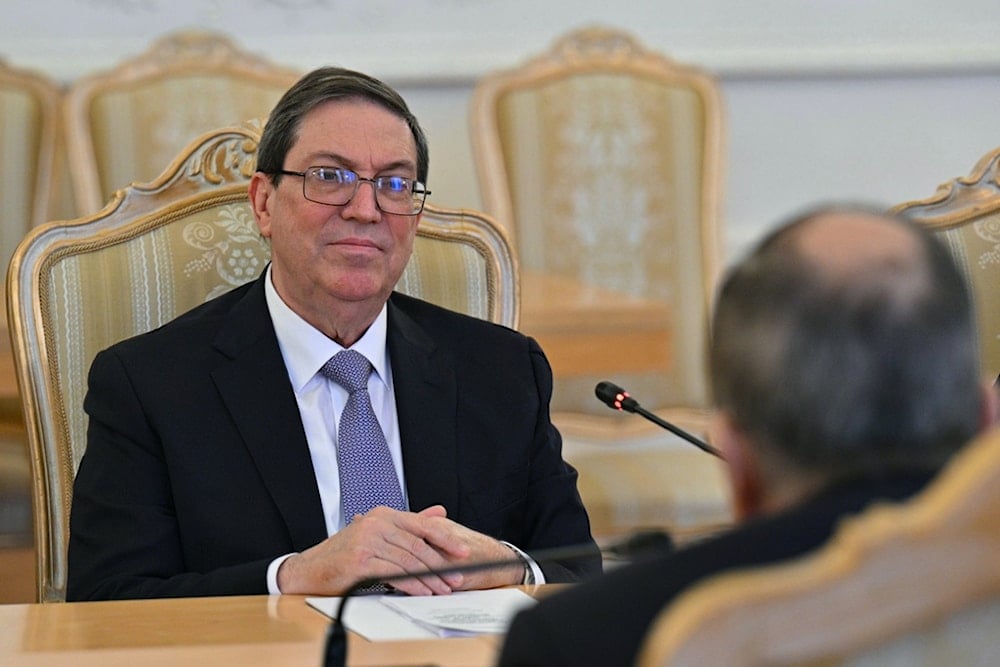
Cuban Foreign Minister Bruno Rodriguez, left, listens to Russian Foreign Minister Sergey Lavrov during their meeting in Moscow, Russia, Wednesday, Feb. 18, 2026. (Hector Retamal/Pool Photo via AP)
Cuban Foreign Minister Bruno Rodríguez Parilla said Monday that there is currently no agenda for future negotiations with the United States.
He firmly denied any ongoing negotiations or plans for future talks with the US amid heightened sanctions by the Trump administration.
Earlier in July, Cuban Prime Minister Manuel Marrero Cruz said Havana had maintained ongoing contacts and talks with representatives of the US government, in line with a position previously expressed and reaffirmed by Cuban President Miguel Díaz-Canel.
The Cuban government said months of negotiations with Washington had failed to make progress, while stressing that it remained open to dialogue.
In April, Cuba announced that a recent meeting had been held between official Cuban and US delegations in Havana as part of sensitive contacts conducted with a degree of discretion.
Cuba has faced a US blockade for more than six decades, with Washington imposing broad economic, financial, and trade sanctions on the country.
Havana maintains that the measures have contributed to severe hardships and shortages of food, fuel, and medicine. The United States, meanwhile, claims that its pressure is directed at the Cuban authorities rather than the Cuban people.
Cuba condemns US extension of trade embargo for another year
In late August, the United States extended its decades-long trade embargo on Cuba for another year, prompting an angry response from the Cuban government.
Havana condemned the extension “in the strongest terms,” with Rodriguez Parilla writing on X that the embargo was “a genocidal policy” and accusing Washington of being “intent on suffocating an entire nation.”
He added that the extension “comes at the cruellest moment of the US offensive against Cuba in recent years.”
The embargo dates back to 1962, when then-US President John F. Kennedy invoked the Trading with the Enemy Act, legislation that gives Washington the authority to restrict trade with countries it designates as adversaries.
A 1978 law has required each sitting US president to renew the measure annually, making the latest extension largely a formality rather than a surprise.
The decision came as Cubans faced one of the harshest periods in the country’s recent history, marked by ongoing rolling blackouts and persistent shortages of food and fuel.
Trump escalates pressure
Since returning to office, US President Donald Trump, who has floated the possibility of the US seizing Cuba, has imposed further restrictions, including measures obstructing fuel shipments to the island and sanctions targeting entities linked to the Cuban state.
In one of the latest rounds, Washington sanctioned nine entities and three individuals, including the Cuban Ministry of Construction and senior figures at the Cuban Institute of Friendship with the Peoples (ICAP). Those targeted included ICAP President Fernando Gonzalez Llort, First Vice President Noemi Ramona Rabaza Fernandez, and North America Director Leima Martinez Freire.
US Secretary of State Marco Rubio accused ICAP of sponsoring a “vast subversive network” in the United States, alleging that Cuba sought to exploit the 100th anniversary of Fidel Castro’s birth to activate the network.
The same round targeted entities in Cuba’s metals and mining sectors, including state companies involved in nickel and cobalt extraction and processing, minerals that constitute a significant part of the Cuban economy. The measures stem from an executive order Trump signed in May expanding sanctions against Cuban officials, security forces, and their supporters.


