
Cuban FM blames US blockade for power outages, rejects threat claims
 4 Min Read
Bruno Rodríguez rejects US accusations against Havana and blames Washington's blockade for the island's energy difficulties.
-
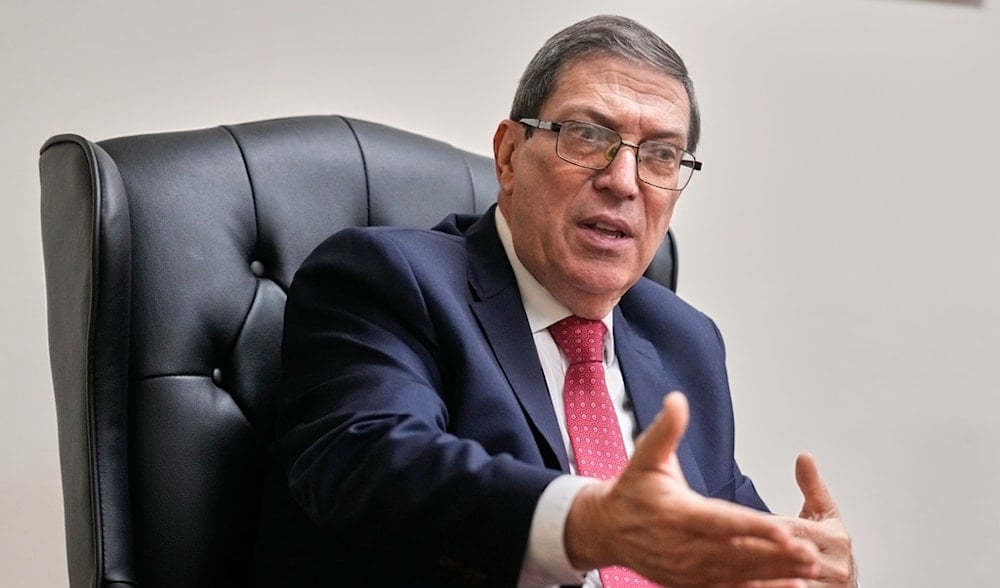
Cuba's Foreign Minister Bruno Rodriguez Parrilla speaks during an interview for The Associated Press at the Permanent Mission of Cuba to the United Nations, in New York, Tuesday, Sept. 30, 2025. (AP)
Cuban Foreign Minister Bruno Rodríguez Parrilla has blamed the United States blockade for repeated disruptions to the country's national electricity system, saying that Washington's sanctions have restricted Havana's access to fuel, equipment, financing, and technical cooperation.
In a post on X, Rodríguez said power outages affecting Cuba's National Electric System (SEN) were "direct consequences" of the US "genocidal blockade" against Cuba, particularly restrictions targeting the energy sector.
Las desconexiones del sistema eléctrico nacional (SEN) son consecuencias directas del genocida bloqueo de EEUU contra #Cuba, en particular del cerco energético.
— Bruno Rodríguez P (@BrunoRguezP) August 4, 2026
Este último no sólo impide la libre importación de combustibles. Bloquea la entrada a nuestro país de partes y piezas… pic.twitter.com/DFKlA1Ebec
"The latter not only prevents the free import of fuels. It blocks the entry into our country of parts and pieces necessary for the SEN, prevents collaboration with experts from other nations and makes access to international financing more difficult," Rodríguez wrote.
He added the hashtag #CubaNoEsUnaAmenaza, or "Cuba is not a threat," stressing that "the blockade is."
Cuban foreign minister rejects US allegations
In another post, Rodríguez criticized US Secretary of State remarks regarding Cuba, accusing Washington of using claims that Havana poses a threat to justify continued pressure on the country.
"The Secretary of State insists on the ridiculous and clumsy lie, in which neither he nor his corrupt colleagues believe, that #Cuba could constitute a threat against the greatest nuclear power on the planet," Rodríguez said.
El Secretario de Estado insiste en la ridícula y torpe mentira, en la que no cree él ni sus corruptos colegas, de que #Cuba pueda constituir una amenaza contra la mayor potencia nuclear del planeta.
— Bruno Rodríguez P (@BrunoRguezP) August 2, 2026
Intento desesperado por justificar el actual genocidio contra el pueblo cubano… pic.twitter.com/DoZdGOYVnU
The Cuban foreign minister accused US officials of attempting to justify "collective punishment" against the Cuban people and warned that any military escalation would result in severe consequences for both Cuban and US citizens.
Rodríguez reiterated that Cuba does not represent a threat to the United States, arguing that the US blockade remains the primary challenge facing the island.
US pressure on Cuba intensifies amid reported intelligence expansion
Rodríguez's accusations against the US blockade come as Washington has increased pressure on Havana through expanded sanctions measures and a reported rise in intelligence activity targeting the island.
According to a report by Politico, the United States has expanded its intelligence presence in Cuba in recent months, including the deployment of intelligence personnel and other assets as the Trump administration increases its focus on the country.
The report, citing sources familiar with the administration's plans, said the effort includes expanding the CIA's presence in Cuba, with the moves potentially indicating preparations for a range of possible actions.
Politico reported that these measures could include operations ranging from military action to attempts aimed at influencing public sentiment against the Cuban government.
The report also noted that Washington could shift greater attention toward Cuba even before resolving other foreign policy priorities, with the island remaining a key focus for US Secretary of State Marco Rubio.
Trump administration expands sanctions on Cuba
Simultaneously, the Trump administration has intensified economic pressure on Cuba, further worsening the island's long-running economic difficulties.
In January, US President Donald Trump signed an executive order authorizing tariffs on imports from countries supplying oil to Cuba and declared a state of emergency over what he described as a threat posed by the Cuban government to US national security.
The measures further strained Cuba's access to fuel supplies, affecting electricity generation, transportation networks, food production, healthcare services, and education across the island.
Havana has repeatedly condemned US sanctions as a form of economic warfare, arguing that the restrictions limit Cuba's ability to import essential goods, access international financing, and maintain critical infrastructure.
Cuba's energy crisis deepens amid fuel shortages
The latest tensions come as Cuba continues to face severe electricity shortages and repeated failures in its national power system.
Five of Cuba's 15 provinces were left without electricity on Saturday after the National Electric System (SEN) experienced another partial collapse. The state-run electricity company Unión Eléctrica de Cuba (UNE) said the failure occurred at 6:07 pm local time, affecting Havana and other areas in western Cuba.
Cuban authorities have linked the worsening energy crisis to fuel shortages, saying limited access to diesel has reduced the country's ability to operate emergency generators and stabilize the national grid.
The country's power problems have been compounded by decades of US sanctions and restrictions, which Havana says have hindered access to energy supplies, spare parts, international markets, and financing needed to maintain infrastructure.


