
US expands intelligence ops in Cuba amid blockade
 3 Min Read
The US has expanded its intelligence presence in Cuba, with CIA assets reportedly increasing as Washington intensifies pressure on Havana.
-
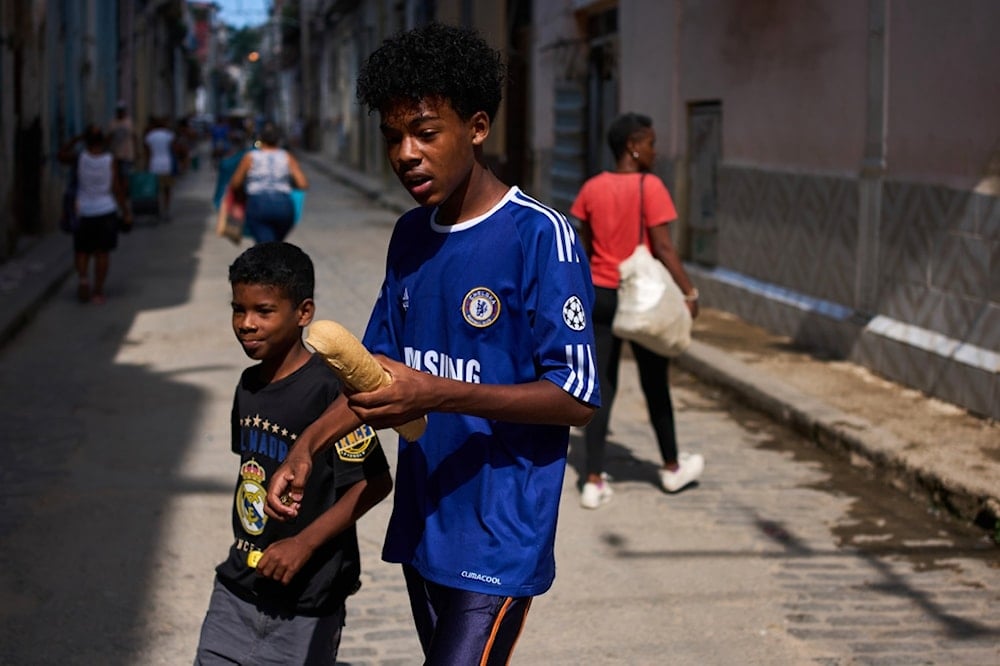
Children walk with a loaf of bread in Havana, Cuba, Wednesday, July 29, 2026 (AP)
The United States has expanded its intelligence presence in Cuba in recent months, including the deployment of spies and other intelligence assets, as Washington intensifies its focus on the island, Politico reported Tuesday, citing sources familiar with the Trump administration’s plans.
According to the report, the effort includes expanding the Central Intelligence Agency’s (CIA) presence in Cuba, with the moves potentially indicating that Washington is preparing for a range of possible actions.
Politico reported that these actions could include measures ranging from a military operation to efforts aimed at turning local residents against the Cuban government.
The report added that Washington could shift its attention toward Cuba even before resolving the conflict with Iran, noting that the island remains a key priority for US Secretary of State Marco Rubio.
Trump administration increases pressure on Cuba
The reported intelligence expansion comes as Washington has increased sanctions pressure on Cuba in recent months, worsening the island’s ongoing economic crisis.
In January, US President Donald Trump signed an executive order authorizing tariffs on imports from countries supplying oil to Cuba and declared a state of emergency over what he described as a threat posed by the Cuban government to US national security.
The measure further strained Cuba’s fuel supply, affecting electricity generation, transportation, food production, healthcare, and education across the island.
Energy crisis deepens under US blockade
Five of Cuba’s 15 provinces were left without electricity on Saturday after the national power grid suffered another partial collapse, deepening the island’s ongoing energy crisis amid the US-imposed fuel blockade.
The state-run electricity company Unión Eléctrica de Cuba (UNE) said the failure occurred at 6:07 pm local time, plunging Havana and other areas of western Cuba into darkness.
The latest blackout comes as Cuba struggles with severe fuel shortages, which authorities say have weakened the national grid and limited the ability to rely on emergency generators that typically require diesel.
The latest crisis follows decades of US sanctions and restrictions that have limited Cuba’s ability to access international markets, finance, and energy supplies.
Havana introduces reforms to counter US pressure
Facing growing economic challenges, Cuban lawmakers have adopted a series of market-oriented reforms aimed at reducing the state's role in parts of the economy and attracting foreign investment.
Earlier this week, Havana announced plans to open major sectors, including gas stations, electricity generation, waste collection and pharmacies, to private companies.
The government has presented the reforms as measures to address economic difficulties while maintaining control over strategic sectors.
Additionally, Cubans have increasingly turned toward alternative energy sources and locally developed solutions to manage the shortages.
Across the island, residents have adopted solar panels, lithium batteries, electric motorcycles, and modified generators to compensate for declining fuel supplies.
Solar energy projects supported through cooperation with China have expanded, while private citizens have imported smaller solar systems and batteries to maintain basic electricity needs during blackouts.


