
DPRK says not bound by NPT, reaffirms 'irreversible' nuclear status
 4 Min Read
DPRK sees outside criticism, particularly from the US and its allies, as “groundless” challenges to the country's sovereignty and nuclear status.
-
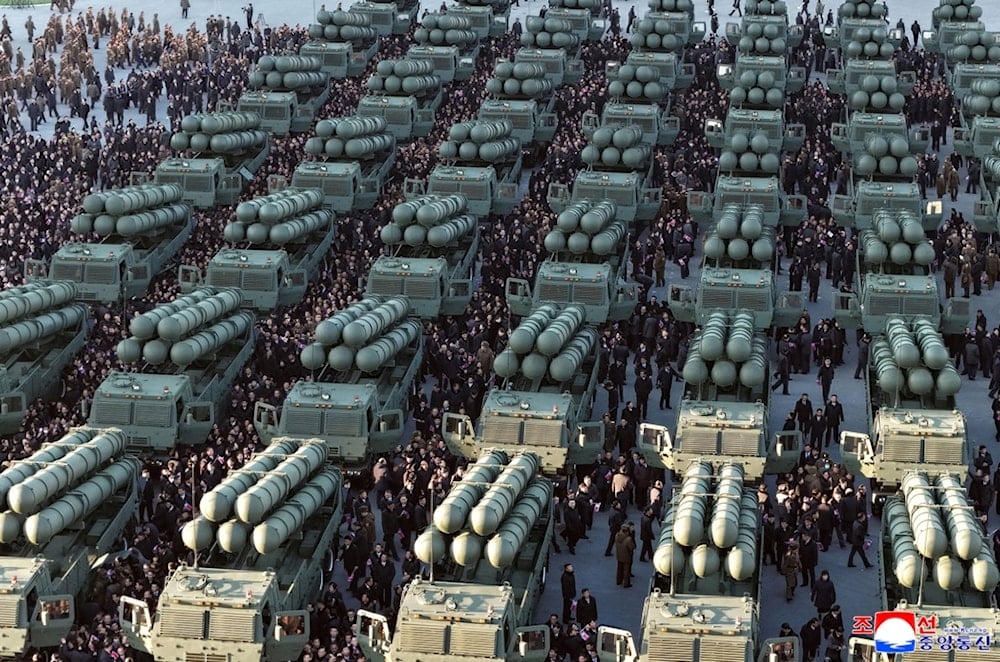
This photo provided by the DPRK shows new launch vehicles for nuclear-capable short-range missiles during a military ceremony in Pyongyang, DPRK, Wednesday, Feb. 18, 2026 (Korean Central News Agency/Korea News Service via AP)
The DPRK has declared that it is not bound by the Nuclear Non-Proliferation Treaty (NPT) and will not alter its status as a nuclear-armed state under external pressure, the DPRK's UN envoy stated on Thursday, as reported by KCNA.
Pyongyang’s ambassador to the United Nations, Kim Song, said during a review meeting of the NPT at the UN that outside criticism, particularly from the United States and its allies, amounted to “groundless” challenges to the DPRK’s sovereignty and nuclear status.
He stressed that “the status of the Democratic People’s Republic of Korea as a nuclear-armed state will not change based on external rhetorical claims or unilateral desires."
'Irreversible' nuclear posture
Kim also stated that the DPRK “will not be bound by the Non-Proliferation Treaty under any circumstances whatsoever,” adding that its nuclear weapons policy is now enshrined in the country’s constitution and publicly outlines principles for nuclear use.
The DPRK first threatened to withdraw from the NPT in 1993 and formally exited the treaty in 2003. Since then, it has conducted six nuclear tests and remains under extensive international sanctions, while being widely assessed as possessing multiple nuclear warheads.
The NPT, which entered into force in 1970, is signed by nearly all countries worldwide and aims to prevent the spread of nuclear weapons, promote disarmament, and encourage peaceful nuclear cooperation. However, UN Secretary-General António Guterres warned during the review conference that the treaty’s “spirit has been eroding,” citing growing proliferation risks and declining trust among member states.
According to the Stockholm International Peace Research Institute (SIPRI), the world’s nine nuclear-armed parties: Russia, the United States, China, France, the United Kingdom, India, Pakistan, the Israeli occupation, and the DPRK, held an estimated 12,241 nuclear warheads as of January 2025. The US and Russia together account for nearly 90 percent of the global stockpile.
The DPRK has repeatedly stated that its nuclear program is “irreversible” and has vowed to strengthen its capabilities further. The country has also expanded military cooperation with Russia, including reports of troop deployments and artillery support linked to the Ukraine war, with analysts suggesting reciprocal military and economic assistance.
The latest remarks underscore Pyongyang’s continued rejection of international disarmament frameworks and its firm positioning as a de facto nuclear weapons state despite global non-proliferation efforts.
War on Iran proves nuclear arsenal best insurance policy: Leader
Earlier in March, DPRK leader Kim Jong Un said the United States' war on Iran proves his country made the right decision to keep its nuclear weapons. He considered Washington's aggression as confirmation that only nuclear-armed states can deter US military power.
In a speech to the DPRK's Supreme People's Assembly, Kim accused Washington of "acts of state sponsored terrorism and aggression."
"The present situation clearly proves" that the DPRK was justified in rejecting what he described as US pressure and "sweet talk" to give up its nuclear arsenal, Kim said, adding that the DPRK's nuclear status is now "irreversible".
Nuclear deterrence
For the DPRK's leadership, the US-Israeli war on Iran reinforces a long-held belief: countries without nuclear weapons are exposed to US military power, while those with them can deter it. The war, now in its fifth week, began on February 28 when the United States and "Israel" launched an unprovoked aggression on Iran.
US President Donald Trump had used the claim that Iran posed an "imminent" threat to the US, months after declaring the US had "obliterated" Iran's nuclear capabilities. Trump has cited preventing Iran from building a nuclear bomb as one of his reasons for launching strikes on the country, with no proof provided, and Iran repeatedly and categorically refuted the claim.
Read more: War on Iran consolidates DPRK's nuclear deterrence strategy: Guardian


