
East Libya Major-General Fawzi al-Mansouri killed in car bombing
 2 Min Read
Major-General Fawzi al-Mansouri, eastern Libya’s military intelligence chief, is killed in a car bomb blast in Benghazi.
-
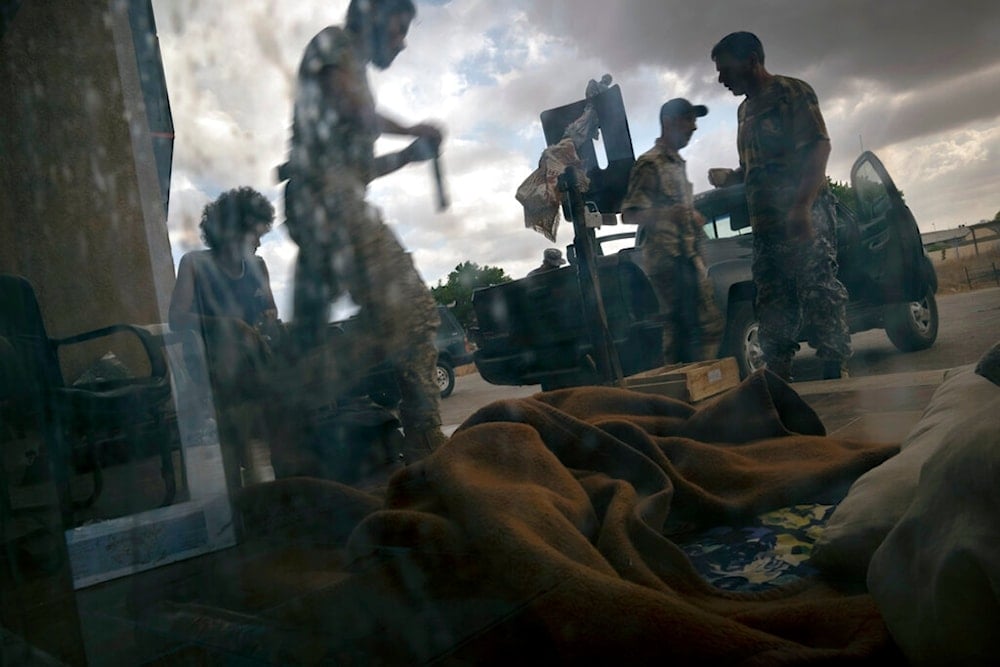
In this Saturday Sept. 7, 2019 photo, fighters of the 'Shelba' unit, allied with the UN-supported Libyan government, prepare for combat at the Salah-addin neighborhood front line in Tripoli, Libya. The fighting erupted in April when the self-styled Libyan National Army headed by Field Marshal Khalifa Haftar launched an offensive to take Tripoli (AP Photo/Ricard Garcia Vilanova)
Major-General Fawzi al-Mansouri, the head of military intelligence for eastern Libya’s self-styled Libyan National Army (LNA), was killed in a car bomb blast in Benghazi, according to eastern Libyan authorities and security sources.
Al-Mansouri was killed late Monday after an improvised explosive device detonated as he entered his car outside his home in the Hawari district of Benghazi, Reuters reported, citing two security sources.
The killing comes as Libya continues to grapple with political division and instability, with rival administrations and armed groups retaining significant influence despite a 2020 ceasefire that halted major fighting.
Eastern Libyan government condemns killing
Osama Saad Hammad, prime minister of the eastern Libyan government, condemned the killing and pledged to “uncover the circumstances of the crime”.
“We condemn, in the strongest terms, this treacherous terrorist act,” he said in a statement on Tuesday.
“There is no place in Libya for anyone who raises arms against the state, and no cover for anyone who plans, executes, finances, or incites assassination and terrorism crimes,” he added.
Al-Mansouri was appointed director of military intelligence in Benghazi, with the rank of major-general, in 2024.
Libya remains divided between rival authorities
The killing underscores the continuing security challenges facing Libya, which has remained divided between rival political and military forces since the 2011 NATO-backed uprising that toppled longtime leader Muammar Gaddafi.
Libya split between rival eastern and western factions in 2014, with armed groups and competing administrations subsequently establishing control over different parts of the country.
The LNA, led by military commander Khalifa Haftar, controls much of eastern and southern Libya and is aligned with authorities based in Benghazi.
Meanwhile, Libya’s internationally recognized Government of National Unity is based in the capital, Tripoli, and controls much of the country’s west.
Despite the 2020 ceasefire, which brought an end to major warfare between the rival sides, political divisions and the continued presence of armed groups have kept the country vulnerable to renewed instability.


