
Ethiopia slams 'coercive measures' on Red Sea, Nile rights
 3 Min Read
Addis Ababa says it will not accept political pressure regarding its legitimate interests in the Red Sea and Nile basin, following El Alamein summit.
-
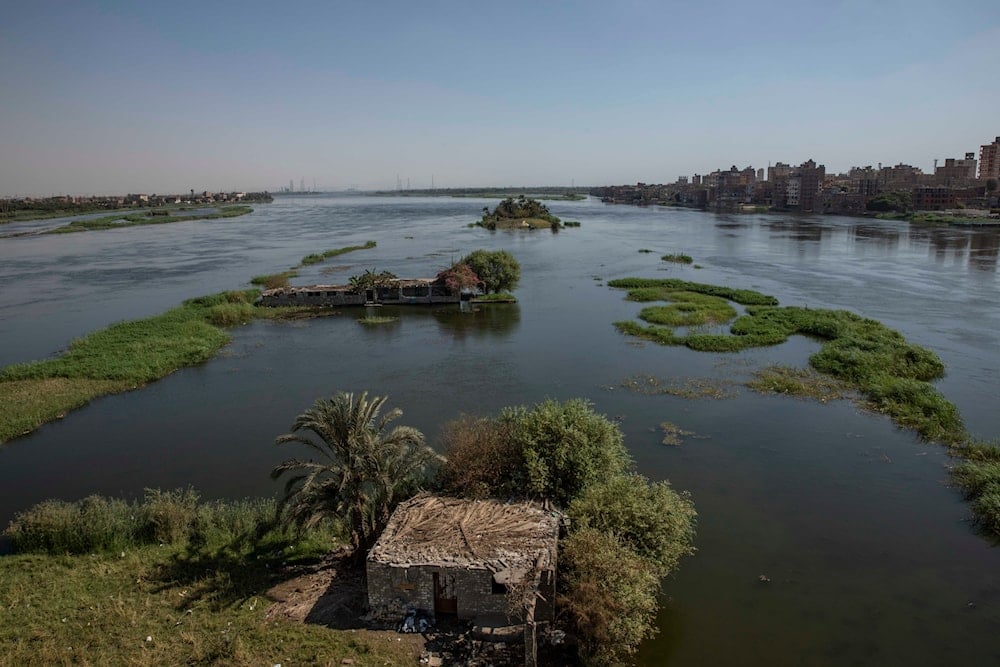
A general view of the Nile River in Beni Suef, Egypt, Tuesday, Aug. 4, 2020 (AP)
Ethiopia has reaffirmed its interests in the Nile and Red Sea following a summit of Egypt, Eritrea, Sudan, and Somalia, whose leaders adopted common positions on shared water resources, maritime governance, and regional sovereignty.
In an October 5 statement, Ethiopia’s Foreign Ministry said discussions concerning the Nile and Red Sea must account for the country’s geographical position and national interests. The statement came after a regional summit in Cairo opposed unilateral actions concerning Nile water resources, with Ethiopia arguing that geographic realities cannot be changed through external political rhetoric.
Press Statement: 05 October 2026 https://t.co/DvwqkCwaW2
— The Ministry of Foreign Affairs of Ethiopia 🇪🇹 (@MFAEthiopia) October 5, 2026
The Ministry reiterated Ethiopia’s "legitimate interests" in the Red Sea and Nile basin, rejecting what it characterized as political pressure and "coercive measures" intended to restrict its water rights and ambitions for maritime access.
Nile Basin sovereignty
The Ministry highlighted Ethiopia’s central role in the Blue Nile, or Abay River, saying nearly the entire river originates in the Ethiopian highlands and accounts for roughly 85% of the Nile’s annual flow. "Any discussion concerning the utilization and management of the Abay River should be informed by these fundamental realities," the Ministry said, underscoring the river’s importance to Ethiopia’s development plans.
Red Sea access claims
Addis Ababa also pointed to its geographic and historical connection to the Red Sea. Although Ethiopia has been landlocked for decades, the Ministry noted that the country’s closest border is only about 30 miles from the coast. "These geographic and historical realities cannot be altered by political rhetoric, coercive measures, or acts of destabilization," the statement said, arguing that regional maritime security frameworks should take Ethiopian interests into account.
Regional summit context
The statement followed a four-way summit in Egypt on Sunday attended by Egyptian President Abdel Fattah el-Sisi, Eritrean President Isaias Afwerki, Somali President Hassan Sheikh Mohamud, and Sudanese Transitional Sovereignty Council Chairman Abdel Fattah al-Burhan. The leaders reaffirmed their commitment to sovereignty and territorial integrity and opposed unilateral measures affecting Egypt and Sudan’s established uses of Nile waters. Ethiopia, however, did not explicitly refer to the summit or the Grand Ethiopian Renaissance Dam in its statement.
"Actions taken through proxies or acts of aggression will not change the facts on the ground, nor will they diminish Ethiopia's legitimate interests, role, and responsibilities in the region," the Ministry said. It added that Addis Ababa would defend its sovereignty while calling for "constructive dialogue, partnership, and adherence to the principles of good neighborliness rather than confrontation and zero-sum approaches."
These events unfold amid renewed conflict in northern Ethiopia and a deterioration in diplomatic relations. Addis Ababa has accused Eritrea, Sudan, and Egypt of backing an opposition alliance led by the Tigray People’s Liberation Front; all three countries deny supporting the rebels.
Read more: El Alamein Summit tackles Sudan, Horn of Africa crises


