
EU rejects Trump tariff threats over Greenland sovereignty
 4 Min Read
EU Council chief António Costa says Europe stands united on Greenland, warns tariffs would damage transatlantic ties, and signals readiness to resist coercion.
-
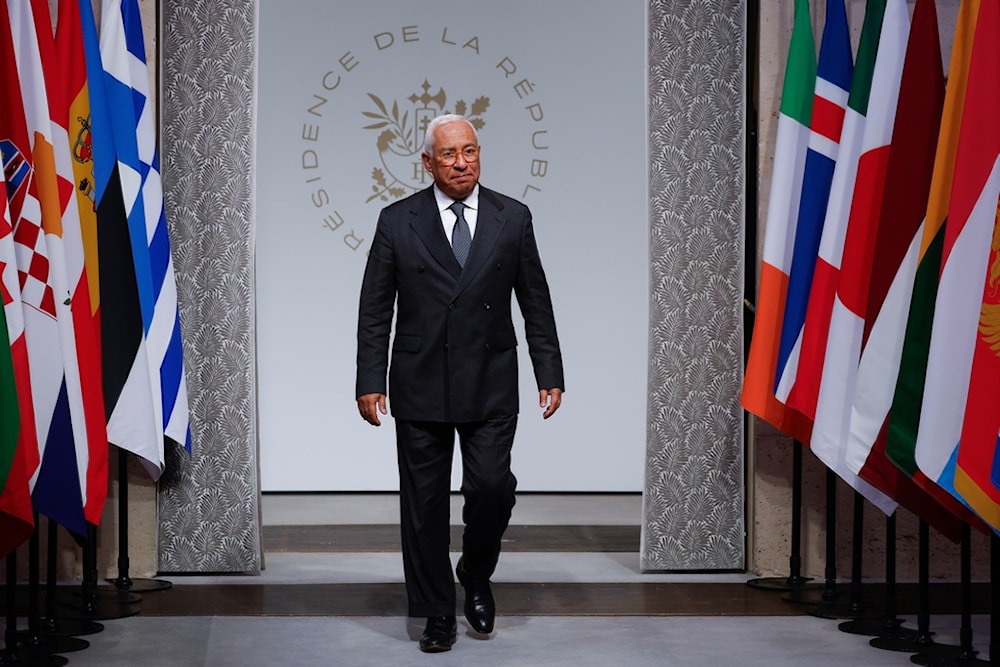
European Council President Antonio Costa arrives for a meeting of the Coalition of the Willing at the Elysee Palace in Paris, France, Tuesday, January 6, 2026 (AP)
The president of the European Council, António Costa, said consultations with EU member states over recent tensions linked to Greenland have reaffirmed a unified European position grounded in international law, particularly respect for territorial integrity and national sovereignty.
Costa stressed that there is a broad European consensus in support of Denmark and Greenland, underscoring solidarity with both and highlighting a shared transatlantic interest in maintaining peace and security in the Arctic region. He added that cooperation should continue within the framework of NATO.
He warned that the imposition of tariffs would undermine transatlantic relations and run counter to the EU–US trade agreement, signaling growing concern in Brussels over economic coercion.
Europe ready to defend itself
At the same time, Costa affirmed the European Union’s readiness to defend itself against any form of pressure, while reiterating its willingness to remain constructively engaged with Washington on issues of mutual interest.
He also announced that an extraordinary meeting of the European Council will be convened in the coming days to strengthen coordination among member states, given the significance of recent developments.
The remarks come after US President Donald Trump pledged on Saturday to impose escalating tariffs on European allies unless Washington is allowed to take control of Greenland, further escalating tensions over the island’s future. Trump renewed his call to seize Greenland on December 23, reviving a proposal he had previously raised in March 2025.
EU weighing retaliation
European Union member states are weighing a package of retaliatory trade measures against the United States amounting to 93 billion euros ($107 billion), following tariff threats issued by US President Donald Trump, the Financial Times reported on Sunday, citing informed sources.
According to the report, Trump said on Saturday that Washington would impose a 10% tariff on Denmark, Norway, Sweden, France, Germany, the United Kingdom, the Netherlands, and Finland starting in February. He added that the rate would later increase to 25% and remain in place until the United States secures a deal to purchase Greenland.
The tariff threats come amid sharply escalating political and security tensions over Greenland and the wider Arctic. Greenland’s strategic position between North America and Europe makes it central to missile detection, space surveillance, and early-warning systems, and it already hosts significant US military infrastructure under long-standing defense agreements with Denmark. European officials have warned that any attempt to alter Greenland’s political status would challenge Danish sovereignty and risk undermining NATO’s principle of collective defense.
Trade countermeasures
Against this backdrop, Greenland’s governing coalition moved this week to reaffirm the island’s defense alignment within NATO, announcing plans to deepen coordination with Denmark to ensure that all future defense arrangements remain under the alliance’s framework. In a formal statement, Greenland’s government stressed that the island is part of the Danish Commonwealth and that, as Denmark is a NATO member, “the defense of Greenland must therefore be through NATO,” adding that all allies, including the United States, share responsibility for its security.
EU officials were quoted as saying that a list of countermeasures had already been prepared in 2025, but implementation was postponed until February 6 in an effort to avoid immediate escalation into a full-scale trade confrontation. The bloc is also considering limiting US companies’ access to the European market through the Anti-Coercion Instrument, a mechanism designed to counter economic pressure from third countries. The issue was reportedly discussed by EU ambassadors on Sunday, amid calls from some member states to activate the tool for the first time.
Sources told the newspaper that the contemplated measures are intended to strengthen Europe’s position ahead of anticipated encounters between EU leaders and Trump during the World Economic Forum, scheduled to take place in Davos from January 19 to 21.


