
EU weighs curbing trade with illegal settlements in occupied West Bank
 3 Min Read
EU foreign ministers are set to discuss measures targeting trade with illegal Israeli settlements in the occupied West Bank as pressure grows over settlement expansion and settler violence.
-
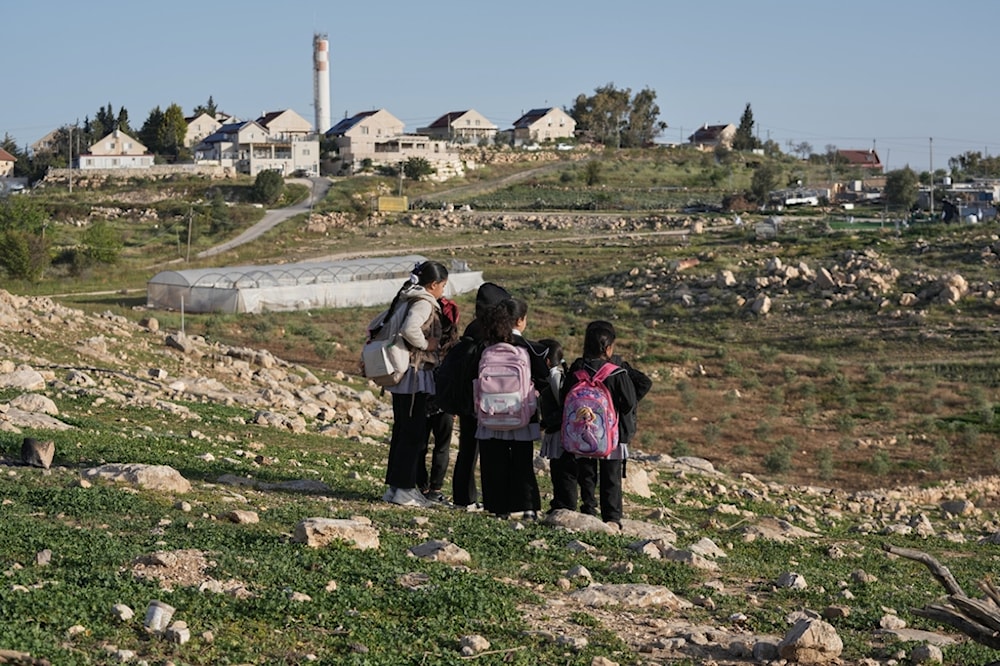
Palestinian students walk to school using an alternative route that is nearly twice as long because a fence separates their village from an Israeli settlement, near the West Bank village of Umm al-Khair, April 14, 2026. (AP Photo/Mahmoud Illean)
European Union foreign ministers are expected to discuss on Monday whether sufficient political backing exists for new measures aimed at restricting trade with illegal Israeli settlements in the occupied West Bank, as divisions within the bloc continue to shape its response to the occupation.
The talks will center on a confidential European Commission paper outlining three possible approaches: introducing an import licensing system, imposing prohibitive tariffs, or implementing a full ban on goods originating from settlements, according to diplomats and European officials.
While no formal decision is anticipated during Monday's meeting, the discussion reflects growing pressure from several EU member states to adopt stronger positions in response to the continued expansion of illegal settlements and escalating violence carried out by Israeli settlers against Palestinians.
Read more: London event advertised land in illegal Israeli settlements
Settlement expansion drives calls for stronger EU action
The European Union has historically struggled to reach unified positions on Palestine due to longstanding differences among its 27 member states regarding the Israeli occupation and broader regional policy.
In recent months, however, frustration with Prime Minister Benjamin Netanyahu's government has intensified as settlement construction has expanded across the occupied West Bank and attacks by Israeli settlers against Palestinians have continued.
In May, the European Union imposed sanctions on four entities and three individuals over serious and systematic human rights abuses committed against Palestinians in the occupied West Bank.
The growing debate within the bloc also follows last year's advisory opinion issued by the International Court of Justice (ICJ), which concluded that the Israeli occupation of the Palestinian territories and its settlement enterprise in the occupied West Bank are illegal under international law.
The ICJ further stated that states should take steps to prevent trade and investment relations that contribute to maintaining the unlawful situation created by the occupation.
Israeli Foreign Minister Gideon Saar previously described efforts by some European governments to implement the advisory opinion as "shameful".
Legal and political divisions remain
Diplomats said Monday's meeting is expected to focus primarily on assessing member states' positions rather than reaching an immediate policy decision.
"I think what you will see on Monday is a discussion on the options, and we will get a bit of a picture of where everybody is," one senior EU diplomat said, speaking anonymously because of the confidential nature of the discussions.
Officials also remain divided over the legal procedure required to adopt any restrictions.
Some diplomats argue that measures such as a ban on settlement trade could be approved through a qualified majority, requiring support from at least 15 member states representing 65% of the EU's population.
However, the European Commission's confidential paper suggests that a full ban may instead require unanimous approval from all member states, a significantly higher threshold that would make adoption considerably more difficult.
European Commission spokesperson Paula Pinho confirmed that the paper had been circulated among member governments but declined to comment on its contents.
Read more: Israeli cabinet greenlights record settlement expansion


